
Whither Goeth the Smelt?
The Delta Smelt, the minnow used as the excuse for California water policies, has been MIA for over a decade.

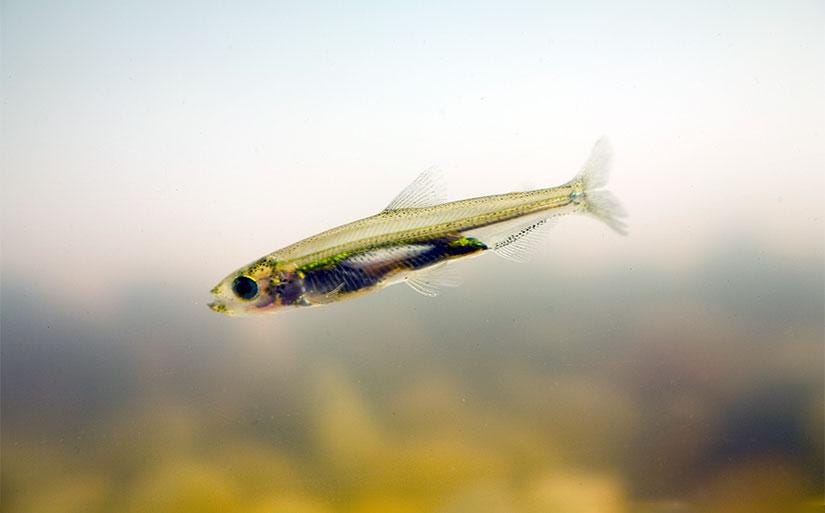
I read with great interest that the primary reason for California's complex water management policies, a minnow called the delta smelt, has not been seen for over a decade. Now, there's some debate about whether this "smelt" even existed or was simply a variant of another, more prevalent minnow.
Having grown up in the South, I am aware of another minnow that blocked development of flood control and power generation in the Tennessee Valley, known as the "Snail Darter." After some research, I discovered that the infamous "Snail Darter," whose endangered species status delayed the building of the Tellico Dam in Tennessee in the 1970s, might not have existed as a separate species. According to a recent article by The New York Times on January 5th, scientists now suggest that the snail darter is genetically indistinguishable from another fish.
How could such errors occur?
Or were they errors at all?
The first thing to understand is the evolution of environmentalism and concerns about anthropogenic climate change and how these movements began with noble intentions but have been co-opted by various groups with more radical agendas. The environmental movement now includes not only well-meaning conservationists but also those who might be described as misanthropic, dystopian, or anti-industrial, all using the fear of climate change to push for drastic societal changes.
Ingrid Newkirk, co-founder of PETA, once remarked, "The extinction of Homo Sapiens would mean survival for millions, if not billions, of Earth-dwelling species. Phasing out the human race will solve every problem on Earth - social and environmental."
This statement reflects an extreme view where human extinction is seen as a solution to ecological issues.
Did you know there is an organization called the “Voluntary Human Extinction Movement”?
I would call it a doomsday cult, but it contemporary sensibilities classify it as an “environmental movement” that calls for all people not to reproduce to cause the gradual voluntary extinction of humankind because they believe human extinction would prevent environmental degradation.
At the core of some environmental ideologies is a belief in a return to a simpler, nature-centric lifestyle, often idealized through the lens of "romantic primitivism." This ignores the harsh realities of pre-modern life, such as the brutal inter-tribal warfare, human sacrifice, institutional slavery, and the stark dependence on nature which often led to famine.
Nature, as anyone who has experienced it firsthand knows, is not the harmonious paradise some might imagine. It's a realm where survival of the fittest is the rule, where animals face death from starvation, predation, or injury without the aid of civilization. Even among the smallest creatures, like insects influenced by fungi such as Ophiocordyceps unilateralis, there's a stark illustration of nature's cruelty.
The recent wildfires in California have again highlighted the consequences of environmental policies designed to protect species (possibly even those that may not exist) over human lives and property. This contrasts sharply with policies from a century ago that favored human needs. One might wonder if this shift represents a broader trend towards anti-humanism in environmental policy-making.
Sure seems to be a trend, and one that needs to be reversed.
Some wise person once said that the first fossil evidence of civilization is finding a human skeleton with a healed fracture of the femur. Pre-civilization, this injury results in imminent death from starvation or disease.
Nailed it, once again!