
The Rust That Never Sleeps
How non-assimilating cultures, empowered by a self-loathing Western left, accelerate the quiet corrosion of civilization.

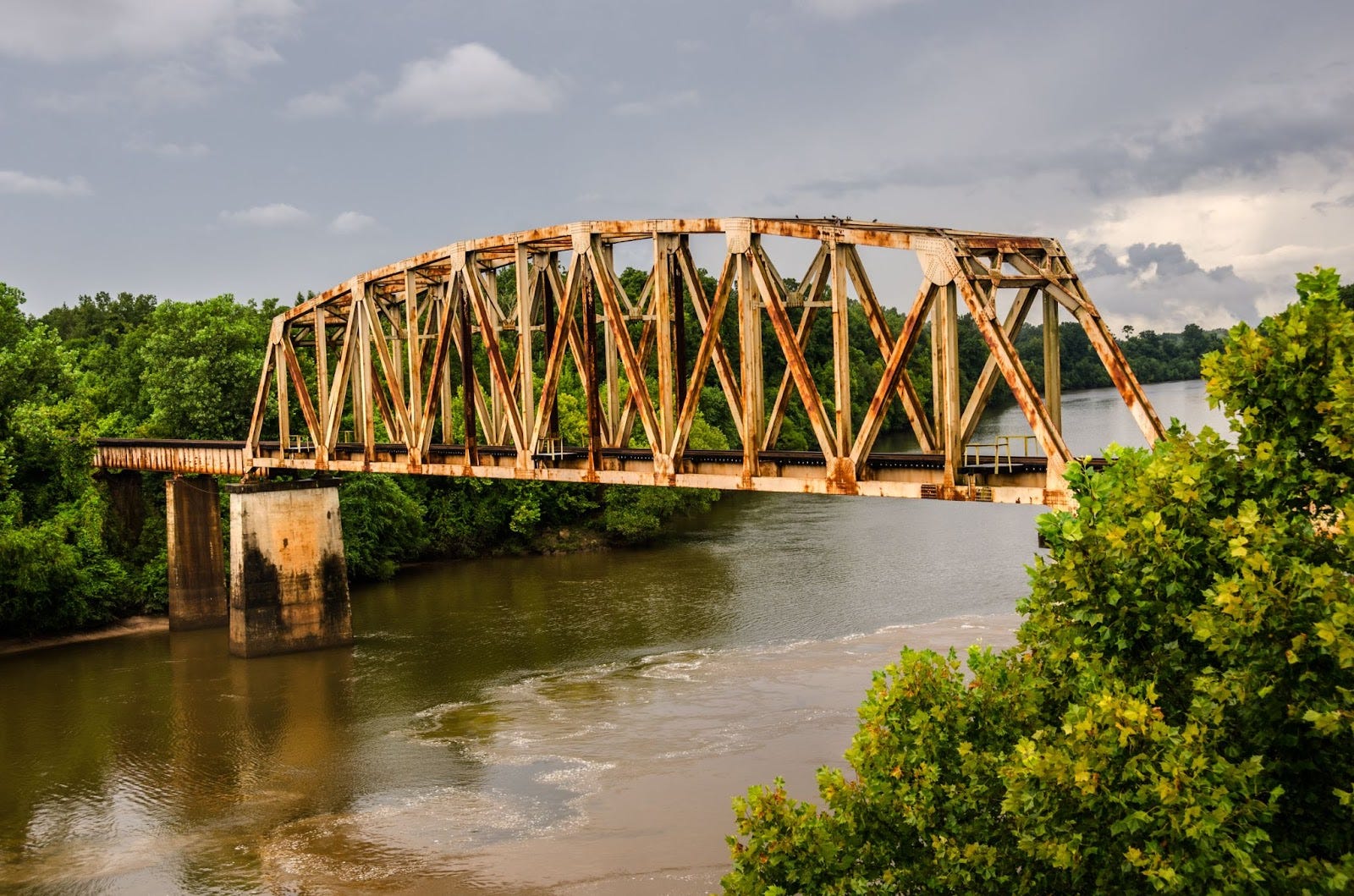
Civilizations rarely fall with a crash. More often they decay the way metal succumbs to oxidation—slowly, silently, inexorably. The process is almost always aided by internal fatigue and external pressure, each reinforcing the other. And one of the most overlooked contributors to a civilization’s decline is the quiet but persistent presence of cultural groups who refuse assimilation. Their refusal, however benign it may appear, functions as a kind of soft assault: sometimes rapid, sometimes glacial, but always progressing. Like rust, they never sleep.
The modern West, with its reflexive commitment to tolerance and its inability to articulate the value of its own civilizational inheritance, has created a dilemma for itself. It invites in other cultures—some admirable, some incompatible—and then insists that any expectation of assimilation is a form of oppression. The result is an archipelago of mutually mistrustful enclaves, each carrying its own norms, loyalties, and historical grievances. The host civilization becomes not a shared home but an empty vessel into which competing cultures pour themselves.
In the United States, assimilation once served as the bedrock principle of immigration. America did not erase identities, but it subordinated tribal allegiance to the civic creed expressed in the Constitution—the very “weapon,” as some have rightly called it, that makes American assimilation possible. A nation can tolerate enormous diversity if it shares a single lodestar. But in much of Europe and the UK, where constitutional liberty is weaker and the civic narrative less defined, multiculturalism has become a substitute for confidence. There, the global left now treats Western Civilization not as an achievement to steward but as a historical embarrassment to be managed.
Their posture is especially ironic. These same societies owe every inch of their economic, political, and social advancement to the Enlightenment—to the flowering of Western thought that shattered feudal hierarchies and liberated the individual. Without that civilizational breakthrough, much of Europe would still be living a form of “Monty Python/Dennis the Peasant /‘There’s some lovely filth over here!’” servitude, beholden to lords, kings, and the medieval church. Yet the beneficiaries of that liberation now display a peculiar self-loathing contempt for the very tradition that delivered them. The modern left in Europe and the UK has become distrustful of Western achievement, antagonistic toward national identity, and eager to dissolve what remains of cultural cohesion in a solvent of guilt.
In this climate, groups that resist assimilation encounter no resistance of their own. They face no expectation to become British, or French, or Dutch, or German—not in any meaningful sense. Instead, the receiving societies recoil from any language of cultural continuity, preferring bureaucratic diversity metrics over shared civic values. Their leaders mistake moral preening for moral confidence. Meanwhile, parallel societies emerge, each operating according to their own assumptions, and the host civilization loses the ability to ask for loyalty even as it provides endless accommodation.
Critics of this dynamic are dismissed as xenophobic or reactionary, but the issue is not immigration; it is the abandonment of assimilation. A civilization that refuses to defend its cultural DNA will, in time, lose it. And the refusal of incoming groups to assimilate cannot be understood merely as personal preference. It becomes, intentionally or not, a challenge to the host culture’s norms, legal expectations, and historical memory. The attack need not be aggressive to be effective; erosion works just fine.
This helps explain why the progressive left’s political battles so often feel existential. When a society becomes unsure of what it is, it treats any defense of its own traditions as a provocation. President Trump once said that the political and media establishment’s fury was not really aimed at him but at the American people. He was mostly right. But the target is even larger than that. The modern progressive movement—both in the U.S. and abroad—directs its full energy toward the dismantling of Western Civilization itself. Trump is merely a proximate obstacle, a symbol of the older civic order they wish to replace. America, with its stubborn constitutionalism and lingering cultural confidence, stands in the way of a broader ideological project: the deconstruction of the West’s moral authority.
Civilizations survive not by accident but by vigilance—by recognizing threats even when they arrive politely. A culture that ceases to believe in itself, that refuses to insist on assimilation, and that invites corrosive ideologies under the banner of openness is a culture volunteering for decline. Rust never sleeps. Neither do the forces that resent the West’s success, whether they stand outside its borders or operate comfortably within them.
If Western Civilization wishes to endure, it must defend itself—not only from its loudest critics but from the silent erosion it too often mistakes for progress.
Former Democrat Congresswoman Barbara Jordan had a lot of great things to say about immigration. This, from an Op-ed in the NYTs, 1995, is one of them:
"Immigration imposes mutual obligations. Those who choose to come here must embrace the common core of American civic culture. We must assist them in learning our common language: American English. We must renew civic education in the teaching of American history for all Americans. We must vigorously enforce the laws against hate crimes and discrimination. We must remind ourselves, as we illustrate for newcomers, what makes us America."
Excellent commentary. FRA GER and the U.K. are probably past the point of no return, though.