
Romancing the Resistance
Why are educated, female, middle-class activists increasingly drawn to "righteous" causes that ignore law, facts, and consequence?

Within adult women, there is a fast growing attraction to sexualized fantasy fiction—elves, witches, dragons, and other sword-and-sorcery archetypes. I guess they are just catching up with men because our sword and sorcery addictions are well known and many (Robert E. Howard’s Conan stories) have made it to the big screen.
The new female addiction is perhaps best understood as a rational escape from a modern world that has moralized, bureaucratized, and surveilled desire. Fantasy strips sexuality of real-world risk, reputational consequence, and ideological scrutiny, allowing power, dominance, danger, and intensity to be explored without guilt or social penalty.
These mythic settings reintroduce meaning, hierarchy, and emotional stakes into intimacy, while offering hyper-masculine figures without the friction or failure of real relationships. In a culture where wanting requires justification and attraction is treated as a political act, fantasy becomes a safe container for desire itself—it is a form of incentivized unreality, chosen not out of delusion, but relief.
One wonders if this is at least part of why so many affluent white women are engaged in the protests spreading across America.
White, college educated, middle class, women may not statistically make up most of the radical opponents to all things conservative or Trumpian, but they sure seem to be taking a leading role in protest activity. I was thinking how well Renee Good checked the boxes for an ideal victim of a shooting—and yes, this is a cruel thought—she was white, female, lesbian, had kids, was a poet, was obstructing what she defined as evil, and seemed completely brainwashed to risk her life for “the resistance”.
She might as well have been sent to Minneapolis from Central Casting.
I’ve come to the harsh realization that persuasion or evidence no longer factors into decisions about what people will muster to support and defend. Those have been replaced by a moral substitution process operating inside a system of incentivized unreality—one in which believing the right thing matters far more than believing the true thing— that sustains political belief today and facts cannot penetrate.
It seems a certain class of young and middle aged females are especially susceptible to romanticized resistance based on incentivized unreality.
Illegal immigration exposes this because it is legally binary. Either a person entered the United States lawfully or they did not. Either a visa was honored or it was overstayed. Government failure to enforce the law does not alter the law’s existence, yet protests, riots, and mass moral theatrics have erupted across the country defending people whose only distinguishing feature, legally speaking, is that they violated immigration statutes and are therefore subject to removal. The contradiction is not accidental. It is foundational.
The first move is moral substitution. Rather than disputing the law itself, activists quietly replace the operative question. “Is this legal?” becomes “Is enforcing this law cruel?” Once that substitution occurs, legality ceases to matter. Law is no longer the organizing principle; emotion is. Enforcement becomes oppression. Borders become bigotry. Officers become villains. The statute itself is treated not as a democratically enacted rule, but as a moral offense.
From personal experience, I can say that, when pressed on the issue, defenders of illegal immigration will concede that the conduct is illegal. What they reject is the authority of law over moral feeling. They have decided—often unconsciously—that empathy overrides statutes, that individual hardship nullifies general rules, and that enforcement itself is immoral. Once that hierarchy is reversed, no law is safe. Any statute can be vetoed emotionally, case by case, story by story.
This leads directly to something I’m calling “incentivized unreality”. Our cultural institutions—media, academia, nonprofits, and activist networks—reward narrative alignment rather than factual accuracy. People are praised, promoted, and socially protected not for being correct, but for signaling moral membership. Within such a system, reality becomes negotiable while acts that support the approved moral frame are amplified. Facts that contradict it are dismissed and in extreme cases, events are invented outright because the narrative demands them.
That is how people can see something with their own eyes and deny it moments later. They are not processing evidence; they are defending identity. The brain treats challenges to moral identity as threats. Admitting error would mean loss of status, loss of community, and loss of self-concept. Under those conditions, defending a falsehood feels safer than accepting the truth.
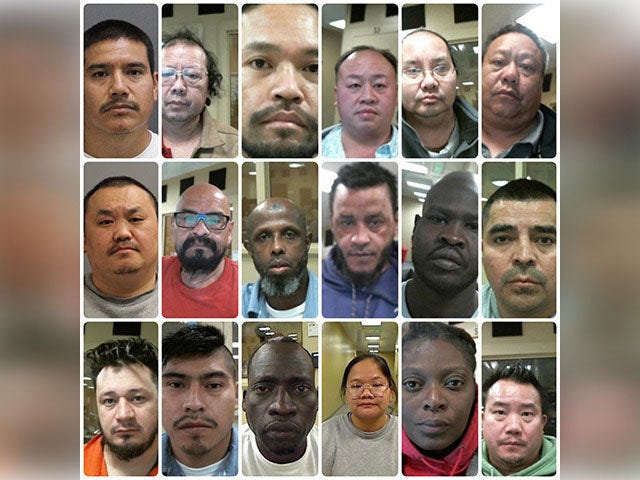
Illegal immigration protests follow this script precisely. Millions of violations are collapsed into a single curated story; protesters categorize every illegal alien as “our neighbors” must also tacitly and blithely ignore the heinous criminals who fit into that invented identity category. A recent list of “our neighbors” detained in Minneapolis and scheduled for deportation includes a horror show of offenses—offenders with convictions for child rape, kidnapping, prostitution, sodomy of a child, even convictions for murder.
The result is a form of collective narrative possession that resembles historical episodes of mass hysteria—not because people are clinically insane, but because social rewards have replaced truth as the stabilizing force. In earlier eras, reality reasserted itself through shared norms and institutional restraint. Today, those restraints often validate unreality instead.
Stein’s Law applies—when something can’t go on forever, it will stop. The rule of law depends on impersonal application, not moral improvisation. Once exceptions become virtues and enforcement becomes violence, the legal system collapses into sentiment. What replaces it is not justice, but coercion exercised through narrative dominance and when believing the right thing matters more than believing the true thing, reality does not disappear—and when it returns, its consequences are far worse than any unenforced law.
As we saw last week with Renee Good, those consequences can tragically include the end of a life.
This is politics rewritten in Orwellian ink. Law enforcement becomes violence. Illegal conduct becomes moral heroism. Criminals are rebranded as “neighbors,” while officers enforcing duly enacted law are cast as villains. War is Peace. Freedom is Slavery. Ignorance is Strength. The modern “resistance” survives by inverting reality and rewarding belief over truth. When legality is replaced by feeling, enforcement by empathy theater, and facts by curated narrative, the rule of law cannot survive. This isn’t compassion—it’s ideological gaslighting, sustained by institutions that punish dissent and reward unreality. In that upside-down world, refusing to see facts is framed as virtue—and the consequences are real, predictable, and tragic.
Two things: 1. You might want to fix "White, college educated, middle class, white women" in which there seems to be a redundancy. 2. I miss George Carlin. His analysis of the subject you address would, I suggest, be both sharp and the cause of invectified laughter. BTW Beta males would fit into the group you have described.