
Wisdom Before Age
Why are America's young radicals almost always radically wrong these days?

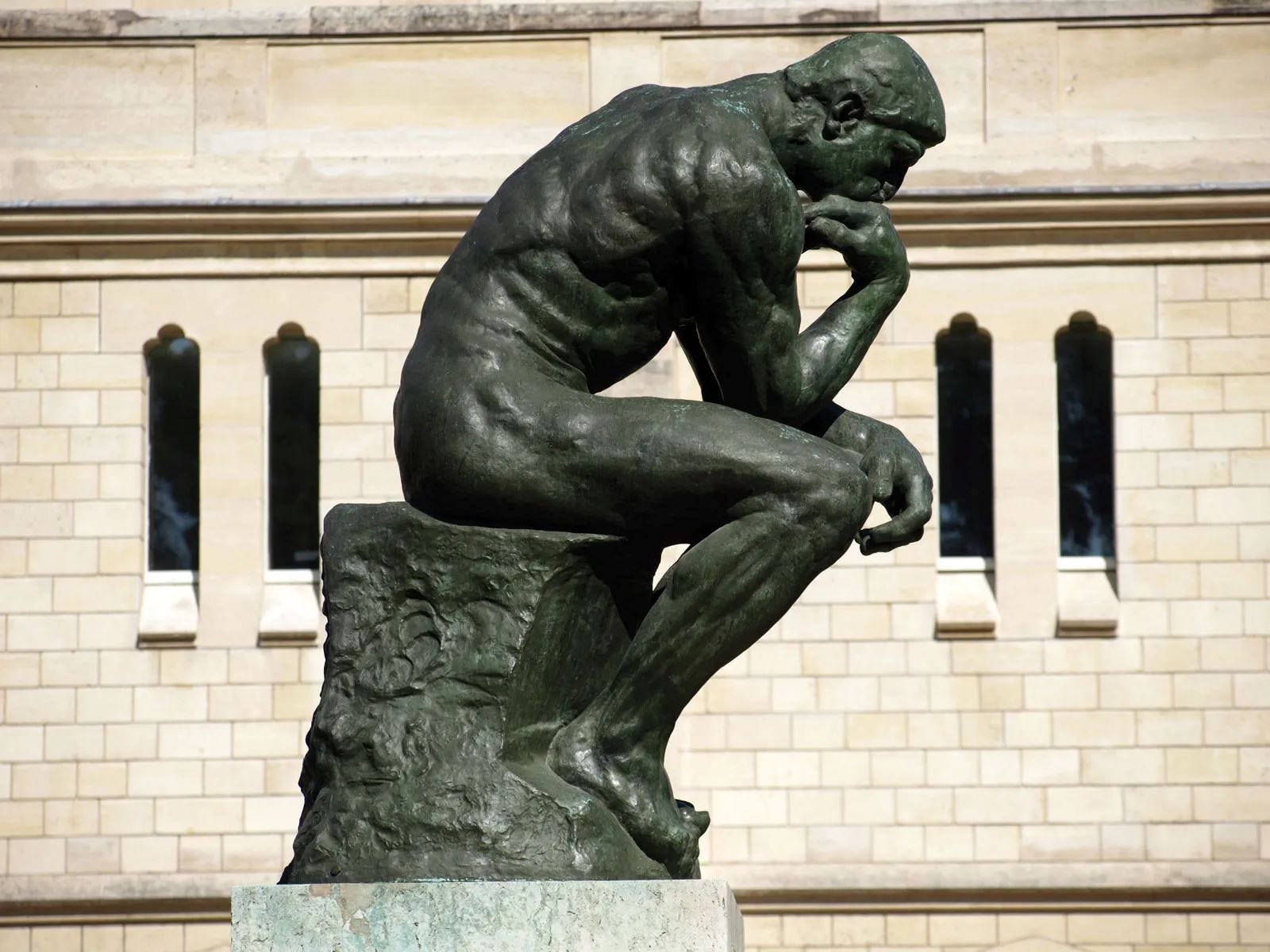
For many years, I have been fascinated by Immanuel Kant’s idea of “nonage”. Kant wrote of the condition he called “nonage”, or an extended period of elected immaturity, saying:
“Laziness and cowardice are the reasons why such a large part of mankind gladly remain minors all their lives, long after nature has freed them from external guidance… It is so comfortable to be a minor. If I have a book that thinks for me, a pastor who acts as my conscience, a physician who prescribes my diet, and so on–then I have no need to exert myself. I have no need to think, if only I can pay; others will take care of that disagreeable business for me.”
Just this morning, I commented that kids today are taught that the act of "activism", in and of itself, is a social good. What they are not taught is that it isn't the act that is a social good or social evil, it is that which they are performing activism in support or opposition that is either good or evil. I think this is why you see so many of these "protesters" at these events who have no idea what they are protesting.
We have so many young radical politicians whose radicalism seems to be focused in being radically wrong – so is it the fact that they are young, or is there something else at play here?
I did a little intellectual inquiry of my own, and here is what I found.
Philosophers through the ages have grappled with the interplay of chronological age, maturity, and reasoning, consistently concluding that wisdom and rational capacity transcend mere years. From Plato to modern thinkers like Hannah Arendt, the consensus is clear: maturity and the ability to reason depend on experience, education, and critical engagement, not just the passage of time. This insight challenges simplistic assumptions about age and offers a nuanced view of human development relevant to today’s debates on wisdom and decision-making. It would seem that time is assumed to be an avatar for the three critical aspects of intellect - experience, education, and critical engagement.
In The Republic, Plato argued that wisdom matures through rigorous education and life experience, not automatically with age. He envisioned the philosopher-king reaching peak reasoning around age 50, after decades of philosophical training. For Plato, maturity required disciplined dialectic, not just growing older. Similarly, Aristotle, in Nicomachean Ethics, tied maturity to phronesis—practical wisdom honed through experience. He noted that while young people may possess intellectual potential, they often lack the seasoned judgment of their elders, though he acknowledged individual variation in reasoning ability.
John Locke, in An Essay Concerning Human Understanding, viewed the mind as a tabula rasa, shaped by environment and education. For Locke, critical reflection, not age, defined maturity, achievable at different rates based on one’s experiences. Immanuel Kant echoed this in Critique of Pure Reason and “What is Enlightenment?”, where he defined maturity as rational autonomy—daring to use one’s reason independently (sapere aude). For Kant, questioning authority marked true intellectual growth, regardless of age.
Jean-Jacques Rousseau, in Emile, or On Education, emphasized developmental stages, arguing that abstract reasoning emerges in adolescence. Forcing complex thought too early, he warned, could stifle natural growth. Maturity, for Rousseau, required education tailored to a child’s readiness, not just their years. John Stuart Mill, in On Liberty, further stressed that reasoning matures through exposure to diverse ideas and open debate. He believed intellectual maturity could emerge at any age, depending on one’s engagement with critical thinking.
Simone de Beauvoir, in The Coming of Age, challenged societal stereotypes about aging and reasoning. She argued that older individuals can retain sharp reasoning if they stay engaged, while younger people may lack maturity despite intellectual promise, depending on their experiences. Similarly, Hannah Arendt, in The Life of the Mind, viewed reasoning as an active process of reflection and world engagement, not tied to age. For Arendt, maturity meant critically assessing one’s actions and their consequences, achievable across the lifespan.
These philosophers highlight common themes: experience trumps age, individual variation matters, and societal factors shape development. Plato and Aristotle emphasized the role of experience in cultivating wisdom, while Locke and Kant focused on critical reflection as the cornerstone of maturity. Rousseau’s stage-based approach contrasts with Mill’s emphasis on intellectual freedom, yet both recognize that reasoning develops unevenly. Beauvoir and Arendt underscore that societal expectations and personal engagement, not just years, determine rational capacity.
This philosophical perspective has profound implications. In today’s polarized world, we often equate youth with impulsiveness or age with wisdom, yet these thinkers caution against such assumptions. A young person immersed in critical debate, as Mill advocated, may reason more maturely than an older individual stuck in rigid habits. Conversely, as Beauvoir noted, older adults can remain intellectually vibrant through active engagement. Society must foster environments—through education, open discourse, and opportunity—that nurture reasoning across all ages.
Example of adolescent confusion: Young man wearing a “Che lives!” T-shirt also wearing a beret sporting a “Free Tibet!” pin.
Age segregated education may be valuable until post-adolescence. However, exposure to non-age related experiential learning after, say, age 15 bolsters developmental maturity. My senior year in high school ('68), having satisfied academic requirements, I took electronics, auto shop, machine shop and stagecraft (my dad taught woodworking at home). That year, the eleven previous grades began to make sense. As an adult, I have met far too many 'papered' knuckleheads.