
Wilsonian Technocracy and Scientific Management
President Biden is employing a political version of a 19th century management theory called Taylorism.

I must have been blessed with psychic foresight.
Actually, nothing could be farther from the truth as nothing this administration is doing is anything less than predictable, the only thing surprising is how brazenly they do it.
Two days ago, I wrote:
"We live in an age of malignant technocracy where the technocrats are wrong about just everything but are protected by a government Leviathan that has the power to silence, punish and destroy those who disagree. Their power is so overwhelming that they can turn a lie into the truth and the truth into a lie, success into failure and failure into success."
This is Biden using the power of the technocratic agencies within the federal government to usurp our elected government, proving that they believe anybody they call an "expert" and anything they call "science" trumps the Constitution.
Back in December of last year, I wrote this about the coming technocracy:
“If you haven’t figured it out by now, progressives have little interest in constitutional governance – or public health – as demonstrated by how they continue to break the pandemic related dictates they enforce on people who do not agree with them.
Know your place serf. The rules are for thee, not for me.
Progressives have no interest in anything that doesn’t give them more power – they just want to rule. That’s it. Bottom line. They just want power over as many people as they can grab…
And the hell of it is, they aren’t even trying to hide it anymore. The have adopted the “try and stop me” attitude that was so prevalent during the Obama years.
Public health “emergencies” create a new opportunity for technocratic rule. Technocratic rule is based on the edicts of experts, essentially creating a superior class of technocrats controlled by dictators at the top. As long as the technocrats please their masters, they are awarded with status, influence, power and position within the technocracy.
From the writings of H.G. Wells to F.A. Hayek to Ayn Rand, we were warned about this very thing.”
Life is not designed to be easy or efficient. If it was, it wouldn’t be worth living. Freedom is also messy. Technocrats hate messy - that is why they will forever try to pound the square peg of individualism into the round hole of conformity - and also where they find common cause with communists.
Throughout history, philosophers have sought to design the “optimum” society. Since many of the early philosophers were scientists, logicians and mathematicians, many from the age of Plato – and even into the 17th century – tried to conceptualize societies that could exist with mathematical efficiency and precision – Hobbes’ society in Leviathan was based on a geometric proof because mathematics was seen as a “pure” science and the ultimate in Nature’s logic, even more so than religion (thus providing the reason for the ongoing conflicts between scientists and religion).
Man sought to create a perfect order out of what they perceived as chaos.
Progressives brought this idea forward in the late 1800’s as the industrial revolution was beginning in earnest in America. Leading “intellectuals” also shaped the progressive mentality.
In “Dynamic Sociology” (1883) Lester Frank Ward laid out the philosophical foundations of the Progressive movement and attacked the laissez-faire policies advocated by Herbert Spencer and William Graham Sumner. In The Theory of the Leisure Class (1899), Thorstein Veblen attacked the “conspicuous consumption” of the wealthy. Educator John Dewey emphasized a child-centered philosophy of pedagogy, known as progressive education, which affected schoolrooms for three generations. Many “progressives” like Teddy Roosevelt and Woodrow Wilson adopted and tried to adapt the “scientific management” theories of Fredrick Winslow Taylor to society and government.
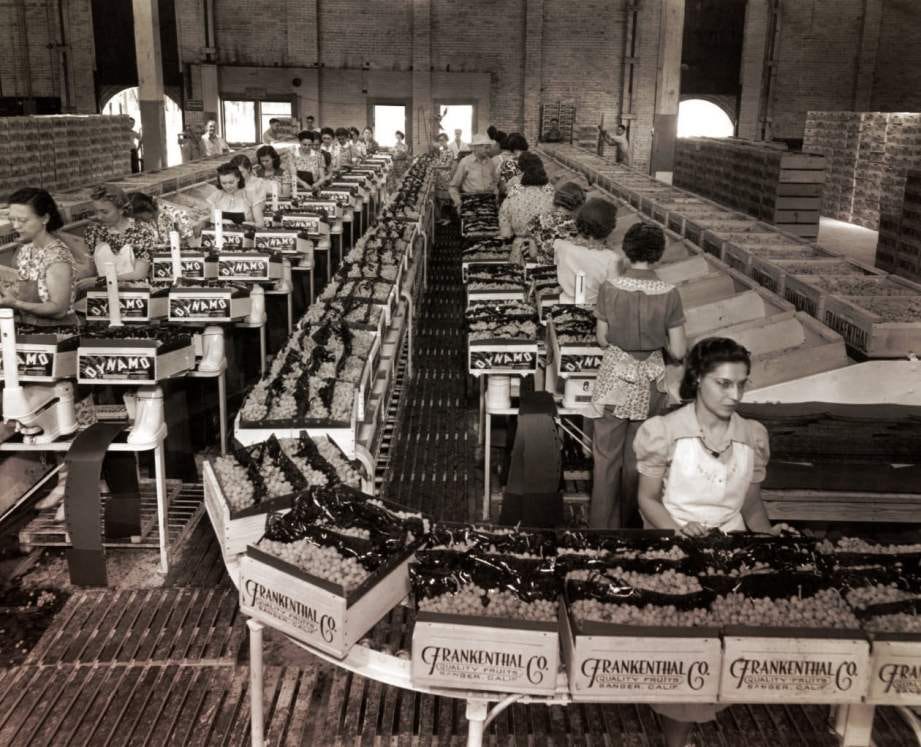
So much of today’s leftist politics are rooted in those same “scientific management” theories put forward by Taylor in the late 1800’s. Taylor was a mechanical engineer and his focus, like that of the philosopher/mathematicians of history (like Thomas Hobbes), was to create precision and efficiency in pursuit of the goal of order and productivity. Taylor thought the only solution was to be found in transferring control from workers to management. He set out to increase the distinction between mental (planning the work) and manual labor (executing the work). He believed that detailed plans specifying the job, and how it was to be done, were to be formulated by management and communicated to the workers and had very precise ideas about how to introduce his system:
“It is only through enforced standardization of methods, enforced adoption of the best implements and working conditions, and enforced cooperation that this faster work can be assured. And the duty of enforcing the adoption of standards and enforcing this cooperation rests with management alone.”
Taylor thought workers to be incapable of understanding what they were doing and even proposed that this was true even for very simple tasks. In his book, The Principles of Scientific Management, Taylor writes:
“…the science of handling pig-iron is so great and amounts to so much that it is impossible for the man who is best suited for this type of work to understand the principles of this science, or even work in accordance of these principles without the aid of a man better educated than he is.”
Taylor’s theories (called Taylorism) have a limiting factor that prevents this type of management practice from being successful – that limit was effectively eliminated in the self-managed work teams of the Toyota Production System – which are the antithesis of Taylor’s model. While Taylor’s work was the precursor to processes like the Toyota Production System, TPS is different in significant ways. Toyota’s system added a degree of respect (verging on reverence) for the individual and unlike Taylor, recognized that worker education and advancement goes hand in hand with defined “standard work” processes and productivity. The “progressives” adopted only Taylor’s “command and control” philosophies in government and governance and left out the inconvenient individual focus and “productivity” aspects that TPS recognizes are necessary.
Progressivism is advertised as forward looking and visionary. While its rhetoric may well be – in application it is quite regressive and reactionary, adopting none of the modern management theories that focus on the liberation of the mind of the worker rather than sentencing them to be mindlessly changed to a task defined by “experts”.
Where business and industry have learned to exalt the individual, “progressivism” continues to try to force people into a political version of Taylorism, a forced equality by lowest common denominator.
Somewhat ironically, “progressivism” is solidly anchored in the past rather than the future (even the name of the ideology is contradictory!).
I firmly believe an overwhelming majority of today's Progressives, only identify as such because they like the sound of it, or what you state is the advertised version. Forward looking and visionary, while in practice, it is anything but. These "low information" Progressives are exactly as Taylor described those handling the pig iron. they are for all intents and purposes, the useful idiots the Left requires to implement its insane ideas.
From 2016 to 2020, we witnessed Reed Pilling, #Walkaway, and even now, many that identify as Democrat are resisting falling in line with the ever authoritarian Progressives that have pushed Liberals aside in favor of the woke, antifascist fascists. Will it be enough? That remains to be seen, but from 2008 to '16, the absolute fawning over Soetero is missing with the *sterisk administration. We really need to offer a solid alternative to those uncomfortable with BLM activism, woke radicalization and the do as I say, not as I do Progressive elite. Just not sure who or what that is beyond simple conservative values. Something missing in most of the GOP.