
When Progress Stops: The Eloi Problem
What if Spartacus had a Piper Cub AND the Morlocks were bitten by the woke mind virus?

Sometimes things seem worse simply because they stopped getting better.
Almost every new thing, as it ages, tends to experience a period of slower improvement or advancement, or it veers off course and misses its target entirely. When the process or product veers or plateaus, our perception of that stasis is that the thing is worse—when it may not actually be—but often, let’s be honest, it is.
There’s an expectation baked into modern life: a continuing rate of change, an ever-upward trajectory where satisfaction increases like some sort of dopamine stock portfolio. But that isn’t always true, and sometimes the outcome doesn’t just fail to satisfy—it face-plants spectacularly.
Entertainment is the classical example of what I’m talking about. Sure, the exploding number of Internet streaming sources and the rapid adoption of platforms like Hulu, Paramount+, YouTube, Pluto, and Sling created a massive demand hole for content. When Covid transformed cocooning into a national—hell, global—sport, that demand hole became a black hole of content that an utterly unprepared industry got sucked into like a wayward asteroid. Studios scrambled. Writers’ rooms became content factories. The machine needed feeding, and feed it they did, quality be damned.
But that’s only part of the story.
I think the bigger part was this all coincided with woke and cancel culture spreading faster than Covid itself—and with considerably less regard for social distancing.
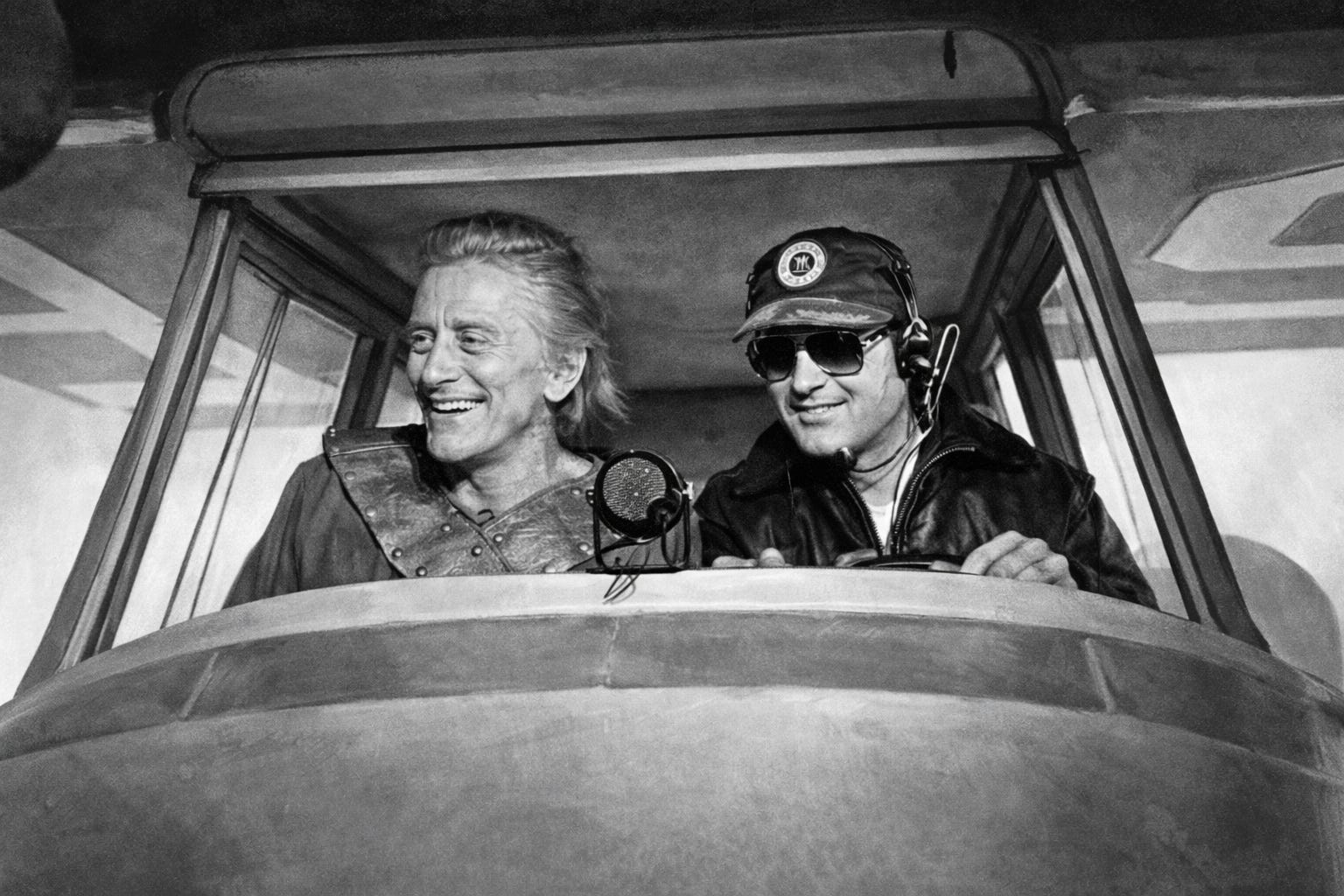
I think of this in terms of the old SNL skit: “What if Spartacus Had a Piper Cub.”
Stay with me here.
So, what if in H.G. Wells’ The Time Machine, rather than the Morlocks being the bad guys—running the world from their subterranean lairs and feeding on the innocent, flower-field-frolicking Eloi—the Morlocks were suddenly bitten by the woke mind virus? Picture this: they start begging the Eloi to forgive them for all those dinner invitations where the Eloi were, awkwardly, the main course. “We’re so, so sorry,” the Morlocks wail, wringing their pale, underground-dwelling hands. “We should have done better. We will do better.”
The Morlocks then pay reparations by ceding control of the entire subterranean infrastructure to the Eloi. After all, the Morlocks’ hands were dirty—literally and metaphorically—from doing what they saw as necessary to survive. As a gesture of fostering “diversity” and “inclusion,” the Morlocks become vegans (kale smoothies all around) and magnanimously tell the Eloi they can start managing and maintaining all the complex machinery that keeps the world functioning.
Problem being, the Eloi are grossly unprepared and unskilled in the tasks at which the Morlocks excelled. The Morlocks had done these jobs for centuries—literally long enough to evolve into beings mentally and physically suited for those precise tasks. But the Eloi? They’ve been practicing interpretive dance in sunlit meadows. Within months, the operation of the world devolves into a big, steaming pile of fecal matter. Not because the Eloi are bad people—they’re lovely, really, especially when served with fava beans and a nice Chianti—but because they’re simply bad at running the world.
It isn’t difficult to understand how, in this scenario, that would be catastrophically true.
My question is this: why would we not expect movies and entertainment—everything, really—to get worse when society replaced the movie Morlocks—the ones who knew how to make blockbuster Top Gun: Maverick movies—with the far less prepared Eloi who only know how to make Emilia Pérez movies? You know, films about transgender Mexican drug lords played by Karla Sofía Gascón, who is himself trans, that are going to have—how shall we say—an extremely limited appeal at the box office.
I’m not saying these stories don’t deserve to be told, but when they become the only stories being greenlit because the algorithm demands “representation” over actual entertainment a majority of America wants to watch, Houston, we have a problem.
The studios didn’t suddenly forget how to make entertaining movies. They just handed the keys to people selected for reasons other than their proven ability to consistently deliver what audiences actually want to watch. It’s the cinematic equivalent of putting someone who’s never changed a tire in charge of Formula One pit crews because they wrote a really inspiring essay about transportation equity.
And here’s the kicker: it isn’t really the fault of the Eloi. The Morlocks caused it all. They opened the gates, handed over the controls, and walked away drinking their iced Mocha Macha from Starbucks, feeling morally superior while the machinery ground to a halt. Now we’re all sitting in the dark—or rather, staring at our screens—wondering why nothing works anymore and why every new release feels like a lecture disguised as entertainment.
The cruel irony? Everyone’s worse off. The Eloi are stressed and failing. The Morlocks are resentful and sidelined.
And the rest of us? We’re just trying to find something decent to watch.
Or WE could just change our habits to Ayn Rand and C.S. Lewis.
TV time in our family has shrunk to watching the weather person at 0530 forecast the day and morrow.