
When Everything Becomes a Right, Nothing Is
Unable to amend the Constitution, the modern left redefines policy preferences as rights—eroding the very concept the Founders sought to protect.

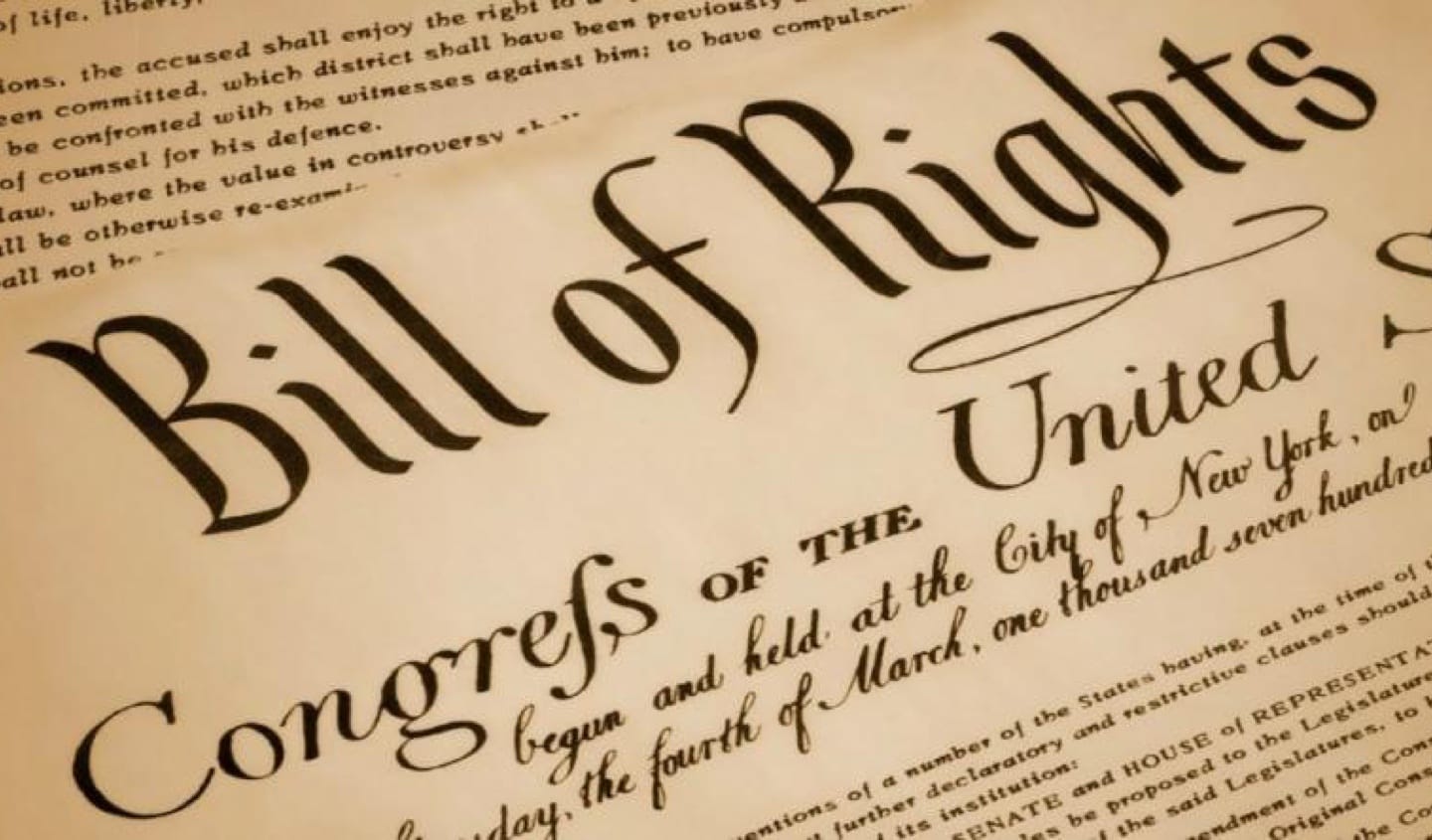
Democrats across America have largely abandoned attempts to change the Constitution through its prescribed amendment process. Since the ratification of the Bill of Rights in 1791, the Constitution has been amended only seventeen times, with the most recent change ratified in May 1992. Even the proposed Equal Rights Amendment of the 1970s failed to secure sufficient support for ratification—not even Biden trying to simply “declare” it ratified could change that. I must give credit where credit is due, Biden’s surprise declaration embarrassed a great many Democrats, most chose to ignore it and hope that nobody noticed.
Unable—or unwilling—to modify the Constitution through the deliberately demanding process designed by the Founders, the left has instead pursued a different strategy: redefining policy preferences as “rights,” thereby diluting the very concept of rights themselves.
Today, nearly every desired policy outcome is labeled a right. A “living wage” is a right. Home ownership is a right (well, it was back in the 90’s anyway). Protection from life’s risks is a right. Immigration is a right. Ironically, the same political coalition that expands the definition of rights without limit routinely opposes those rights explicitly enumerated in the Constitution—free speech, gun ownership, and the free exercise of religion.
Nowhere is this contradiction more apparent than in the debate over health care.
Fifteen years after the passage of Obamacare, Democrats still insist that government-delivered, taxpayer-funded health care is a right.
But is it? More fundamentally, what is a right—and where do rights come from?
A right can generally be defined as that which is due to a person by law, tradition, or nature. The American answer to this question is found in the Declaration of Independence, which states:
“We hold these truths to be self-evident, that all men are created equal, that they are endowed by their Creator with certain unalienable Rights… That to secure these rights, Governments are instituted among Men, deriving their just powers from the consent of the governed.”
The distinction of rights “endowed by their Creator” is critical. Rights preexist government. Government exists to protect them.
Conservatives traditionally understand rights through several closely related concepts.
Natural rights are universal and binding, much like the laws of nature themselves. John Locke argued that in the “state of nature,” before organized society, humans were inherently free, equal, and independent, and that natural law prohibited harming another’s life, liberty, health, or property.
Inalienable rights cannot be revoked by any power or surrendered by the individual.
As former Attorney General Ramsey Clark once put it, “A right is not what someone gives you; it’s what no one can take from you.”
God-given rights originate from a perfect source rather than an imperfect institution. Scripture recognized rights to life, due process, and inheritance long before modern governments existed.
Finally, self-evident rights are so obvious that they require no elaborate justification. Jefferson intentionally bypassed philosophical proofs by asserting their inherent clarity.
This framework directly contradicts the modern progressive view that rights originate with government. Reread the Declaration: governments are instituted to secure rights, not to create them. The notion of a “living Constitution” that can be reinterpreted to manufacture new rights through legislation does not produce rights at all—it produces social constructs.
Social constructs are inherently political. Over the past half-century, progressives have increasingly embraced the idea that rights should evolve with societal preferences and that government has the authority to define, expand, and delegate them. But a right delegated by an imperfect entity—government—is necessarily imperfect. A right flowing from a perfect source is not.
This distinction provides a simple test: exercising a true right does not infringe upon the rights of others. Life, liberty, and the pursuit of happiness can be exercised universally and simultaneously without coercion. No one must be compelled to surrender their liberty for another person to possess theirs.
Obamacare fails this test outright. It always has. For it to function, one group of citizens must be penalized, taxed, and constrained so that another group may receive “affordable” care. Its operation depends on compulsory participation, the distortion of risk through regulation, and involuntary wealth transfer. That is not a right; it is a legislatively imposed social program.
Progressives often respond that life, liberty, and the pursuit of happiness are meaningless without health, and that the Constitution’s charge to “provide for the common welfare” authorizes such intervention. But the Founding documents do not guarantee outcomes. They protect the conditions under which individuals may pursue them freely. There is no constitutional basis for a mandatory, intrusive system that grants one group the “right” to extract resources from another under force of law.
Social constructs are inherently mutable, subject to political fashion and shifting power. True rights are not. The Founders anticipated the need for change in governance, which is why they provided an amendment process—but they also understood the danger of rapidly eroding fundamental liberties. That is why change was made difficult, deliberative, and dependent on broad consensus.
We should therefore be deeply skeptical whenever something new is declared a “right.” It is one of the most consequential words in our civic vocabulary—and treating it casually threatens the very liberties it was meant to protect.
A great piece. Thank you.
Rights are those activities that do not require time, effort, money, or property from another party to result in their fulfillment. Such requirements would disqualify an activity from the lawful designation of (a) right(s) In addition, the exercise of any legitimate right does not impose upon another party's rights or the exercise thereof, any burden, nor cause demonstrated harm to any party who is in the lawful pursuit of their own activities, otherwise, it is not a right.
No one needs to approve of, benefit by, or agree with the exercise of any rights, nor, by registering their objections, have any expectation of recourse against the exercise of any right(s). The rights enumerated in the United States Constitution and the Bill of Rights are not intended to exclude the existence of other rights, nor their free exercise, such unspecified rights to be determined by the whole of the people, or the states, respectively. The entirety of the argument concerning rights may be resolved by requiring a demonstrated injury to one or more parties or a general deleterious effect upon the nation as a whole in order to lawfully infringe on activities in question.