
Two Days Over Iran
Chinese missiles failed, Russian air defenses collapsed, and American air power reminded the world why deterrence still works.

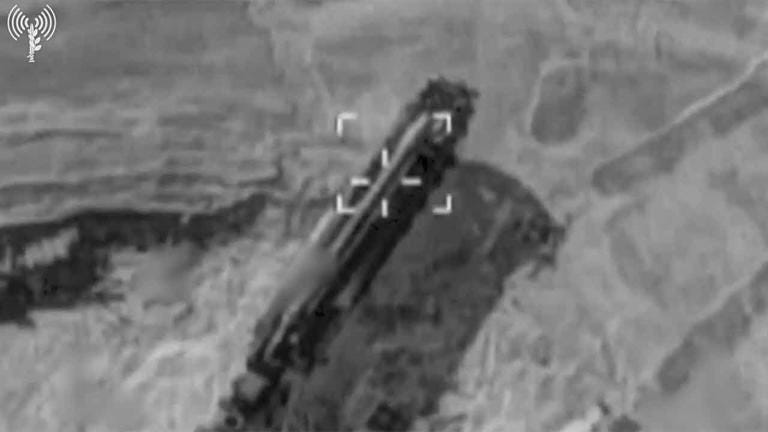
China sold Iran its latest CM-302 supersonic anti-ship missiles. They didn’t work. When Iranian forces launched them at U.S. Navy warships, the missiles either missed outright or were intercepted before they could reach their targets. The much-touted Chinese HQ-9 and sophisticate Russian air-defense systems guarding Iranian bases proved equally ineffective. Most Iranian aircraft—including helicopters—were destroyed on the ground before they ever became a factor in the fight. Those that managed to take off did not last long. Pilots flying American-designed F-35s and upgraded F-16s quickly dispatched them, recording the first air-to-air victories of the conflict and demonstrating once again that Western aircraft, training, and integrated command systems remain far ahead of what America’s adversaries can field.
Within roughly forty-eight hours, the United States and Israel had effectively established control of Iranian airspace. In modern warfare, that development is decisive. Once a military loses control of the sky, it loses the ability to move forces safely, defend infrastructure, or protect command networks. Air superiority allows the victor to dismantle an opponent methodically—striking missile sites, radar installations, supply depots, and bases with increasing precision and diminishing risk. Reports from the region suggest exactly that pattern. As American and Israeli sorties increased, Iranian responses became more sporadic and disorganized, and the regime’s ability to project military power began eroding almost immediately.
The geopolitical consequences were immediate. Chinese probing flights around Taiwan—which had been occurring with increasing frequency in recent months—reportedly halted. Beijing had grown comfortable testing the limits of American patience, probing Taiwan’s air defense zone almost daily in an effort to normalize pressure. The spectacle of a regional military infrastructure being dismantled in a matter of days appears to have altered that calculation. Deterrence, long dismissed by some analysts as an outdated Cold War concept, turns out to work quite well when it is backed by credible demonstrations of capability.
Elsewhere, the psychological effects are already visible. Even media outlets rarely inclined toward pro-American narratives have begun describing the shift in countries aligned with authoritarian regimes. NPR correspondent Eyder Peralta recently described the atmosphere in Venezuela—now that Nicolás Maduro sits in an American jail—as “surreal,” reporting that ordinary citizens say it feels as though a great weight has been lifted from their lives. Cuba may soon face a similar reckoning. The regime in Havana has long depended on outside resources and political patronage to sustain itself. Without those supports, the structural weaknesses of the system become much harder to conceal.
Iran’s weakening position carries broader implications because Tehran occupies a key role in the informal alignment between Russia and China. Iranian military cooperation and energy exports have given Moscow strategic flexibility while providing Beijing with a reliable partner in the Middle East. A diminished Iran complicates that arrangement and forces both powers to reconsider the durability of the regimes on which they have relied. Strategic shocks rarely remain confined to one region. They ripple outward, reshaping calculations in places as distant as Ukraine and the South China Sea.
These developments raise an uncomfortable question: how many crises might have been avoided if the credibility of American power had been demonstrated earlier? For three decades after the first Gulf War, American military policy often emphasized restraint, incremental escalation, and restrictive rules of engagement designed to minimize political risk. In Iraq and Afghanistan, U.S. forces frequently operated under conditions that prevented them from exploiting their overwhelming advantages to achieve decisive outcomes. Wars became prolonged, objectives blurred, and deterrence weakened. Our adversaries did not necessarily grow stronger, but they did grow more confident that the United States lacked the will to finish what it started.
What appears different now is not simply the quality of American weapons or training—both of which remain unmatched—but the clarity of leadership. When a president signals that commitments will be enforced and military commanders are given authority to prosecute operations decisively, the strategic environment changes quickly. Allies gain confidence. Adversaries reassess their assumptions. The tempo of events accelerates.
It would be premature to declare the conflict with Iran finished or even fully successful. Wars rarely unfold exactly as planners expect. Yet the trajectory is unmistakable. Iranian capabilities appear to be degrading rapidly while American and Israeli forces operate with increasing freedom of action. The imbalance suggests the regime’s ability to sustain meaningful resistance may collapse sooner rather than later.
History offers a useful comparison. Rome did not dominate the Mediterranean world because it endlessly negotiated with its rivals. It achieved dominance because the effectiveness of its legions was widely understood. Roman soldiers combined discipline, engineering skill, logistical sophistication, and tactical innovation in ways their adversaries could rarely match. The resulting Pax Romana was not simply diplomacy; it was the product of a widely accepted reality that resistance to Roman power was futile.
The United States now faces a similar opportunity. What the world has witnessed is not merely another episode of “shock and awe” but a reminder of the scale and speed with which American power can still be applied. For adversaries accustomed to assuming that Washington lacked the will to act decisively, the message is unmistakable. No rival—whether Russia, China, or North Korea—can safely assume that American commitments are empty.
Yet the ultimate foundation of American strength lies deeper than military capability. Weapons systems and aircraft are instruments, not causes. The true source of American power is the political civilization that produced them—a civilization grounded in liberty, law, and the belief that power should ultimately serve human freedom rather than tyranny. When that civilization acts with confidence and clarity, its influence extends far beyond the battlefield. It restores order, strengthens deterrence, and reminds the world that the defense of liberty is not merely an aspiration but a force capable of shaping history.
Given all of this, the most remarkable reaction may be the panic now visible among American Democrats at the prospect that the United States could be both dominant and good at the same time.
Insightful, eloquent, and inspiring.
What you described may prove to be Trump's greatest accomplishment as POTUS: Undoing The One's fundamental transformation of our nation. No more leading from behind.