
Thinking About Thinking
It's about learning the basics.

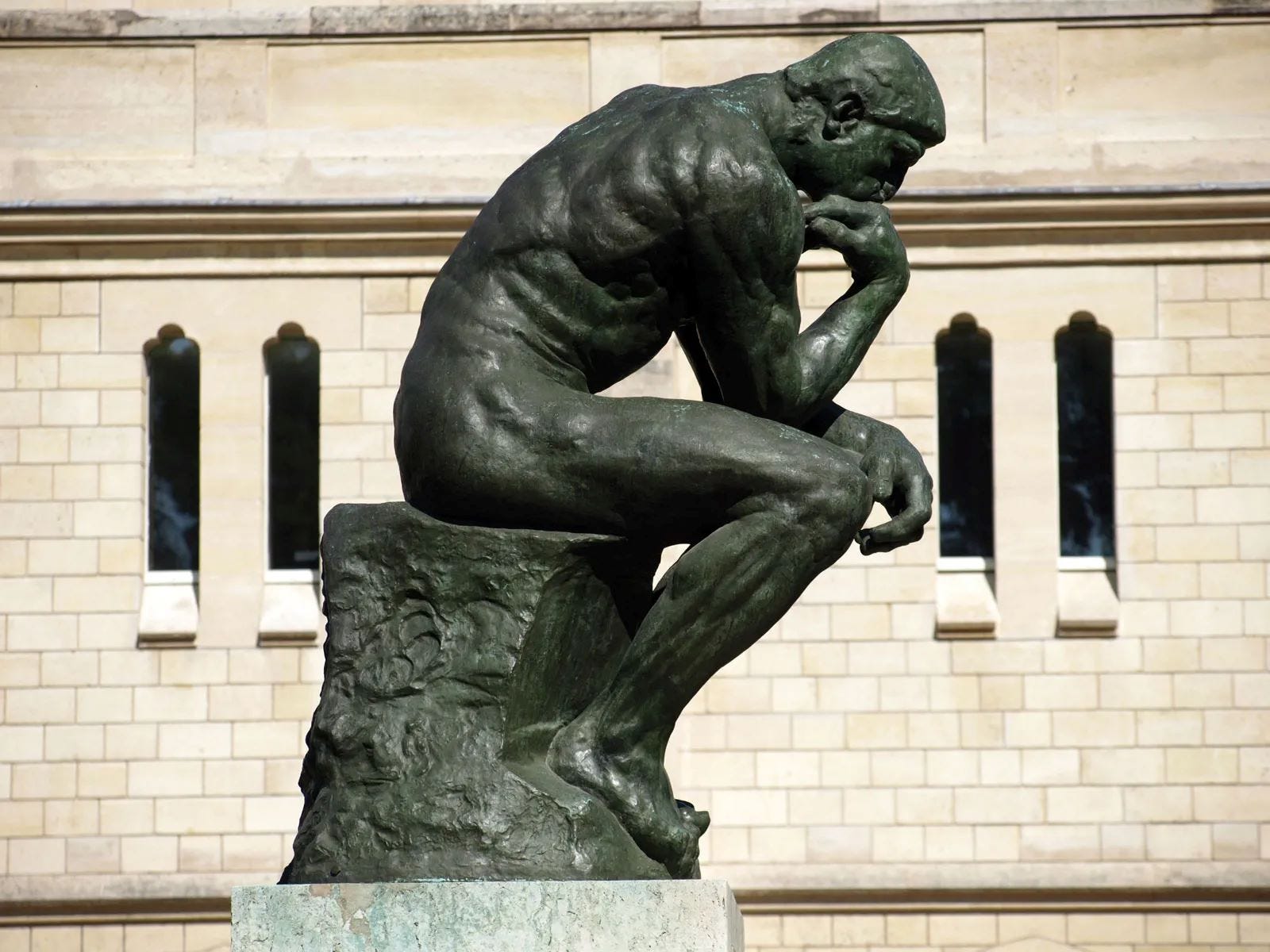
"Your problem is that you always think you are right and you don't want to hear anything that goes against what you believe. How can you be sure you are right?"
That's sort of a condensed version of an email I received today about one of my posts.
I replied that I'm not always right and I do use opposing opinions to form my position. I read left leaning and right leaning articles about any issue and try to logically reduce them to competing ideas and then try to judge which is the most likely (because we usually are dealing with what the possible outcome of something will be rather than dealing with actual hard data.
Mark Twain said:
"In religion and politics people’s beliefs and convictions are in almost every case gotten at second-hand, and without examination, from authorities who have not themselves examined the questions at issue but have taken them at second-hand from other non-examiners, whose opinions about them were not worth a brass farthing."
I know it is an oversimplification, but I try to strip everything down to basics.
For example:
I know that fire burns and water wets. Always have always will.
I know that sometimes it is hot, sometimes it is cold - because it has been that way for hundreds of thousands of years - sometimes hotter, sometimes colder - we know via objective evidence.
I know that even if I go into my wife's closet and dress in her clothes, from skivvies to makeup (not that I have ever done that), I know that when I look down, the old twig and berries are going to be there, so I'm not a woman just because I put on a disguise.
I know my mind is powerful, but it can conceive things my body cannot achieve. Even when I was in my prime, I was a pretty good football, basketball, baseball, and softball player - I had a few great games, but I know I would never be a professional athlete, no matter how much I wanted it.
So I know that a mind cannot change a man to a woman or a woman to a man.
I've spent a lifetime refining my mind and how I test things for bullsh*t, and I think I'm not too bad at it. I learn from my mistakes and try not to jump to conclusions.
I guess what I am saying is that I have trained my mind to follow where evidence leads. Paring complexity down to basics helps manage the process of learning the facts.
I run into people all the time who fall victim to two major logical fallacies - the genetic fallacy where they believe or disbelieve information based solely on the source and the appeal from authority where people believe something because someone they see as an authority says it.
I've learned to get multiple sources and never believe anyone who presents as an authority without proof of that authority. If we learned anything during the Covid pandemic, it is that untruths are weapons and "authority" is not always dispositive.
I guess the most important thing I have learned is that you need to be prepared to be wrong.
As Mulder and Scully believed, the truth is out there - it is just that often it takes a bit of bother to find it. Some people are more comfortable not knowing.
Sometimes I think I think too much. But in all that thinking I have never had to talk myself into believing something that simply didn't match the evidence given, or new information that ran counter to what I tended to believe.
From my own experience as a professor of politics in higher education what the social science faculties aim to impart to their charges is not unbiased critical thinking but rather critical theory sluiced through very narrow directed channels.