
Therapy of Distance
In the modern world, does distance matter? I think the answer is "yes" - but distance is now measured in time, not miles.

In 1976, the year of America’s bicentennial, Daniel J. Boorstin, the Librarian of Congress and long-time social commentator, gave a series of lectures that were published later that year. I read this collection around 1980 and one of his lectures, the one titled “The Therapy of Distance” stuck with me.
In this lecture Boorstin advanced the idea that geography – specifically the Atlantic Ocean, helped launch “a novel experiment in democracy that grew as the American colonies expanded.”
Interestingly, during the time the colonists were building settlements, the people of Ireland were contemplating independence as well, but being separated by only a few miles of water did not have the advantage three thousand miles of oceans, storms and wind provided the English Colonies in the New World.
Boorstin wrote:
“While Cromwell’s army could master next-door Ireland, neither he nor his successors could effectively assert the power of the English Parliament over the transatlantic Americans. Three thousand miles of ocean accomplished what could not be accomplished by a thousand years of history. The Atlantic Ocean proved a more effective advocate than all the constitutional lawyers of Ireland.”
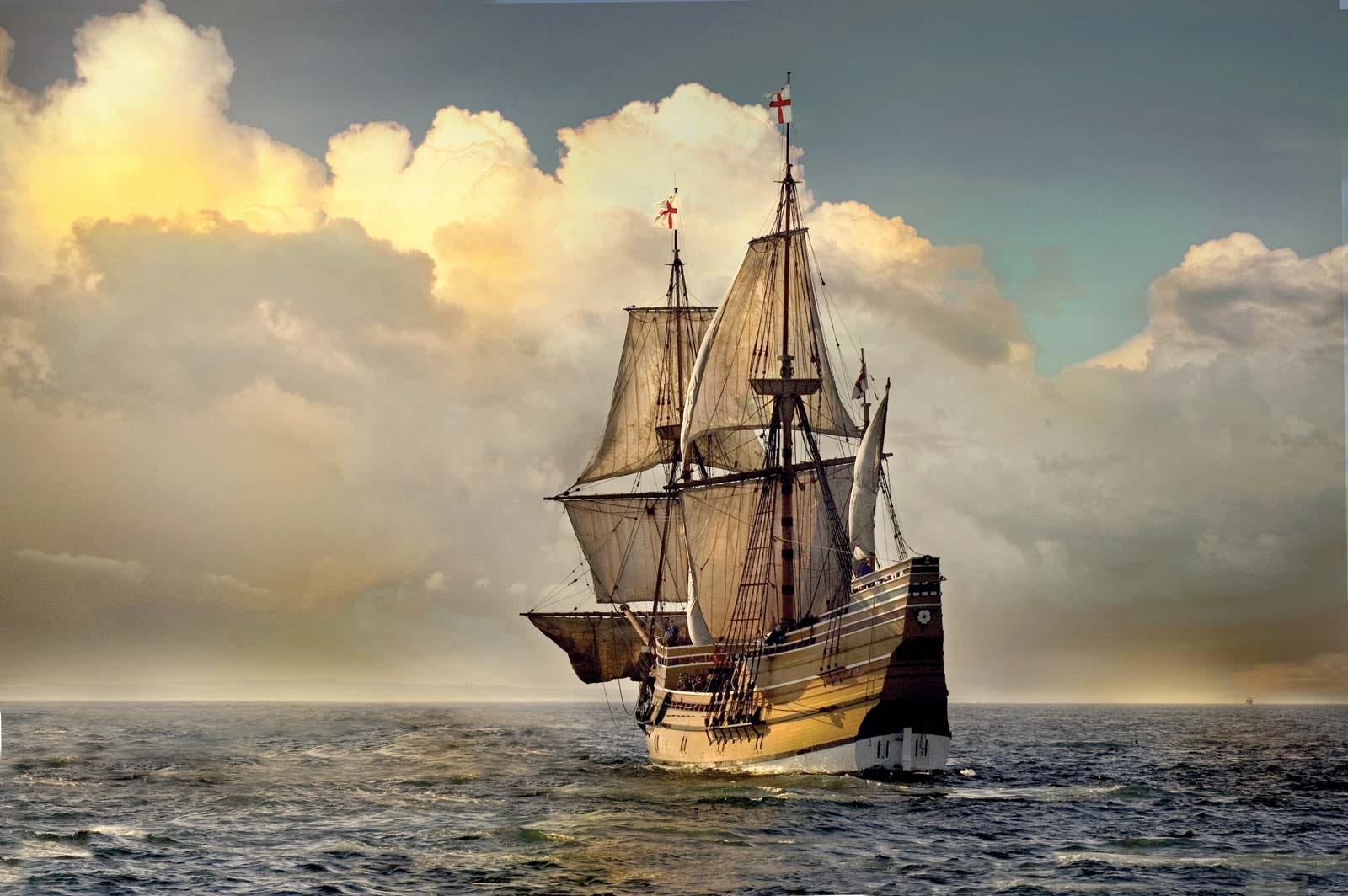
When the Pilgrims landed at Plymouth Rock, they did so by error of navigation and a spate of bad weather. They “had intended to settle at the mouth of the Hudson River, which was still well within the Virginia Company’s northern boundaries.”
But they missed their mark.
Their right “to settle in the New World came from a patent that they had received from the Virginia Company of London, who authorized them to establish ‘a particular plantation’ wherever they wished within the domain of the company.”
If they had landed where intended, they would have had a pre-ordained government, specified in their patent from the Virginia Company and would have had no need for a new instrument of government, which originated in the form of the Mayflower Compact, “the primary document of self-government in the British colonies in North America.”
I was considering this in the context of our modern world and how technology has reduced the impact of physical distance and wondered if distance mattered anymore.
Then I realized “distance” can also be measured in units of time. While we have increased the velocity of our world, there are still some processes that, in comparison, move at glacial speed.
Think of our judicial system.
In the past, court decisions moved slowly through the initial trial, the appeals process and on to the Supreme Court. It was a slow and laborious process in the days when documents traveled from point to point on horseback. The era of planes, trains, automobiles, and the Internet sped document transfer, literally to the speed of light – but the old, constitutionally prescribed processes remained.
It often takes years for a lawsuit to be filed, a state level court rendering a decision and then for that decision to make its way through the appeals process and then to SCOTUS, and then the Black Robes must decide whether to hear it or not.
Democrats have mastered the technique of using that time lag to implement policies. They know that by the time the challenges are completed, even if the final decision does not go their way, they will achieve most, if not all, of their policy objectives.
The distance that prevents defeat of their policies in this case is time.
The therapy of distance is still a thing, it is just the distance is now measured in ticks of a clock instead of time.
If you are interested, the lecture Boorstin gave is here. I highly recommend it, it is well worth a read.
Many of Boorstin's writings are worthy reads. 'The Americans: The colonial experience' in particular reset my perception of why the 'American' experiment succeeded when I first read it years ago. Thx for the reminder.