
The Rorschach Generation
How ideology replaced reasoning and turned education into a pattern-recognition exercise

A Facebook friend shared a post of Michael Rothman’s analysis of Peter Boghossian’s interview with a young student who insisted that America is uniquely, systemically racist. If you do X, the video is here and well worth watching.
I learned of Boghossian when he gained attention for his involvement in the grievance studies affair, where he and others submitted fake academic papers to expose flaws in certain academic fields. Boghossian, being a college professor, a philosopher, and an expert in the Socratic method, walked this student down a Socratic path by asking her simple questions that mirror the framing and process needed to rationally support making such a claim, and he had no answers, not even bad ones. Boghossian proved through his questions that she had not even thought about the subject of racism or why she concluded that America is irredeemably racist—if you can even call where he landed a “conclusion.”
Rothman, who posted the video, got it right when he said it is not opinion, reason, or logic, it is simply ideology: the blind acceptance of a belief that cannot be challenged by evidence.
This phenomenon extends far beyond this single interaction. In 2018, Boghossian, along with James Lindsay and Helen Pluckrose, successfully published absurd papers in peer-reviewed academic journals—including a feminist rewrite of a chapter from Mein Kampf and a study claiming dog parks perpetuate “rape culture.” Their grievance studies hoax exposed how entire academic disciplines had abandoned rigorous inquiry for ideological conformity. The same pattern manifests in our students: opinions held with religious certainty but defended with intellectual vacancy.
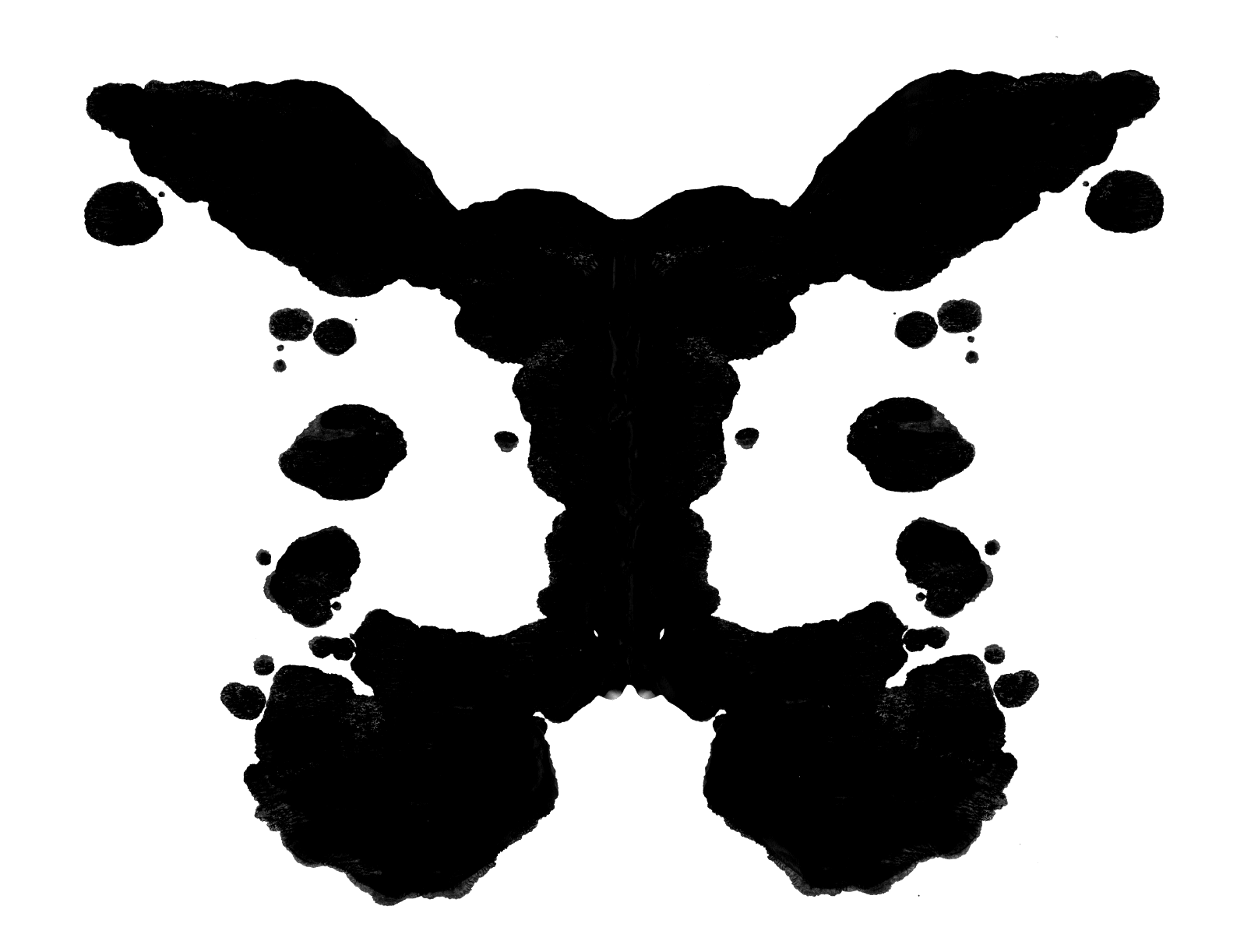
I think so much of what passes for thinking and reason these days is simply a word association exercise or a Rorschach test, where students are taught to recognize patterns and formulate specific thoughts and outcomes based on them. They are not being taught to recognize why they think that ink blot looks like racism to them; they are simply having those ranges of shapes drilled into their rote memory like we used to get drilled in addition, subtraction, multiplication and division tables. We were taught to recognize the form of nine times nine as “81,” could recognize that specific form on sight and could snap it off in an immediate response—without ever doing the mental calculations. It was simply a fact of mathematics on which there was no need to waste processing power.
What we—many of my age went through the memorization drills—experienced was the rational form of committing proven mathematical facts to memory for immediate recall, as compared to what kids experience today. They are subject to the irrational form of the practice, like O’Brien torturing Winston Smith in Orwell’s 1984, not to say 2+2=5, but to believe it.
The distinction matters profoundly. Mathematical facts derive from logical proofs, tested and verified across centuries. When I memorized that 7×8=56, that number represented a verifiable reality I could demonstrate by counting. Today’s ideological memorization operates inversely: conclusions come first, unchallengeable and absolute, with reality forced to conform. Students learn to identify “systemic racism” everywhere—in mathematics, punctuality, objectivity itself—without ever examining whether the framework holds logical or empirical validity.
Jonathan Haidt’s research on moral foundations demonstrates how quickly reasoning becomes post-hoc rationalization. We form gut reactions, then construct justifications afterward. Traditional education once counteracted this tendency by teaching logical frameworks and demanding evidence, but this process has been bastardized by modern ideological education and now instinct is transformed into unquestionable dogma.
It serves to further solidify my thoughts—and this is certainly not original to me—that you can never reason someone out of a position they didn’t reason themselves into in the first place. When belief precedes thought, when conclusions are memorized rather than discovered, rational discourse becomes impossible. If we hold ourselves to be rational, objective minds, we must learn to recognize when an argument is an actual argument and when it is not.
We’re left with a Rorschach generation fluent in accusation but illiterate in argument, certain of their righteousness but incapable of defending it, wielding ideology as both sword and shield against the uncomfortable demands of critical thought.
Never in doubt, and never right.
These kids are in a leaderless cult. Dogma is their language. Grievance is their religion.