
The Minsurrection
We've seen this plot before.

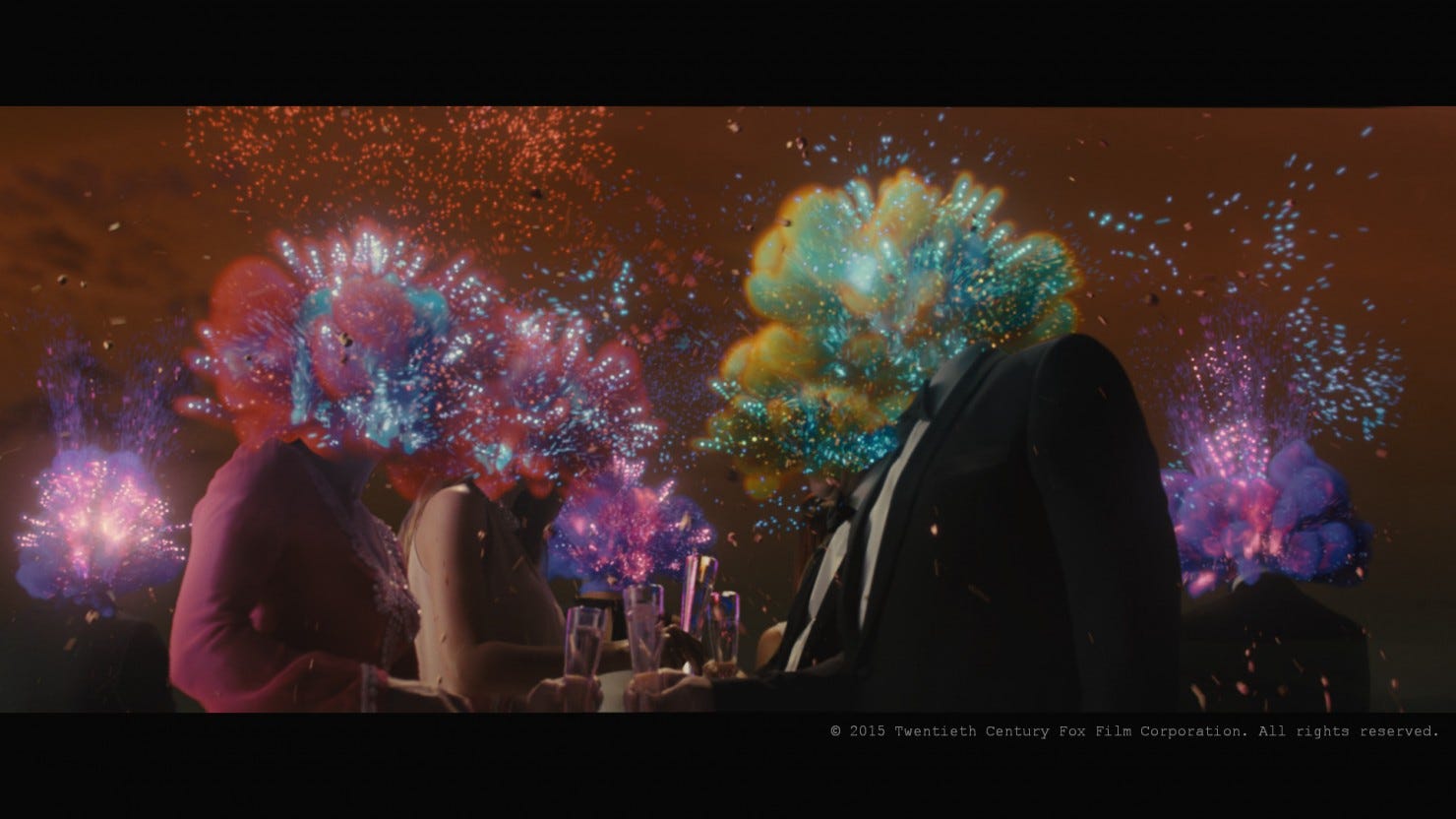
I’m so tired of the Minsurrection up north that my mind started drifting this afternoon. It started making weird connections, so let’s begin our mental journey down the rabbit hole of my mind and imagine a purely hypothetical scenario. Entirely fictional. No resemblance to real people or events should be inferred, except where it feels uncomfortably familiar.
Suppose there is a particular region gripped by unrest. The streets are chaotic, authority is openly defied, and the funding sources behind the turmoil are murky. Dark money is suspected, perhaps funneled through NGOs and shell groups by a globe-trotting billionaire who speaks fluent moral urgency. Call him an eco-savior type. A man who believes the world would be better with fewer people in it. Someone with a famous last name, maybe Alex, maybe Soros, but again, totally fictional.
This billionaire is not just funding disruption. He is underwriting something more ambitious: a kind of mind-altering social virus. Not a literal pathogen, but a psychological one. It strips people of restraint, floods them with righteous fury, and turns them into shock troops convinced their violence is virtuous. Helping him along are a handful of local lieutenants, ambitious climbers promised influence and reward once the billionaire’s vision is realized. Let’s call them Tim, Keith, Jacob, Amy, and Tina. Names chosen at random, of course.
To keep the chaos churning, there is a public moral justification. A church is assaulted. The congregants are denounced as extremists, white supremacists, irredeemables. The accusation becomes the excuse. Leading the charge are activist celebrities and professional agitators, breathlessly explaining that intimidation is not only justified, but necessary. Call them Donnie LeMon, William, and Nekima. The point is not accuracy. The point is permission.
Opposing this madness is a small group of protagonists. Old-fashioned types. Call them Donald, Kristi, and Tom. They are trying, against media hostility and institutional resistance, to restore order before the mind virus spreads completely. They even have a theoretical countermeasure. A kind of antivirus. Something buried deep in the system, dusty and controversial, known as IA1807. If deployed, it would instantly neutralize the shock troops and end the billionaire’s operation. Think of it as a kill switch for manufactured chaos.
Now, nothing quite that dramatic has happened yet. No antivirus has been deployed. No brains have exploded. Which suggests we are still somewhere in the middle of the story.
This week, while watching the situation unfold in Minnesota, I kept having the unsettling feeling that I had seen this plot before. The characters were different. The setting was more Midwestern. The production values were lower. But the structure felt familiar.
And then it hit me. This is the plot of Kingsman: The Secret Service.
Most people remember the first Kingsman film as a slick, foul-mouthed spy romp with tailored suits and weaponized umbrellas. That is how it was sold. That is how it was received. What is less widely acknowledged is that the movie quietly smuggles a deeply conservative argument into theaters full of smug progressives who assumed they were laughing at someone else.
On the surface, the film looks progressive enough. It mocks class snobbery. It caricatures evangelical Christians. The villain sounds like a TED Talk wrapped in a hoodie. But beneath the jokes and hyper-stylized violence is a story about elite contempt for ordinary people, mass manipulation disguised as moral necessity, and the danger of surrendering self-control to systems that promise safety or salvation.
The villain, Richmond Valentine, is not a nationalist or a reactionary. He is a global technocrat. A billionaire visionary who speaks the language of science, climate urgency, and moral obligation while calmly planning to wipe out most of humanity. His argument is familiar: people are the problem, experts are the solution, and consent is an inconvenience when the stakes are high enough. Governments are obsolete. Borders are irrelevant. Democracy is too slow for enlightened management.
This is not a parody of conservatism. It is a send-up of elite progressivism taken to its logical extreme.
Valentine does not persuade the masses. He hacks them. His free SIM cards turn ordinary people into uncontrollable killers by hijacking their brains. When the signal flips on, moral restraint disappears. Neighbors turn on neighbors. Civility collapses in seconds. The message is blunt. Remove self-control and you do not get liberation. You get savagery.
Replace the signal with algorithmic outrage, saturation media, or permanent crisis messaging and the analogy becomes uncomfortable. People are whipped into emotional frenzy, convinced their actions are justified because someone else flipped the switch. The exaggeration is cinematic. The dynamic is not.
The infamous church scene drives this home. It is often described as anti-Christian mockery, but that reading misses the point. The congregation is not evil. They are human. Flawed, loud, imperfect, and ultimately helpless. The horror of the scene is not that they are ridiculous. It is that even people anchored in moral structure can be turned into monsters when something external overrides the will.
The film is not sneering at religion. It is warning that no community, however disciplined, is immune to psychological takeover. That is a deeply traditional idea.
Then there is Kingsman itself. The organization is unapologetically hierarchical. It believes in training, apprenticeship, manners, and restraint. It is private, rooted in tradition, and loyal to national culture rather than global ideology. Eggsy does not succeed because he is authentic or disruptive. He succeeds because he learns discipline, responsibility, and self-command.
That is not the language of modern progressivism. It is the language of inheritance and earned status.
The ending removes any remaining ambiguity. The world’s self-appointed saviors gather in a bunker, congratulating themselves on surviving the purge they designed. Politicians, elites, tastemakers, and power brokers toast their own moral brilliance. And then their heads literally explode. No reform. No redemption. The system turns on its architects.
It is hard to imagine a less progressive ending.
Kingsman pretends to be a joke. That is how it gets away with saying something serious. Elites who believe they are saving the world are often the most dangerous people in it. Mass manipulation is not progress. Civilization depends on restraint. And those who promise utopia while bypassing consent are rarely the heroes.
Progressive audiences laughed at the church scene. They cheered the spectacle. In doing so, they missed the real punchline.
The joke, quietly, subversively, and impeccably tailored, was on them. Let’s hope that’s the way the Minsurrection ends as well.
This piece nails the pattern everyone pretends not to see. Chaos never just “happens.” It’s financed, narrated, morally laundered, then unleashed by people who think they’re above the fallout. Minnesota isn’t special—it’s a rerun. Same script. Same NGO fog. Same media permission structure. Same useful idiots convinced they’re righteous while they torch their own neighborhoods. Kingsman wasn’t fiction so much as a warning label. When elites strip restraint and call it virtue, violence follows. Every time. The real tell isn’t the mobs—it’s who keeps excusing them. And who benefits while the streets burn.
Today VP Vance said he thinks this mob scene in Minneapolis is the worst--and will be the ONLY one. I seriously doubt it. EVERY Sanctuary city/state seems to be announcing "resist!". And the media doesn't help--it seemed as if every reporter asked the same question--not listening to him as he repeated his answer to each one. So will Independent voters (who DECIDE our elections)--get the false impression that. this artificial "chaos" is the fault of ICE and therefore we'll lose the House, Senate, and Presidency because of this ridiculous false impression? It troubles me.