
The Humanitarian-Industrial Complex
How Western aid became an industry first and a moral mission second

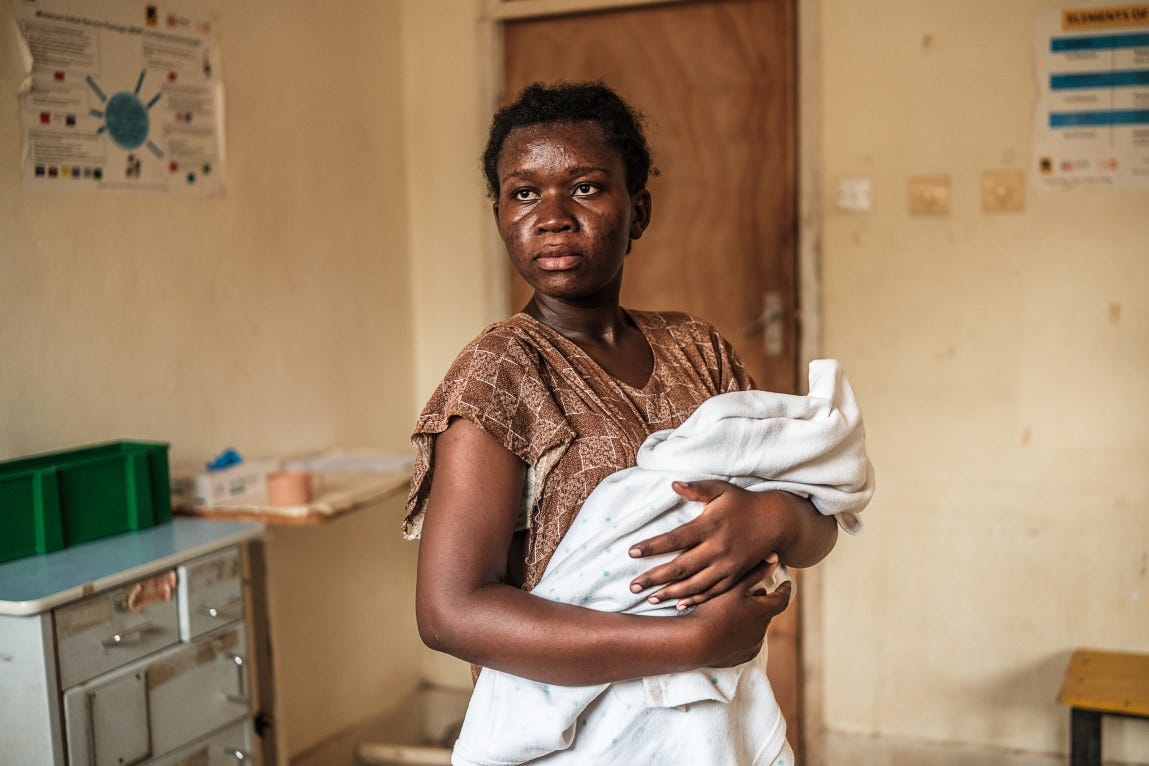
ProPublica (a hard left “news” outlet) marked Christmas Day with a story designed to shock the conscience: the claim that the elimination of USAID funding has driven pregnant African women to eat clay and charcoal and left thousands without AIDS medication or contraception. Democratic politicians now insist that hundreds of thousands of children may die because decades-old foreign-aid programs are losing U.S. taxpayer support.
Let me be candid: I don’t pretend to know the exact truth. But after years of watching activist media shape narratives, I’m skeptical that the situation is as catastrophic as advertised. The NGOs and international agencies sounding the alarms have a strong incentive to dramatize the stakes. And the public increasingly understands that the aid economy is just that—an economy, complete with layers of contractors, consultants, and nonprofit executives extracting their share before a single dollar reaches the intended beneficiaries.
Critics abroad have rushed to condemn the United States for turning off the spigot. Yet few acknowledge that many NGOs skim off vast sums—sometimes millions in executive salaries—before a dime is converted into medicine or food. The patronage culture surrounding federal grants has become so routine that when watchdogs began exposing specific abuses, Americans were struck not by the fact that skimming existed, but by the sheer scale of it.
Anyone who has worked internationally knows that “facilitation” arrangements often grease the skids. That is not news. But what has startled many Americans is discovering that enormous sums never leave U.S. soil at all. Investigations have revealed cases in which 75 to 90 percent of taxpayer funding vanished into “administrative costs,” with only pennies per dollar reaching the ground—if any did. And yet when stewards of public funds attempt to impose accountability, they are painted as villains indifferent to human suffering.
So who is at fault? The taxpayers who object to funding an industry of aid-brokers? Officials trying to stop the leakage? Or the network of organizations that has learned to capture as much “free” money as possible under the banner of compassion?
The political response makes the answer clear. The protectors of the existing racket always cast reformers—the people who want aid to reach those in need rather than those managing the pipeline—as heartless and cruel. Moral leverage is their weapon: invoke women, children, and the sick, and argue that any attempt at oversight is an assault on the vulnerable.
But the deeper question is whether the model works at all. Americans will tolerate some inefficiency if the job gets done. Yet, after decades of “temporary” emergency spending, too many recipient nations show little measurable progress. Meanwhile, their rulers have grown adept at outsourcing care for their own citizens to Western taxpayers, freeing up domestic revenue for weapons purchases, internal repression, and elite enrichment. The worse the suffering, the more money flows.
At some point, we must admit that the humanitarian-industrial complex has created its own perverse incentives. Yes, there are isolated success stories. But judged against the scale of Western investment, the broader record is bleak.
Part of the problem is the difference between aid and charity. Aid is impersonal: it severs the connection between giver and recipient and converts compassion into a financial transaction mediated by bureaucracies. Charity entails proximity—relationships, accountability, and moral responsibility. It knits communities together rather than outsourcing compassion to international contractors.
Yet the measure of success remains the same tired metric: how much money was spent. Not how many people were lifted into self-sufficiency. Not how many nations strengthened their institutions. Just the size of the appropriation.
The world has grown accustomed to judging virtue by the size of the check. But if the checks sustain inefficiency, corruption, and dependency, then the moral calculus changes. Reforming the aid economy is not cruelty. It may be the first step toward making compassion real again.
Earlier this year, I quipped, "Why doesn't Africa grow its own food?" on one of those sob stories. That little logical statement managed 1K likes on X. It's like the "Don't Feed the Bears" idea—they become dependent. Aid, foreign or domestic, shouldn't be a lifestyle, and it certainly shouldn't advance the lifestyles of those supposedly handing it out.
The article about Kenya sets out a serious American error in foreign policy and one that should be corrected. Making these third-world people dependent on a handout is cruel. It sets them up for a disaster that would not occur if we would just learn to leave people alone. But the ignorant but scheming liberals can't think past the immediate.
Second observation: That article is really low grade propaganda by the swine that run Pro-Publica. It's an insult to their own readership but those emotionally conditioned morons never catch on.