
The Founding Fathers’ Perspective on Borders
In case you were wondering - here's what I found.

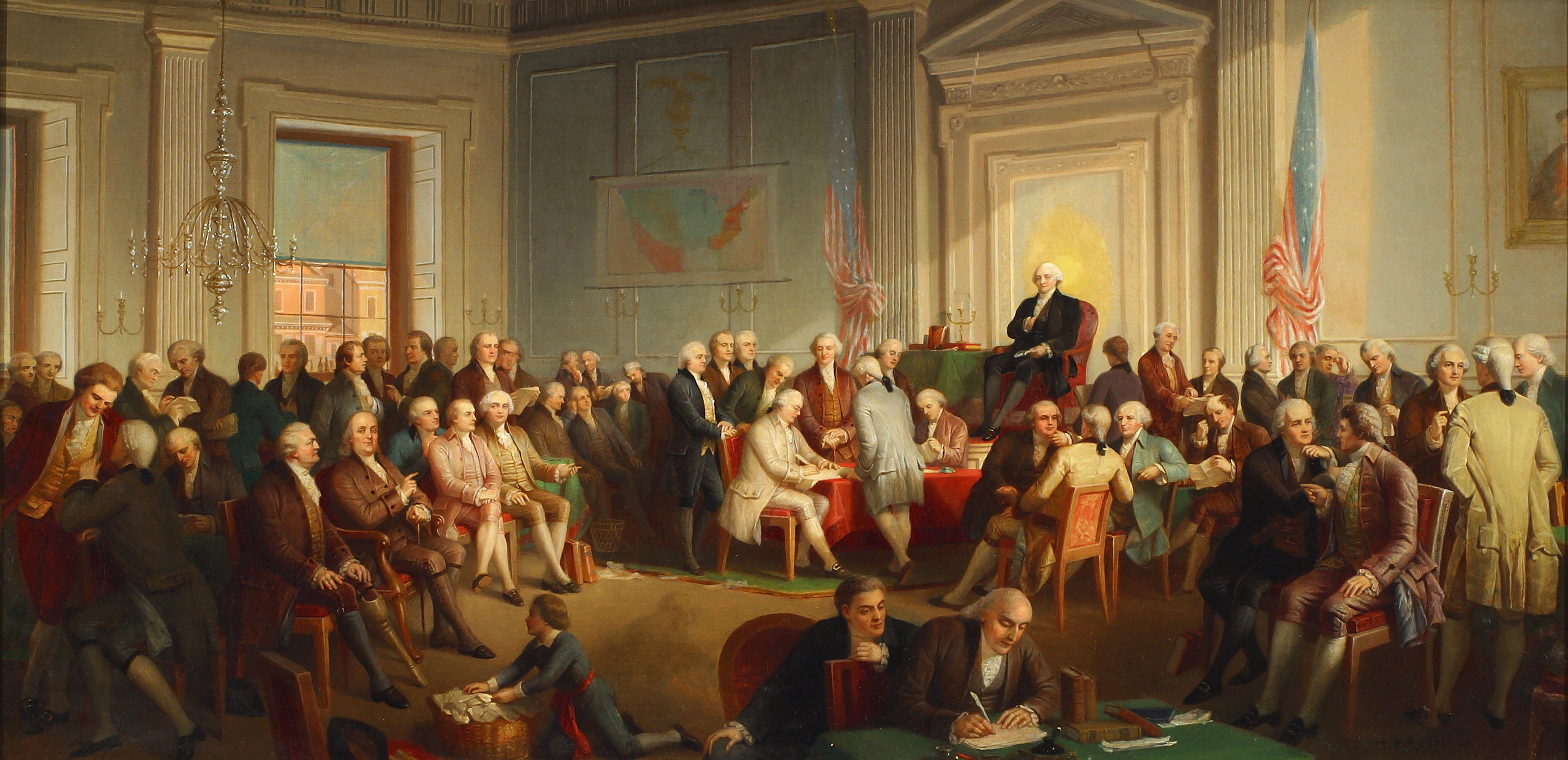
The concept of national borders, as understood in modern terms, was not a central focus of the Founding Fathers’ writings, which is unsurprising given the historical context of the late 18th century. During the formation of the United States, borders were primarily about territorial sovereignty, national identity, and defense against external threats rather than our modern issues of immigration control or border security.
Given those limitations, my curiosity and a massive amount of searchable information in online archives, I began to use Grok to search and examine the repositories of writings (and actions) of key figures like Jefferson, Hamilton, Adams, and Madison, we can infer their views on the importance of defined national boundaries, which were absolutely critical to establishing the young nation’s independence, stability – and security.
You might think that was an easy task but given the multitude of claims of ownership and jurisdiction of land in North America, it was a difficult task. In the late 18th century, borders were fluid, often defined by treaties and subject to disputes with European powers and Native American tribes. The Founding Fathers prioritized establishing the United States as a sovereign entity with recognized boundaries over restrictive immigration policies. Immigration was generally encouraged to support population growth and economic development, as seen in the Naturalization Act of 1790, which set citizenship rules but did not address border enforcement.
Thomas Jefferson, a principal architect of American ideals, emphasized the importance of territorial integrity for national sovereignty. His vision for the United States included westward expansion, as seen in the Louisiana Purchase of 1803, which doubled the nation’s territory. In his correspondence and policies, Jefferson supported clearly defined boundaries to secure the nation’s claims against foreign powers and Native American tribes. While he did not explicitly address border enforcement in the contemporary sense, his actions strongly suggest a belief that a nation’s borders were foundational to its autonomy and growth. For Jefferson, borders were less about restricting immigration, largely because the colonies turned states needed people - and more about asserting control over territory to foster national development.
Alexander Hamilton, in the Federalist Papers (particularly Federalist No. 25) underscored the necessity of a strong federal government to protect national security, including the defense of territorial boundaries. He argued that a unified approach was essential to safeguard the nation from foreign encroachment, emphasizing military preparedness over immigration control. Hamilton’s focus was on ensuring that the United States could defend its borders against external threats, such as European powers or neighboring territories, rather than regulating who crossed them. His writings reflect a pragmatic understanding that well-defined borders were crucial for maintaining national sovereignty and deterring foreign aggression.
John Adams, a key founder and president from 1797 to 1801, shared similar concerns about national unity and territorial integrity. His role in negotiating the Treaty of Paris (1783), which established the United States’ initial boundaries, highlights his commitment to securing clear borders to affirm American independence. Adams’ correspondence reveals a belief that defined boundaries were essential to prevent foreign interference and maintain the nation’s sovereignty. Like his contemporaries, he did not address immigration or border enforcement directly, as these were not pressing issues in an era when the nation sought to attract settlers to populate its vast territories.
James Madison, in Federalist No. 43, articulated the importance of territorial integrity for the stability of the republic. He viewed defined borders as critical for effective governance and maintaining order, particularly in managing relations with neighboring countries and territories. Madison’s writings suggest that clear boundaries were a prerequisite for the nation’s ability to function as a cohesive entity, though, like others, he did not delve into specifics about border control policies.
While the Founding Fathers did not explicitly discuss borders in the modern context of immigration or customs enforcement, their writings and actions reveal a consensus that defined national boundaries were essential for sovereignty, security, and national identity. Their focus was on protecting the nation’s territory from external threats and ensuring its stability as a new republic. It is a very short step to understanding that, if the founders were alive today and were subject to our modern challenges, they would very likely see open borders and illegal alien migration as the threat to national sovereignty it is.
Very interesting discussion of issues I had never explored. But our empty-headed opponents of sound immigration policies are highly unlikely to know who our Founders were and why their ideas were instrumental in structuring our understanding of important issues. One can only hope!!! CDE