
The Dissenter Problem
Every collectivist system must answer the same question: what to do with those who won’t comply? The digital age offers a new solution.

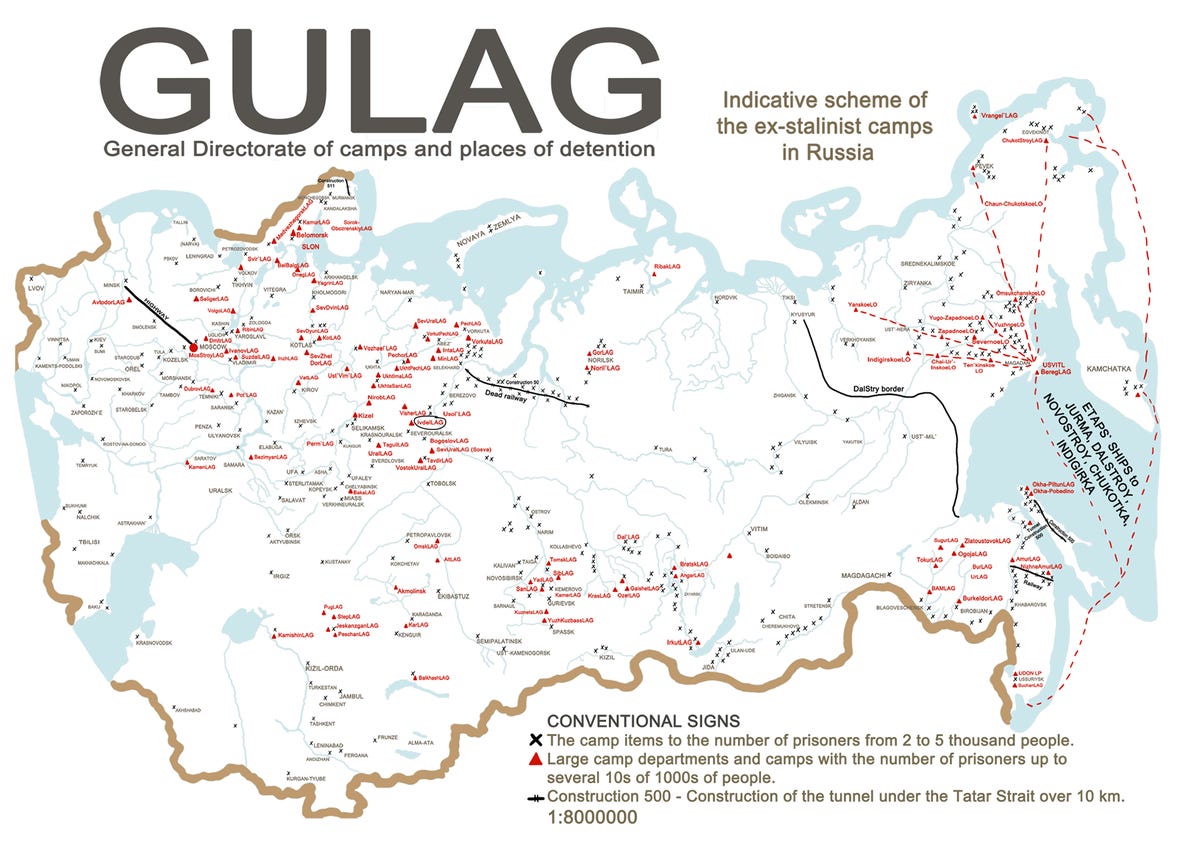
Every coercive collectivist regime, regardless of its ideological wrapper, eventually confronts the same uncomfortable question right out of the box: What is to be done with the people who refuse to comply? This isn’t a latent concern or an implementation detail—it’s the fundamental problem that exposes the violence inherent in any system that subordinates individual conscience to collective will.
The 20th century provided abundant clarity on this point. The Soviet Union didn’t accidentally stumble into the Gulag archipelago. The camps were a necessary feature of the system, not a bug. When you insist that society must conform to a single economic and political vision, you need somewhere to put the millions who won’t pretend to believe. Arrest, conviction, transportation to remote labor camps—this was simply the most honest answer to the dissenter problem. The Soviets understood that building their workers’ paradise required removing the workers who insisted on building something else.
Western democracies face the same structural challenge but operate under different constraints. You cannot maintain the fiction of liberal democracy while operating visible concentration camps. The aesthetics of freedom matter, even when the substance is negotiable. So, the question persists: What do we do with those who reject the prevailing orthodoxy?
Recent history suggests we’re developing an answer. Consider the January 6 defendants who received prison sentences for the crime of walking through open doors in the Capitol building. Or examine the United Kingdom’s expanding definition of actionable thought crime—standing silently near an abortion clinic, posting unapproved opinions on social media. These prosecutions serve a purpose beyond punishing specific acts. They establish boundaries and send signals. But physical imprisonment remains costly, visible, and politically awkward.
The emerging solution is more elegant: a digital Siberia that achieves the isolation of the Gulag without the logistical inconvenience. Banks can close accounts. Payment processors can refuse service. Social media platforms can suspend access. Cloud service providers can terminate hosting. Employment can become impossible when professional networking sites ban users or when background check systems flag them for expressing wrong opinions. The punishment is real—loss of livelihood, social isolation, inability to participate in the digital economy that now constitutes most of the economy—but the government’s fingerprints are harder to trace.
Even China, which maintains traditional mechanisms of physical repression, recognizes the efficiency of this approach. The Communist Party’s social credit system represents perhaps the most comprehensive attempt yet to create a virtual Gulag. Low scores restrict access to air travel, high-speed rail, quality schools, and employment opportunities. The system doesn’t require prison camps when it can simply make normal life impossible for those who accumulate too many digital demerits. It is telling that Beijing sees no contradiction in operating both traditional and digital systems of control—they understand these as complementary technologies serving the same end.
This convergence across regimes—authoritarian and ostensibly free—reveals something important. The digital Gulag offers advantages over traditional political repression regardless of political system. Private companies make the actual decisions in the West, allowing governments to maintain deniability. No trials are required, no appeals permitted, no public accounting of who has been “unpersoned” or why. The accused cannot confront their accusers because the accusation is often simply an algorithmic determination of “harmful content” or “terms of service violations.”
The ideology justifying this architecture borrows the language of harm prevention and community safety. We’re told that a “free and civil society” requires limiting certain forms of expression, that some ideas are too dangerous for the digital public square, that deplatforming isn’t censorship but responsible content moderation. This framing inverts the traditional understanding of freedom—which centered on protecting unpopular speech from the majority’s censorious instincts—into something else entirely. Freedom now means freedom from encountering ideas that challenge approved narratives.
What makes this system particularly insidious is its informal nature in democratic societies. The Soviet citizen sent to Vorkuta knew he was being punished and why. The digital exile often cannot determine exactly what rule was broken or appeal through any meaningful process. The uncertainty itself is control. When boundaries of acceptable discourse remain deliberately vague and enforcement appear arbitrary, people learn to self-censor preemptively. They internalize the censor, which is always the goal.
We should recognize this development for what it represents: not a novel approach to content moderation or reasonable response to “misinformation,” but the latest iteration of an old answer to an old problem. Collectivist systems, whether they call themselves socialist, progressive, or simply “our democracy,” cannot tolerate persistent dissent. They require mechanisms to isolate or silence those who refuse to comply. What changes across time and place is merely the technology of control.
The advantage of recognizing the pattern is that it reveals the stakes. The question isn’t whether certain speech is harmful or certain ideas dangerous. The question is whether we will permit informal public-private partnerships to exercise the kind of comprehensive social control that we once understood required totalitarian government. We’re building the infrastructure of repression while congratulating ourselves on avoiding the cruel excesses inherent in these systems.
But the fact remains that exile is exile, whether the destination is Siberia, a low social credit score in Shanghai, or simply a digital erasure of an online presence.
"We’re building the infrastructure of repression while congratulating ourselves on avoiding the cruel excesses inherent in these systems."
Snowden's book points out that the government didn't originate a large part of the surveillance apparatus - they adopted what Big Tech was doing. And why did Big Tech get away with it - because we gave them everything they asked for as long as they gave us back - convenience.
Thou art a brave man, Mr. Smith.
The windmills have, indeed, been dragons all along.