
The China Threat
Why changing our perspectives and relationships with Canada, Greenland, and the Panama Canal is no joking matter.

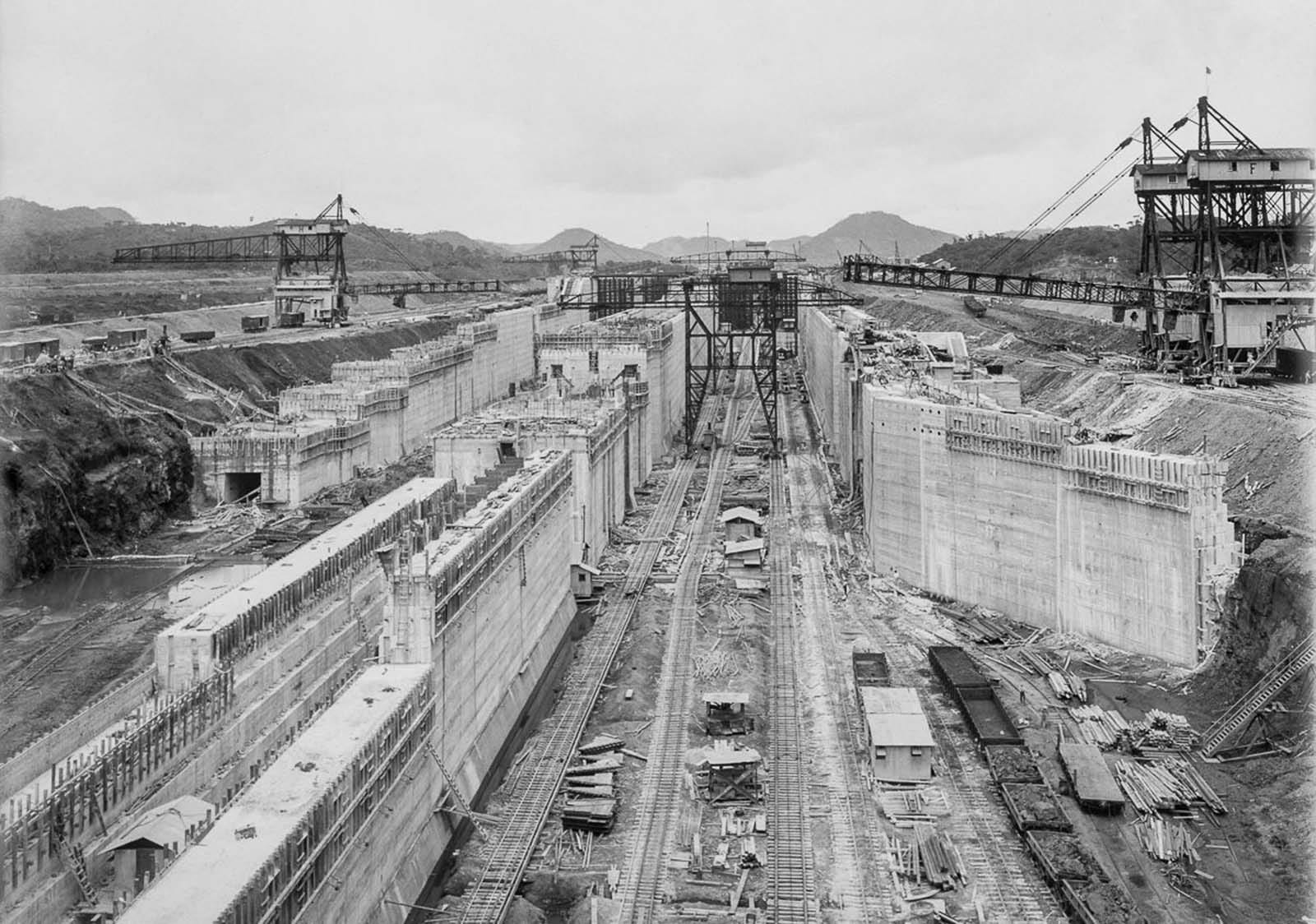
The criticism of President Trump about his thoughts about Canada, the Panama Canal and Greenland, some of which are approaching self-parody, share one commonality - all are in denial of what has transpired since Nixon opened China to the world.
Yes, I’m going to blame Nixon for being the starting point.
During the periods of world dominance by Pax Britannia and then Pax Americana, both Japan and China used mimicry of clearly advanced cultures to gain advantage. Japan’s ended in the direct conflict with Western powers in World War II, but China is a study in how things can change. Initially, under the leadership of Chang Kai-Shek, China was seemingly headed toward a Western style of self-government. Then came the isolation when Mao’s revolution succeeded. For decades, China isolated itself in communism until Richard Nixon, like Commodore Perry, sailed in. Almost immediately, the Chinese communist leadership saw an opportunity to maintain political control over their country while learning how to profit from the rest of the word.
This process led to the most interesting marriage of opposites – communists worldwide who were disappointed that the USSR had stalled in the Cold War with America and saw China as the next big opportunity for global communism, and globalist corporations (with no national allegiances) that were seduced by the profits to be made from a market of a billion people who had been starved (physically and culturally) and were completely unaware of what was available outside their borders.
That was the moment China kicked off their R&D (Rip-off and Duplicate) programs and drove them into high gear, creating a mimicry for a purpose. More than just a mechanism of survival, it was a way to skip several steps in their evolution, learning through replication, creating partnerships, then dependence, and eventually dominance.
American businesses – and our government – believed contact with the “new and improved” products and services of the West would lead to the rejection of communism and the acceptance of capitalism, that the West could “virtually colonize” China, following the Japan model.
Japan is an interesting study in how a virtual colonization, a colonization of the mind, can take place. The wariness of outsiders has always been a Japanese trait, choosing to maintain isolation from the outside world. Portuguese traders visited Japan as early as the mid 1600’s and even thought that contact changed the way internal wars were fought – they introduced the Japanese warlords to guns and gunpowder – Japan maintained its feudal, Shintoism culture and societal system largely unaltered. That all changed on July 8, 1853, when Commodore Matthew Perry of the United States Navy, commanding a squadron of two steamers and two sailing vessels, sailed into Tôkyô harbor aboard the frigate Susquehanna. By the late 1800’s the upper classes in Japan had adopted Western dress, styles and mannerisms and Christianity had gained a foothold.
Getting tied up in forever wars allowed China to progress while our attention was elsewhere and now that China has decided it is time to let their mask fall away to reveal their ability to project influence and power around the world, the mistakes of the past fifty or sixty years are coming home to roost.
In 1956, Nikita Khrushchev uttered the oft misunderstood quote “We will bury, you!” On August 24, 1963, Khrushchev himself remarked, “I once said, ‘We will bury you,’ and I got into trouble with it. Of course we will not bury you with a shovel. Your own working class will bury you.” – a reference to the Marxist saying, “The proletariat is the undertaker of capitalism.”
With their Belt and Road Initiative, China has used an economic variant of virtual colonization. By disguising their strategic plans for dominance in a business suit, using business investments and loans in countries with strategic natural resources (Africa and South America) and strategic geographies (Panama Canal, Greenland, Central America). The Chinese have most of South America and Africa deeply indebted to their central bank – and as the saying goes, he who pays the piper, calls the tune.
The soft on China policies over the past six decades have eroded America’s national security by treating a rising power, one that has industrial and military capabilities almost equal to our own, as a “developing nation.” Our hands off “send them money and hope for the best” policies and political disengagement from countries south of the border have allowed China to encroach into the Western Hemisphere and gain footholds from which to operate.
Much to America’s detriment, the Monroe Doctrine and Manifest Destiny are long forgotten.
Strategic policy mistakes, made by Democrat and Republican administrations alike, are the very reason we must have serious discussions about or relationships with Canada, Greenland, and Panama today - and President Trump is right to raise this alarm.
I was an industry advisor to the Office of Special Trade Relations in Canada --50 years ago and I said then all that you have written. I've never understood or supported the self-loathing, countenanced as sympathy for the third world, that has dominated foreign and trade policy in the USA and the 'Western' nations. The time has come for the great awakening happening with PDJT and his team.
That is an excellent and very condensed description of Chinese aggressiveness over the last 50 years. We could call it "The Japan Plan" except that Japan is not hostile and doesn't have the world-dominating ambition of the Chinese.
This is a time of profound change in the world, both politically and technologically. I have no idea where it is going.