
Same As It Ever Was
The grasping hand never stops grasping.

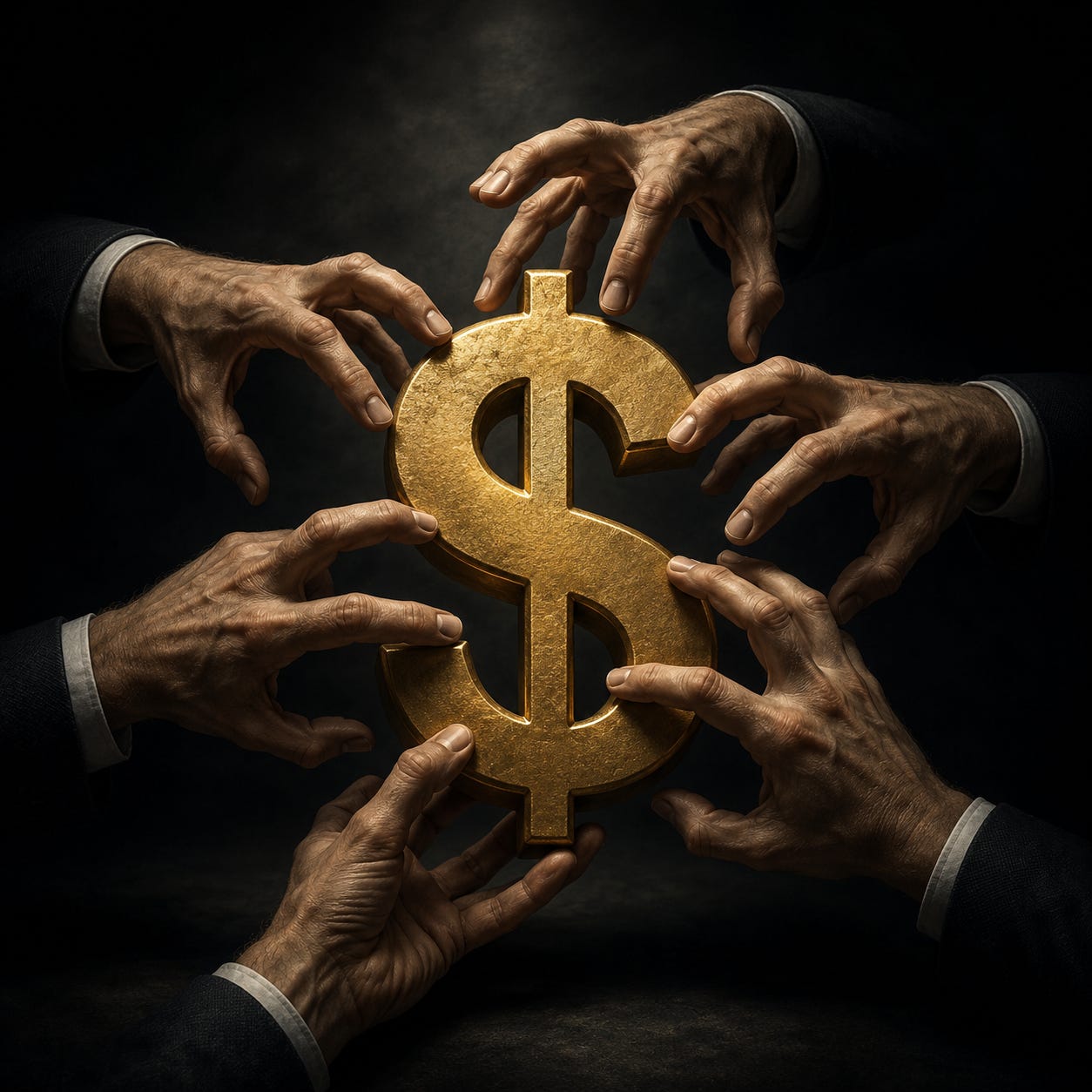
None of the left’s incessant bitching and whining about Elon is really about Elon.
Musk simply happens to be the current avatar of a much older argument, one that predates electric cars, reusable rockets, social media platforms, and even modern capitalism itself. The argument is about ownership. More specifically, it is about who owns the fruits of human effort and who gets to decide how those fruits are distributed.
In Karl Marx’s day, the focus was on factories, farms, railroads, and heavy industry. The “means of production” were tangible things. They were machines, buildings, land, and equipment. The socialist complaint was that those assets were owned by a relatively small number of people who profited from the labor of workers.
That argument has not disappeared. It has simply evolved.
The modern economy is increasingly driven not by physical capital but by intellectual capital. The most valuable assets in the world today are not steel mills or textile factories. They are ideas. Software. Algorithms. Engineering breakthroughs. New business models. New technologies. Innovation itself.
This creates a problem for those who still view society through the lens of class conflict. What happens when the means of production is no longer a machine but an idea? What happens when value is created not by owning a factory but by imagining something that did not previously exist?
The answer is that the target shifts.
In the late nineteenth century, the political left wanted ownership of the strength of your back. In the twenty-first century, it wants ownership of the productivity of your mind.
Consider the asymmetry.
If you have a brilliant idea and spend years developing it, mortgaging your house, exhausting your savings, sacrificing your weekends, and ultimately fail, society generally tells you that the outcome is your responsibility. Nobody volunteers to absorb your losses, rushes to reimburse your investment or offers to share your bankruptcy.
That risk belongs entirely to you.
But if the idea succeeds, if it creates tremendous value, if millions of people voluntarily buy the product or service, suddenly a different set of voices emerges. Now the argument becomes that you did not really earn the rewards. Now we are told that society made your success possible, that government infrastructure enabled your achievement, that taxpayers deserve a larger share of the proceeds.
As Obama and Lieawatha said, “You didn’t build that.”
The entrepreneur owns the risk but not the reward. The inventor owns the failures but not the successes. The innovator is expected to absorb every downside while surrendering an ever-growing portion of the upside.
This is why figures like Musk attract such hostility. It is not because he is uniquely wealthy. America has produced wealthy industrialists, financiers, entertainers, and athletes for generations. What makes Musk different is that his fortune is visibly connected to innovation. SpaceX, Tesla, Starlink, Neuralink, and his other ventures are difficult to portray as passive investments. They are tangible examples of someone taking enormous risks on ideas that many experts dismissed as impossible or foolish.
The existence of such success challenges a worldview that assumes wealth is primarily extracted rather than created.
That is why the rhetoric sounds familiar. We hear repeated claims that individual achievement is largely a product of collective effort. The implication is always the same: because society contributed something to the outcome, society may claim an increasingly large share of the result. Of course, nobody denies that civilization provides a framework within which success occurs. The question is not whether society contributes. The question is whether that contribution creates an ownership claim over every successful outcome.
The modern left increasingly answers yes, while ignoring that those things were not created in a vacuum – they were paid for by taxes collected from people. The left claims ownership of things that were purchased with other people’s money.
Its argument is no longer centered on factories and farms. It has expanded to encompass ideas, innovation, and intellectual achievement. It seeks not merely to regulate success but to establish a moral claim upon it. The irony is that this philosophy eventually discourages the very behavior that produces prosperity in the first place. Innovation requires risk. Risk requires incentives. If the rewards for success are continually socialized while the costs of failure remain private, fewer people will take the gamble.
The result is a society that celebrates innovation in speeches while punishing it in practice.
None of this is really about Elon Musk. If Musk disappeared tomorrow, the argument would continue with someone else. It is not a dispute about one trillionaire. It is a dispute about whether the products of human creativity ultimately belong to the individual who creates them or to the collective that merely observes the result.
That debate has been going on for more than a century.
Only the means of production have changed.
Besides, the core purpose of government is to create and maintain the common safety, security, and infrastructure by which it's citizenry can enjoy life, liberty, and the pursuit of happiness. It should do nothing more, because anything more encrouches into that life, liberty, and pursuit of happiness.
The benefits that permited Musk's success are there for anyone to strive for similar success. The government doesn't merit a portion of that success, because all it did was its purpose, the cost of which came from taxation. The government upholds society's foundation but is not a shareholder in the success or failure of society's individuals.
Oh, this is beautiful. Nailed it, nailed it, and nailed it again.