
Readin', Writin', and 'Rithametic
What do we do about a failing public education system? Eliminating the Department of Education is only a start.

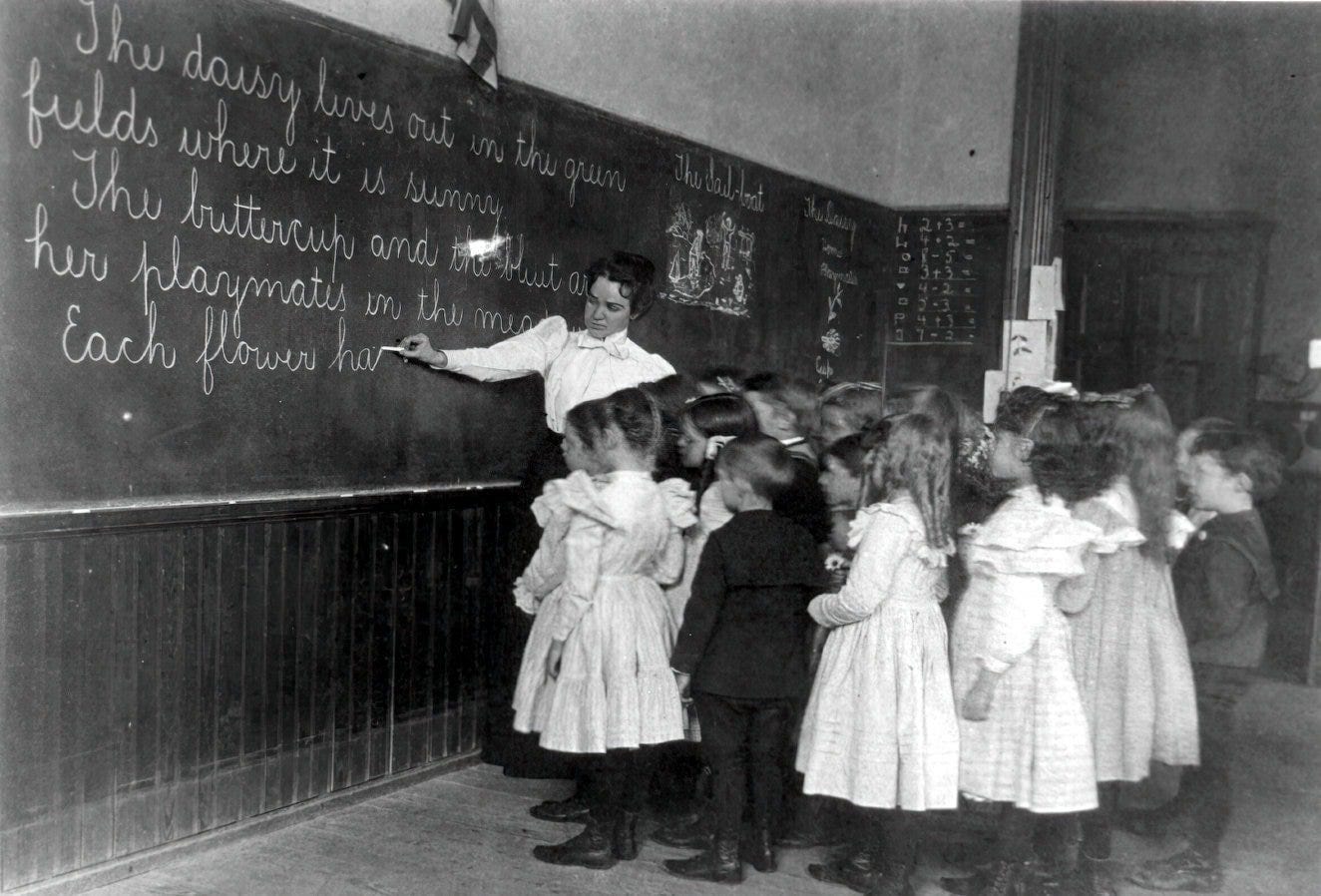
For decades, public education has been a subject of intense debate, often criticized for its shortcomings. Yet despite the criticism, meaningful reforms remain elusive. In an effort to address these issues, the Carter administration established the U.S. Department of Education on October 17, 1979, which officially began operations on May 4, 1980.
So, how has that worked out?
By any credible metric, we’re spending more than ever to educate America’s children, yet their academic performance continues to decline. Critics argue that local school boards bear much of the responsibility, and there’s truth to that. However, as with most issues, the root often lies in the money. Federal funding comes with strings attached, coercing local schools to comply with federal directives. Do we really need a federal department to oversee failing education systems?
Consider the changes we’ve seen over the years. The ratio of administrators to teachers has skyrocketed. According to data from the Department of Education, between Fall 2000 and Fall 2017, the number of school district administrative staff increased by 74.9%, and principals and assistant principals by 33.4%. Meanwhile, teaching positions grew by only 7.7%. Too many managers and bureaucrats are absorbing resources that should be allocated to classrooms, largely driven by federal requirements and policies.
Teaching methods have also shifted, not always for the better. One notable example is the adoption of the "whole language" approach to teaching reading, which many experts consider a failure. Research consistently shows that systematic phonics instruction leads to better and faster reading outcomes. While other methods can complement later instruction, the foundation matters. As my maternal Mississippi granddaddy used to say, “If you start bad, chances are you’ll end bad.”
The consequences of neglecting foundational skills are stark. In 2020, Science News reported that 44 million U.S. adults—23% of the population—struggle with literacy. While they may manage simple tasks like reading movie listings or basic instructions, they often can’t process long passages or understand medication warnings. Poor literacy limits voting, employment opportunities, and participation in a technology-driven economy. Reading is the cornerstone of success in any society.
Unfortunately, we’ve lost focus on the basics. My education emphasized reading, writing, and arithmetic. We read aloud, completed assignments subject to tests and class presentations, drilled math skills, and practiced writing in block and cursive. Competitions encouraged us to excel in composition, math, and other skills. Discipline was strict, distractions minimal, and technology was limited to the occasional filmstrip or 16mm projector.
Distractions and lack of discipline have only worsened with modern technology. Today, classrooms often contend with smartphones, tablets, and other devices. Back then, such items weren’t allowed, and if they were, they would’ve been confiscated. Dress codes and codes of conduct were enforced, with serious consequences for violations. Parents participated in enforcing these standards, often siding with teachers when conflicts arose.
That brings me to the most critical yet overlooked issue: parental involvement. When I was growing up, parents played an active role in their children’s education, especially in the formative years. My parents taught me to read and do basic math before I started school. They maintained high expectations for my academic performance and behavior. Today, many parents view schools as daycare facilities, shifting the responsibility for discipline, values, and education entirely onto teachers. This erosion of parental involvement has far-reaching consequences.
The problems in education are fixable. While not all solutions lie in Washington, D.C., it’s a logical place to start addressing systemic issues. Restoring focus on the fundamentals, reducing bureaucracy, and fostering parental engagement can lead to meaningful change.
We need to restore/restructure the teachers teaching our teachers.
Our public school system has been intentionally directed into destroying our very foundation.
Notice where many of the Bill Ayers and Bernadine Doreens of the 1960's ended up. Education wasn't an accident.
Excellent!!