
Power Is a Posture
Why Democrats govern like owners and Republicans like renters—and how confidence, not ballots, often decides who actually leads.

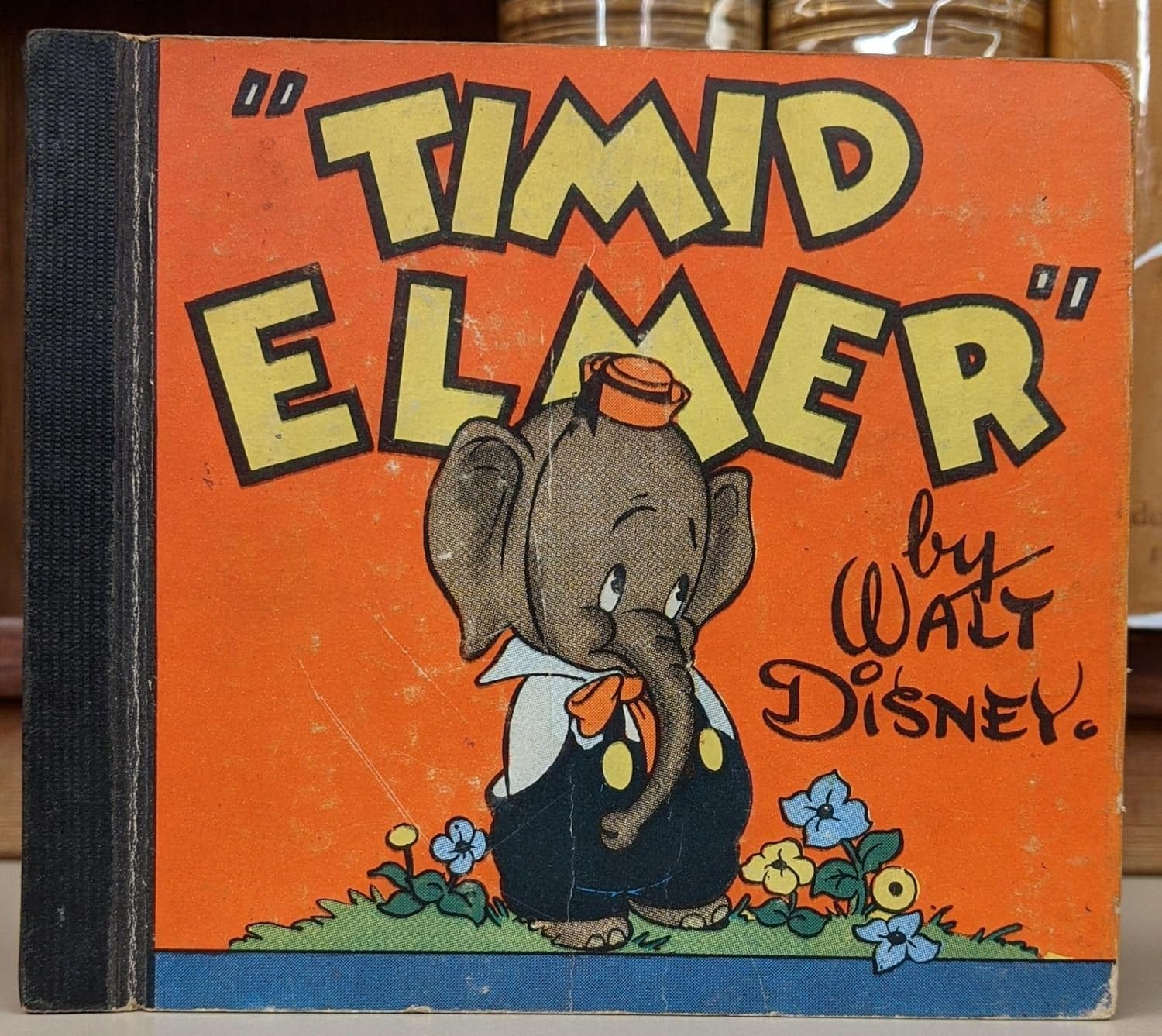
Republicans have lost several special elections, further narrowing their House margins. The conventional wisdom is the Republican base just doesn’t get energized for mid-terms. I have another theory: Republicans are afraid to lead, so they don’t give voters a reason to keep rewarding them. People get tired of the “this is the most important election of our lives” BS, especially when the GOP turns back to its lovable loser persona.
For the first 35 years of my life, Democrats controlled the House of Representatives. Those were the bad old days before Newt Gingrich executed the Contract With America and ended the Democrats’ 40 years of control after the 1994 midterm elections. Gingrich campaigned nationally on the Contract With America and flipped 54 seats, giving the GOP its first House majority since 1954.
Maybe that’s where Democrats learned something the GOP struggles with to this day: power is not merely held, it is performed.
This is one of the quieter truths of political life: authority emerges as much from posture as from position. Titles matter, votes matter, institutional control matters—but beneath all of it lies something older and more primitive. People follow those who behave like leaders. Presence precedes permission.
Psychologists have long observed that humans read confidence as competence. Research by Amy Cuddy, social psychologist and former Harvard Business School professor, showed how physical stance, vocal certainty, and self-confidence shape how others perceive authority. Sociologist Max Weber described charismatic authority as something granted by followers, not conferred by law. Gustave Le Bon explored similar dynamics in The Crowd: A Study of the Popular Mind. In all cases, the same pattern appears: leadership is partly a social agreement. Someone steps forward, projects certainty, and the group responds.
Democrats, almost without exception, behave as though they are in charge—even when they are not. Whether in the majority or minority, they speak with moral certainty. They frame narratives. They act as if institutional control is merely a temporary technicality. They legislate culturally even when they cannot legislate formally. Universities, corporations, media, and bureaucracies become extensions of this posture. Power is treated as an ambient condition rather than a contingent one.
Republicans, by contrast, often do the opposite.
Even when holding majorities, they tend to speak cautiously, govern defensively, and seem to apologize reflexively. They act as though authority is something they have borrowed and might soon be asked to return. They govern like tenants rather than owners. It is almost as if they are more comfortable out of power—as the “loyal” opposition, more at ease criticizing than commanding.
In my opinion, this is not primarily a strategic failure—it is philosophically driven.
The left operates from a worldview in which history has a direction and they are its agents. That produces confidence bordering on inevitability, even when their past policies indicate disasters they have wrought. The right, particularly its classical liberal strain, operates from a worldview that emphasizes restraint, process, and limits. That produces hesitation. One side believes it embodies progress. The other believes it merely administers a system.
The asymmetry persists. Democrats push harder because they believe they are moving toward something, even if they don’t really know what that something is. They act as though authority is theirs by moral right. Republicans behave as though authority must be constantly justified, minimized, or apologized for. One side treats power as expressive. The other treats it as provisional.
President Trump and his cabinet is one of the most muscular and aggressive of my lifetime. The contrast to the Biden administration, the absolute weakest of my lifetime, is stark—and yet, the GOP seems poised to waste an opportunity to make powerful and lasting change.
Trump’s confidence and drive scares some of the Republican caucus. You can almost see it on their faces: “This is not the way things are done around here! We must be more polite and less demanding!” They seem to prefer a more “modest” approach—but the problem is that power does not reward or respond to modesty.
Leadership requires more than policy positions. It requires presence, a cogent and powerful narrative, and ownership of it. You must sell your plans—and it requires the willingness to occupy territory unapologetically. When one side projects certainty and the other projects doubt, the outcome is preordained regardless of vote counts. This is why Republicans can win elections and still lose culture. It explains why they can control legislatures yet fail to set terms, and why they so often govern as caretakers while their opponents govern as architects. It explains why they lose House districts in Texas by 14 points that Trump won a year ago by 17.
Acting in charge is not arrogance—it is responsibility made visible. As an old mentor of mine taught me, if you don’t lead, someone else will step up to fill the vacuum. True leadership lives at the intersection of boldness and restraint—of confidence anchored in competence. Without the first, the second becomes irrelevant.
Power is never merely taken but is continuously asserted. The hard lesson learned is that those who hesitate to inhabit it will always be governed by those who do not.
This nails the GOP’s core pathology. Republicans win ballots, then apologize for it. Democrats lose elections and govern anyway. Power hates a vacuum, and the left fills it without hesitation—through media, culture, and bureaucracy—while Republicans ask permission to use authority voters already gave them. Leadership isn’t rudeness; it’s ownership. Trump understood that instinctively, which is why he terrified both Democrats and timid Republicans. The base doesn’t want caretakers. It wants architects. If you act like a renter, expect eviction. Confidence isn’t cosmetic—it’s communicative. When one side projects certainty and the other projects doubt, the outcome is baked in. Power is performed, or it’s forfeited.
Dunning-Kruger politics.
Those with a clue hedge.
Confident idiots do NOT.
NEVER EVER assume "Confidence is Competence."
Ever deal with a West Pointer? Confident as all get out. And utterly fecking WORTHLESS.