
Pick the Target
How Alinsky’s rules turned American politics personal—and poisonous

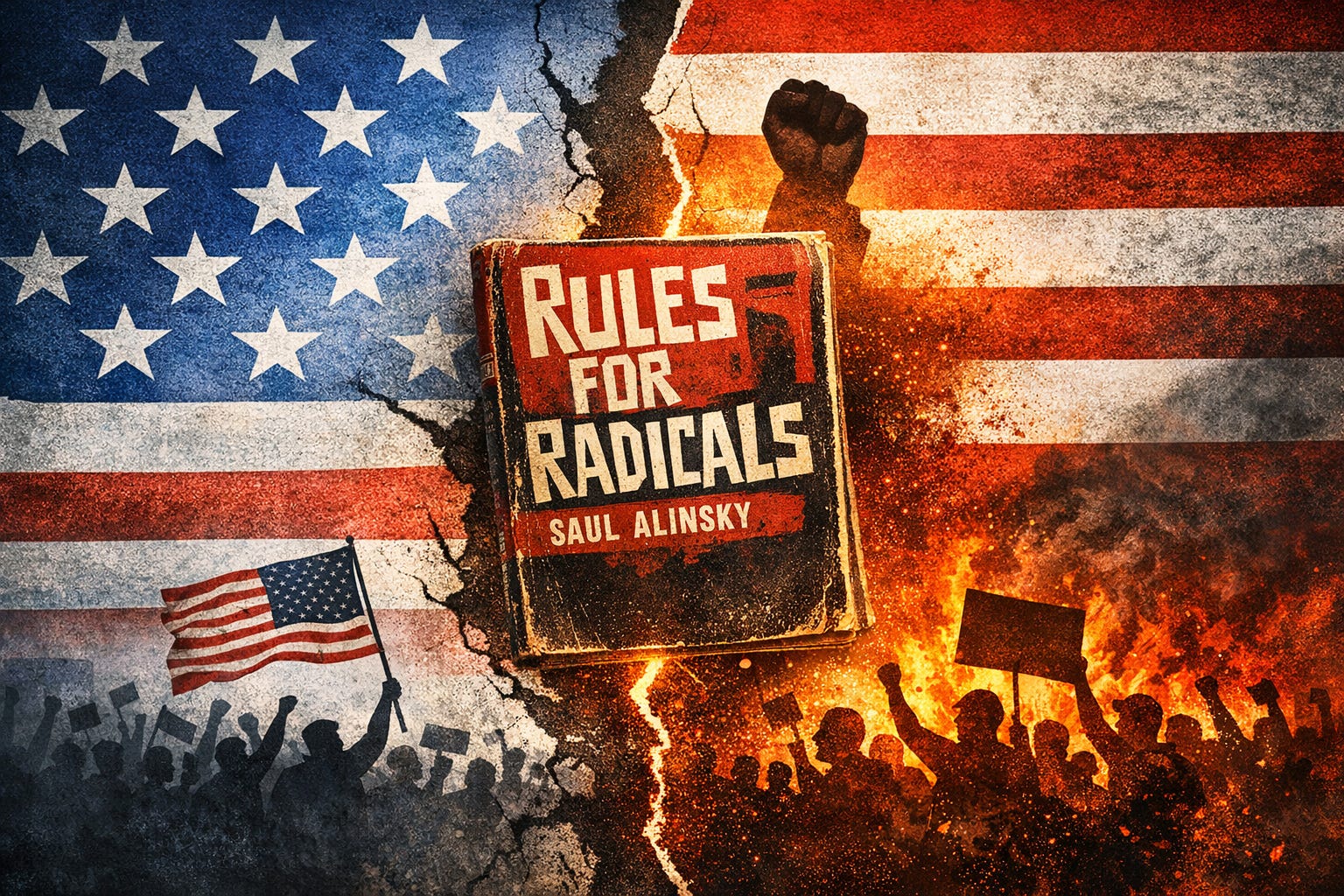
I wrote earlier about Alinsky’s Rules for Radicals, and more thoughts percolated up today - along with memories of how where we are today started a couple of decades ago.
Fifteen years ago, almost to the day, James Taranto warned in the Wall Street Journal that America’s liberal left was consumed by fantasies of political violence—dreams of insurrection paired with exaggerated fears of reactionary bloodshed, amplified by a compliant media. He dismissed claims that conservatives had unleashed a wave of hatred as a manufactured narrative.
Taranto went on to note how figures on the left were already advancing a false story that the Tea Party was violent. New Yorker columnist Hendrik Hertzberg was still trying to justify the media’s baseless attempt to blame conservatives for the shooting of Rep. Gabrielle Giffords, claiming the attack occurred amid a “two-year eruption of shocking vituperation and hatred” supposedly coming almost entirely from the right.
Taranto called it bunk.
He was prescient—up to a point.
Many people now wonder whether American politics has always been this acidic. It hasn’t. The underlying process is familiar, but the intensity has changed dramatically, but what once simmered is now a rolling boil.
You really have to ask how we arrived at a moment where nurses and medical professionals—people whose vocation is literally to preserve life—openly threaten conservatives and Trump supporters on social media. Or where lawyers, who should understand the rule of law, casually post threats online. This is not normal behavior in a healthy civil society. Eve teachers, with whom society trusts their kids are not shy about posting insane rants about imagined “fascism” and how they plan to fight it. Libs of TikTok has been invaluable in exposing these folks in their own voice.
It hasn’t always been this way.
What has changed is the evolution of progressivism from version 1.0 to 2.0. These are not your parents’ progressives—people like Barbara Boxer, Nancy Pelosi, Chuck Schumer, or even Teddy Kennedy. Today’s activists are more rigid, more impatient, and far more ideological and they are not interested in persuasion or compromise. They care about one thing: power, and there is no aspect of life, theirs or ours, that is off-limits in its pursuit.
Saul Alinsky, widely regarded as the founder of modern community organizing, was explicit about this. Power comes first. Control follows power. Transformation follows control. In Rules for Radicals, Alinsky offered his most famous directive: “Pick the target, freeze it, personalize it, and polarize it.”
That four-step process now dominates our political landscape.
It begins with labeling: racist, bigot, homophobe, Islamophobe, nativist. These terms are ineffective when applied broadly—one bad actor in a crowd does not define the group—but devastating when aimed at individuals. They are not descriptive; they are weapons. Their purpose is not debate but destruction.
Alinsky made this explicit in Rules 12 and 13: select a target, isolate it, personalize it, and deny it any escape from blame. Reduce complex issues to a symbolic villain and focus public anger there. Once politics becomes personal, rational discourse ends. Emotion takes over. Anger, hatred, and fear are not analytical states of mind. People become reactive, constantly bracing for the next attack, striking back instinctively rather than thoughtfully.
We have seen this movie before. During the French Revolution, political disagreement was reframed as moral treason before opponents were destroyed. Mao’s Cultural Revolution relied on public shaming and personalized denunciation to consolidate power. In every case, polarization preceded repression. The pattern is old—even if the technology is new.
Religious conservatives are mocked for believing in God. Constitutionalists are ridiculed for revering the founding document. Pro-lifers are caricatured as cruel. Conservatives are described as greedy, selfish, barely civilized. We have even seen conservatives falsely accused—through a kind of modern blood libel—of creating climates of hate responsible for acts of mass murder.
This is Alinskyism in full bloom.
The target has been identified. It has been frozen in place by false narratives. It has been personalized through loaded language. Polarization is nearly complete. And the target is no longer merely conservatives; it is anyone who resists the Neo-Progressive orthodoxy.
People are exhausted. I am. Conservatives are tired of constant siege. Moderates are weary of permanent gridlock. That is why we hear “both sides do it” and “can we just move on.” People want it to stop. They want to know what the endgame is.
There is one.
Either the Alinskyites win and politics becomes permanently personal, invading every corner of public and private life. Power must be maintained this way. In that world, climates like Minnesota’s become permanent.
Or we break the cycle.
We depersonalize politics by returning to facts. We discard half-truths and spin. We stop treating opinion as evidence. We speak plainly. We reestablish shared goals, even when we disagree about methods.
Today, we are not arguing over competing tactics to reach shared objectives. We are arguing over the objectives themselves—and that is far more dangerous.
A society cannot survive long without a common moral vocabulary. When politics becomes permanently personal, every disagreement is treated as a character defect, every opponent as an enemy, and every compromise as surrender. Power replaces persuasion. Emotion replaces reason. Eventually, even truth becomes negotiable.
That is the real endgame of Alinskyism: not merely political victory, but cultural conquest.
Either we accept a future in which politics colonizes every aspect of life, or we consciously step back from the abyss. We restore the distinction between public policy and private character. We insist on facts over feelings, arguments over accusations, and principles over propaganda.
The alternative is permanent mobilization—a society locked in tribal hostility, unable to govern itself because it no longer remembers what it means to be fellow citizens.
First & foremost, I am an empiricist. My Conservatism is a consequence of honoring Truth.
You state a noble aspirations: “We insist on facts over feelings, arguments over accusations, and principles over propaganda”.
With how many leftists have you successfully implemented this strategery? Most I know are utterly incapable & certainly unwilling to do so.
Hillary Clinton was a product of Alinsky’s evil rules.