
Pavlov's Electorate
From stimulus-response politics to eroded responsibility, the welfare state mirrors the logic of an experiment gone wrong.

This is an updated version of something I wrote almost 15 years ago, but it pairs well with the “Entitlement Machine” essay I posted this morning.
There is a reason debates over federal spending and entitlement reform trigger such raw emotion. These programs, many of them born in the Great Depression, are no longer viewed as policy instruments but as extensions of identity—moral covenants between the state and those who depend on it, fiercely defended by a political class that treats reform as sacrilege. Yet the causes of our dependence, and the path out of it, are hardly mystical. They sit in plain view, if we are willing to see them. For all the progressive insistence that science is on their side, the most compelling evidence comes not from ideological laboratories but from nature itself—Mother Gaia’s own operating manual.
Humans remain animals—brilliant animals, but animals nonetheless. The gap between us and our primate cousins is a mere sliver of DNA. Yes, opposable thumbs and a superior cortex helped vault us to the top of the food chain, but the continuity between human and animal behavior is unmistakable. Our achievements in reason, technology, and abstract thought coexist with primal instincts that continually reassert themselves: aggression, territoriality, dominance, fear. If these instincts did not simmer beneath the surface, there would be no murders, no wars, no marital betrayals, no tribal politics. We are governed, whether we admit it or not, by natural law—the ancient framework that links behavior to survival and freedom to responsibility.
This human–animal nexus appears everywhere: gang structures mirroring primate hierarchies, neighborhood self-segregation reflecting herd patterns, outbursts of violence rooted in the same impulses that animate any threatened species. And just as animals respond predictably to conditioning, humans respond to incentives—whether in a corporation’s bonus structure or in a government’s welfare program offering free stuff.
This is not an insult; it is a statement of behavioral science.
Pavlov proved more than a century ago that stimulus and reward can shape conduct. Frederick Taylor built early management theory on similar principles. Modern corporations still rely on them. But the same dynamics that produce efficiency in a workplace can produce dependency when applied clumsily by the state.
A 2008 University of Exeter study by Kristen Jule illuminates this truth with almost painful clarity. She tracked more than 2,000 captive carnivores released into the wild and found that fewer than one-third survived even six months. Captivity does not merely dull the instincts of an animal—it erodes them. Offspring of captive animals lose the ability to hunt, to forage, even to parent. Generational skills wither. Entire family lines become dependent on zookeepers to survive. When such animals are released, many die quickly, unaware of predators, hazards, or the demands of self-reliance.
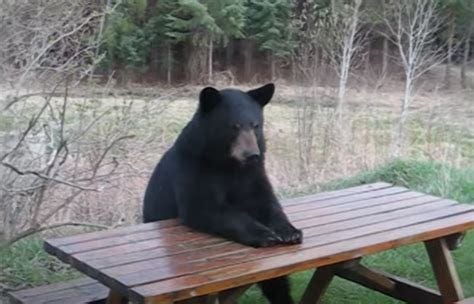
There is a scientific reason for the “Don’t Feed the Bears” signs in our National Parks.
The early environmental movement learned these lessons the hard way. Romantic attempts to “give animals back their freedom” routinely ended in tragedy. You cannot rehabilitate what no longer remembers how to live.
The parallel to the modern welfare state is not metaphorical flourish; it is behavioral equivalence. A welfare system that provides food, clothing, and shelter at a level just comfortable enough to discourage risk-taking creates precisely the dynamic seen in captive species: diminished survival skills, lost generational knowledge, and a dependence so deep that escape feels impossible. The cage is padded, but it remains a cage.
We then lament the very consequences we engineered. We wonder why families in the inner cities collapse under the weight of dysfunction, even as decades of policy have displaced the role of parents with the role of bureaucrats. We fret that people cannot lift themselves from poverty, while ignoring that we have replaced the muscle memory of work and self-reliance with the conditioned reflex of benefit collection. We treat poverty as a failure of resources rather than a failure of autonomy.
The same behavioral atrophy afflicted the middle class during the housing boom and bust in 2008. Easy credit, government-backed mortgage schemes, and the promise—implicit or explicit—of bailout softened the hard edges of personal responsibility. Caveat emptor became quaint. People stopped asking whether they could afford a home or a credit limit; they assumed someone else had set the guardrails. Risk evaporated, judgment eroded, and entire families outsourced their financial decision-making to distant institutions. The difference between the middle class and the welfare-dependent, however, is critical: the middle class never fully exited the marketplace and can, with effort, relearn what they forgot. Those wholly captured by the welfare state face a much steeper return.
Humans are animals. We ignore that at our peril. The welfare state functions as a federal zoo—designed by well-meaning theorists, administered by political zookeepers, and catastrophic in its long-term effects. Our attempt to “take care” of a vulnerable class has instead destroyed the very skills necessary for independence. In trying to save people, we have weakened them.
Economic sanity begins with accepting the biological truth: reentry into a free-enterprise society is no different from reintroducing captive animals into the wild. The answer is not cruelty but conditioning—rebuilding the instincts that dependency has erased. We must teach those who have forgotten how to hunt to do so again.
And then we must let them go.
You need to compile your work into a book. From earliest musings to latest endeavors. It would be wonderful to have them all in one handy place.
An in depth look at Job Corps’ failure, our government’s “workfare” programs, taxation policies, and voter proclivities is in order. Are you up to it? Will it change anything?