
Imported Ideologies
Immigration—legal and illegal— from collectivist societies and rising Islamist activism are weakening the cultural antibodies that once defended liberal democracy.

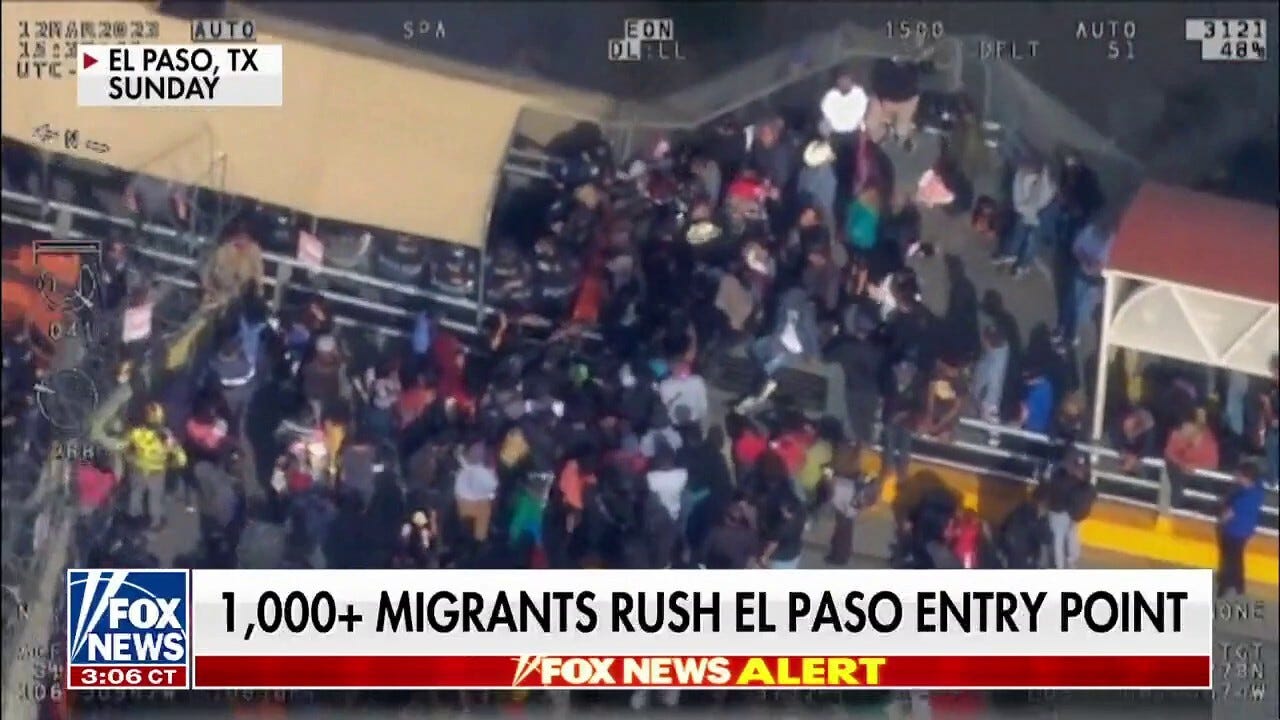
For most of American history, the number of native-born citizens who sincerely subscribed to collectivist ideologies—whether socialist, Marxist, or the harder variants of communism—remained remarkably small. Such worldviews periodically surfaced on the fringes, animated campus radicals, or influenced pockets of the labor movement, but they were rarely able to command more than single-digit support among the broader electorate. The American creed—individual liberty, decentralized governance, private property, and voluntary association—has proved stubbornly resistant to utopian schemes requiring central planning and state absorption of civil society.
Yet the durability of that resistance presupposed a relatively stable civic culture, one in which Americans inherited, often unconsciously, a set of expectations about the relationship between citizen and state. These expectations did not require deep study of Locke or Madison. They were absorbed through lived experience: entrepreneurship as aspiration, suspicion of concentrated power, the idea that government exists to preserve opportunity rather than distribute outcomes.
Over the last several decades, however, the composition of the American population has shifted in ways that complicate those inherited norms. The point is not that immigrants as individuals are predisposed to oppose American capitalism—millions arrive precisely because they seek the economic mobility their home countries cannot provide. Rather, the point is that large inflows, both legal and illegal, increasingly come from societies with markedly different civic cultures. Many come from nations where the state is expected to play a dominant role in economic life, where private enterprise is distrusted, and where the “social safety net” is not a supplement to communal and family responsibility but the primary guarantor of material security.
This does not mean these individuals are committed collectivists in any doctrinaire sense. But it does mean that they often import expectations formed in collectivist or quasi-collectivist systems—expectations about prices, subsidies, public services, income equality, and the proper scope of government. The American left has learned to harness these expectations, folding them into a broader political program that treats the expansion of the state as progress and market dynamism as a threat. When political coalitions depend heavily on constituencies from parts of the world where economic centralization is normal, it becomes easier to portray American capitalism as alien and unfair, and harder to sustain the cultural habits that once made upward mobility possible.
A smaller slice of recent arrivals—again, not representative of immigrants generally but significant in political effect—arrives with explicitly adversarial views toward Western liberalism. This includes certain ideological currents within contemporary Islamism, particularly those that reject Western cultural pluralism, personal liberty, and the separation of religious and political authority. Islamism is not synonymous with Islam, and the majority of Muslim immigrants integrate successfully, embracing American freedoms more readily than many native-born progressives. But the ideological strain is real, well-funded abroad, and increasingly influential on university campuses and activist networks. Its anti-Western posture dovetails conveniently with left-wing critiques of American power, creating tactical alliances that amplify illiberal arguments under the banner of social justice.
When you combine these forces—imported expectations shaped by collectivist systems, activist networks inspired by anti-Western ideologies, and a native-born minority that romanticizes revolution—you get a political environment increasingly hostile to the classical liberal assumptions that once united Americans across party lines. The result is not a mass conversion to socialism but a gradual erosion of the cultural antibodies that used to repel it. Policies once considered extreme—rent control, mass nationalization, punitive taxation, speech-policing—begin to appear reasonable if the electorate is increasingly unfamiliar with their historical failures or culturally acclimated to state managerialism.
None of this is deterministic. America has repeatedly absorbed newcomers and reshaped them into civic participants rather than ideological foot soldiers. But assimilation requires confidence in the nation’s founding principles and the political will to defend them. A country that doubts the legitimacy of its own social model cannot expect those who arrive to adopt it.
The assimilation challenge today is not simply linguistic or economic; it is ideological. If the American system is to endure, its defenders must reassert the case for it—not nostalgically, but with the clarity and confidence of a civilization that knows what it stands for. Only then can immigration return to what it once was: a powerful engine of national renewal rather than a vector for imported discontents.
Educate or Indoctrinate? Leadership is headed in the wrong direction, in my opinion, in K thru 12, colleges and universities. As an old friend of mine says, “It’s been good living at the apex.”
Powerful.