
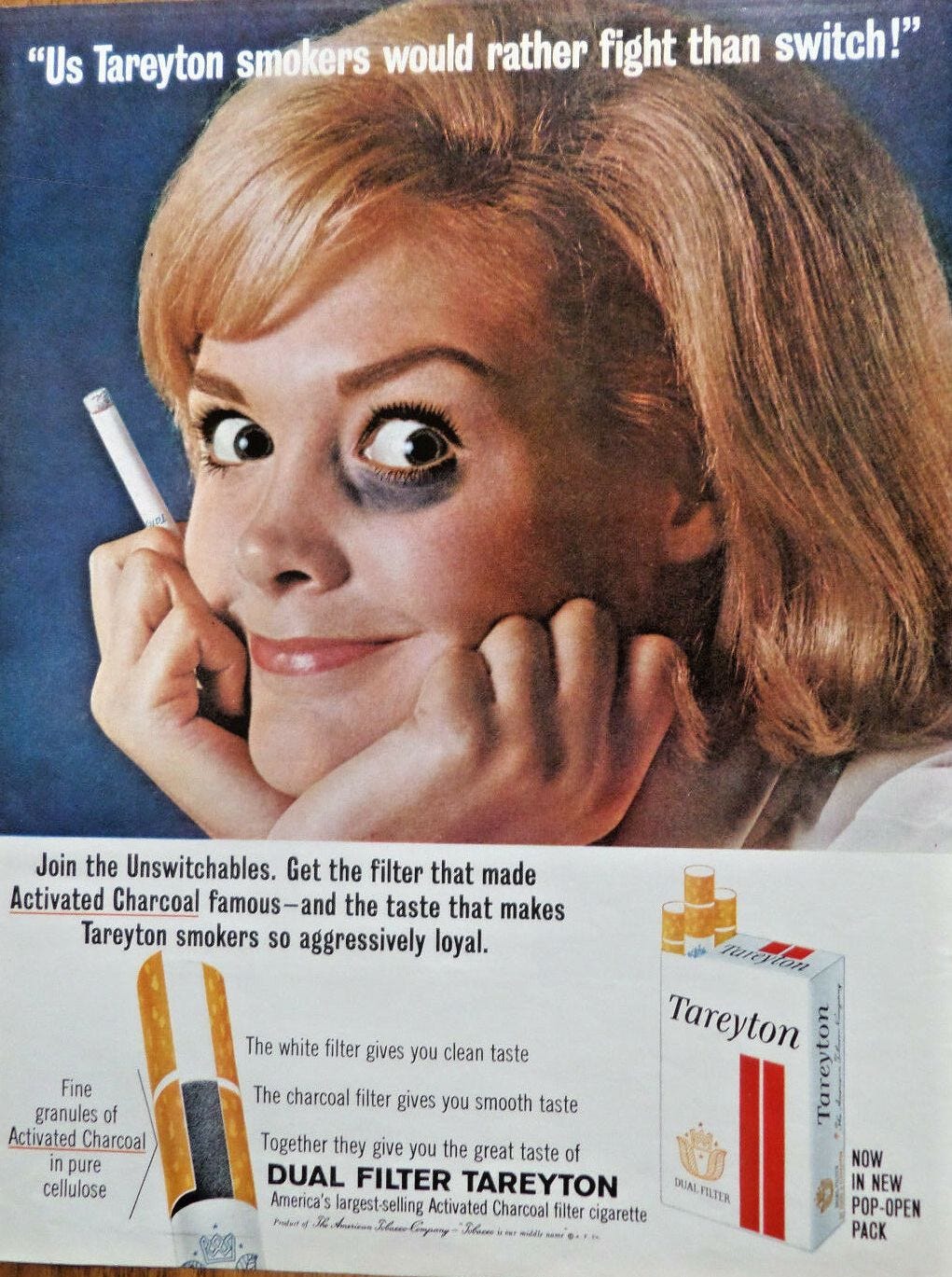
I'd Rather Fight Than Switch
No, the parties didn't switch positions. Democrats are still the party of slavery.

The notion that the Republican and Democratic parties in the United States underwent a dramatic "switch" in ideology or voter base is a persistent narrative, often tied to the Civil Rights era of the 1960s. Proponents argue that the Democrats, once the party of slavery and segregation, became the progressive champions of equality, while Republicans, the party of Lincoln, morphed into defenders of conservatism and states' rights. However, this oversimplified "party switch" theory crumbles under historical scrutiny. The parties evolved, not swapped, driven by broader societal shifts, regional dynamics, and strategic adaptations rather than a clean ideological flip.
Start with the foundational evidence: the Republican Party, born in 1854, was anti-slavery, rooted in Northern industrial interests and abolitionism. Abraham Lincoln’s 1860 victory and the Civil War cemented this identity. Democrats, meanwhile, dominated the agrarian South, defending slavery and later segregation through the Jim Crow era. Post-Reconstruction, the "Solid South" remained a Democratic stronghold, not out of ideological purity but practical power - local elites used the party to maintain racial and economic control. This alignment held for decades, but it wasn’t static.
The supposed switch often hinges on the New Deal and Civil Rights eras. Franklin D. Roosevelt’s 1930s coalition brought urban workers, immigrants, and some African Americans into the Democratic fold, shifting its base northward. Yet, Southern Democrats - Dixiecrats - remained fiercely conservative, resisting racial progress. The 1964 Civil Rights Act, signed by Democrat Lyndon B. Johnson, is cited as the tipping point. Yes, Republicans like Barry Goldwater opposed it, and Richard Nixon’s "Southern Strategy" later courted disaffected white Southerners. But this wasn’t a switch - it was a realignment. Republicans didn’t adopt the old Democratic platform; they capitalized on regional discontent with federal overreach and cultural shifts.
Look at voting patterns. In 1960, John F. Kennedy won many Southern states; by 1972, Nixon swept them. Yet, Congress tells a deeper story. Southern Democrats didn’t vanish overnight - conservative "Blue Dogs" persisted into the 1990s. Republicans didn’t become segregationists; they emphasized states’ rights and law-and-order, appealing to a South already transitioning economically and culturally. The 1860s Republican abolitionists and 1960s Republicans weren’t identical, but their core - limited government, individual liberty - evolved, not reversed. Democrats, meanwhile, retained a statist bent, shifting from agrarian populism to urban progressivism without abandoning their big-government DNA.
The fact remains that without the leadership of Republican Senator Everett Dirksen, the Civil Rights Act would not have passed. Democrat Senator Robert Byrd filibustered the bill. As to the votes, in the Senate, 82% of Republicans voted for the bill vs. 69% of the Democrats, similarity in the House, 80% of the Republican representatives voted in favor vs. 63% of Democrats.
It is this time period on which the Democrats focus when they try to make “the parties switched positions” when the racist positions and actions of the Democrat Party are brought up – and there is some truth to that assertion – but the “switch” was Republicans taking the conservative positions from the Democrats while leaving the racist ideology behind for the Democrats to keep – which they have as the constructed the welfare “plantation” of Lyndon Johnson’s “Great Society” programs.
Ideological continuity disproves a switch. Republicans championed free markets and federalism from the Gilded Age to Reagan; Democrats, from Andrew Jackson to FDR, favored centralized power and coalitions of the "common man," however defined. The Civil Rights era accelerated a voter sorting - liberals to Democrats, conservatives to Republicans - but platforms didn’t trade places. African Americans, once Republican loyalists, drifted Democratic by the 1930s, driven by economic policies, not a sudden party swap. The South’s GOP turn, completed by the 1990s, reflected demographic and cultural shifts, not a Democratic handover.
The "switch" myth flattens complex history into a tidy tale. Parties don’t exchange souls; they adapt to voters and times. Republicans didn’t inherit slavery’s mantle, nor did Democrats steal Lincoln’s halo. Both retooled their tents - Republicans toward a broader conservatism, Democrats toward inclusive progressivism - without ever truly switching places. Evolution, not exchange, defines their paths.
The Civil Rights Act can be traced back into the Eisenhower years. Democrats saw an opportunity in the early 60s to "Turn it around and make it work for you". Lynden was convinced and expressed his epiphany as, "We'll own them for generations".