
Good Grief
How long can an aggrieved group hold on to their grievance?

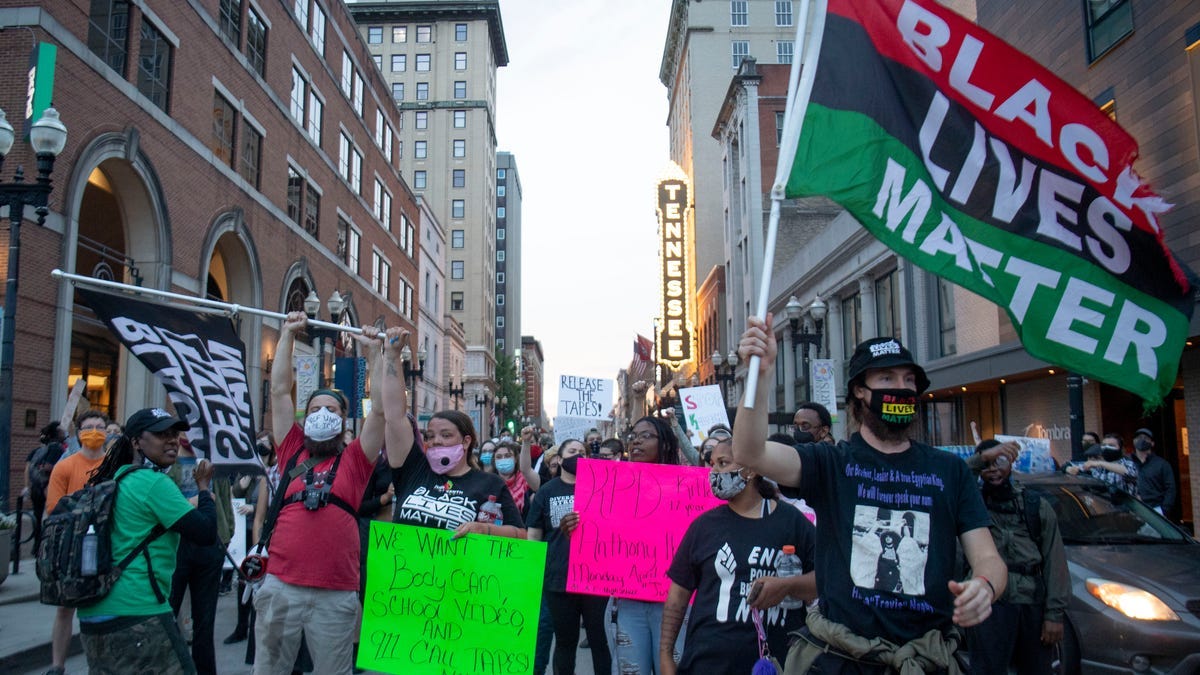
A friend of mine asked me an interesting question today. We were talking about the rise of “grievance” groups and how they tend to drive socioeconomic focus.
He asked me how long I thought an aggrieved group could - or would - hold a grudge.
I had not really given much consideration to that question but as I thought about it, it breaks down into a few elements before I can attempt to formulate an answer.
First, we need to understand that any grievance, real or perceived, must have a target – there must be a person or a group that the grudge is held against because it must have a landing spot – there must be someone or some group that the person or collective group holds the grudge against – the target the griever (or aggrieved) believe is responsible for whatever it is they feel was done wrong to them.
And let’s not underestimate the importance of the target person or group because they have a primary role in how long any grievance can be legitimately held. I use the term “legitimate” for a reason because for a grievance to be legit, the target person or group must treat it that way.
Constitutional scholar Randy Barnett said that the reason our Constitution is valuable is because we treat it that way. Grievances fall into that same process.
Just because a grievance is held does not mean it is legitimate – and the truth is that legitimacy has little to do with how long it lasts. People can hold a grudge for a lifetime – but different from a personal grudge, from a sociopolitical perspective, the target group must validate it by paying attention to it, worrying about it, or trying to make amends for it.
It takes two to tango, one supposes.
And in that lies the basis for my answer to him.
Grievance can only last as long as it has legitimacy - which can only be bestowed by the actions or reactions of the target person or group.
Racism is a good example of how the charge of racism lost its value and impact.
Consider the following conditions:
A white target group is accused of causing black poverty and large enough segments of the white target group are poor.
The accusation is based on skin color rather than culture, drive or ambition and people of the same skin color succeed in the allegedly “white” American culture and socioeconomic system.
If the accusation against whites is treated as universal guilt, but large enough segments of the white target group are not racist, nor do they exhibit racist tendencies.
The accusation against the white target group is so overbroad, ubiquitous, or ridiculously unrelated to race (like being on time or writing things down) are cited as being racist.
The white target group is accused of racial discrimination due to greater incarceration rates of the black grievance group, but the black grievance group commits more crimes.
All of the preceding conditions are proven and statistically true, by the way.
When these things are experienced for long enough and the target group witnesses enough credible evidence that the accusations are false (or simply shared by both people or groups), the target group stops caring and simply stops paying attention to the aggrieved group – and when the target of the accusations stops caring, the accusations lose their force, power and relevance.
As a group, whites have been wrongfully accused of racism for so long, the majority just don’t give a damn.
So, my answer is this: a grievance group can hold a grudge forever, but when the targeted group just doesn’t care anymore, the grievance is just envy, hate or ignorance masquerading as a grievance.
What it is in essence is a form of emotional blackmail. But nothing the “target” groups does to address the grievance is ever enough. Rather any compliance just encourages more and more blackmail.
Exactly. That is why Democrats are moving away from Blacks as their primary focus for elections. Brown is the new Black. Don't be surprised when more Blacks move to the Republican side, or at least away from the Democratic Party in coming elections.