
Friendly Fire Culture
Like an untrained immune system, a protected society can lose the ability to tell threat from reality.

One thing I want to acknowledge up front is this: I am not a medical or psychological expert. I have no clinical training beyond entry-level university coursework and the behavioral and motivational lessons gained from more than forty years of managing people. What I understand about how individuals and groups behave comes primarily from observation and direct involvement rather than academia.
What I do know is that science is ultimately an extension of natural law. The scientific method rests on a simple logical convention—something either is or is not—and we test, replicate, and observe in search of causation.
So, view this as less of a definitive proposition and more of a “thought exercise.”
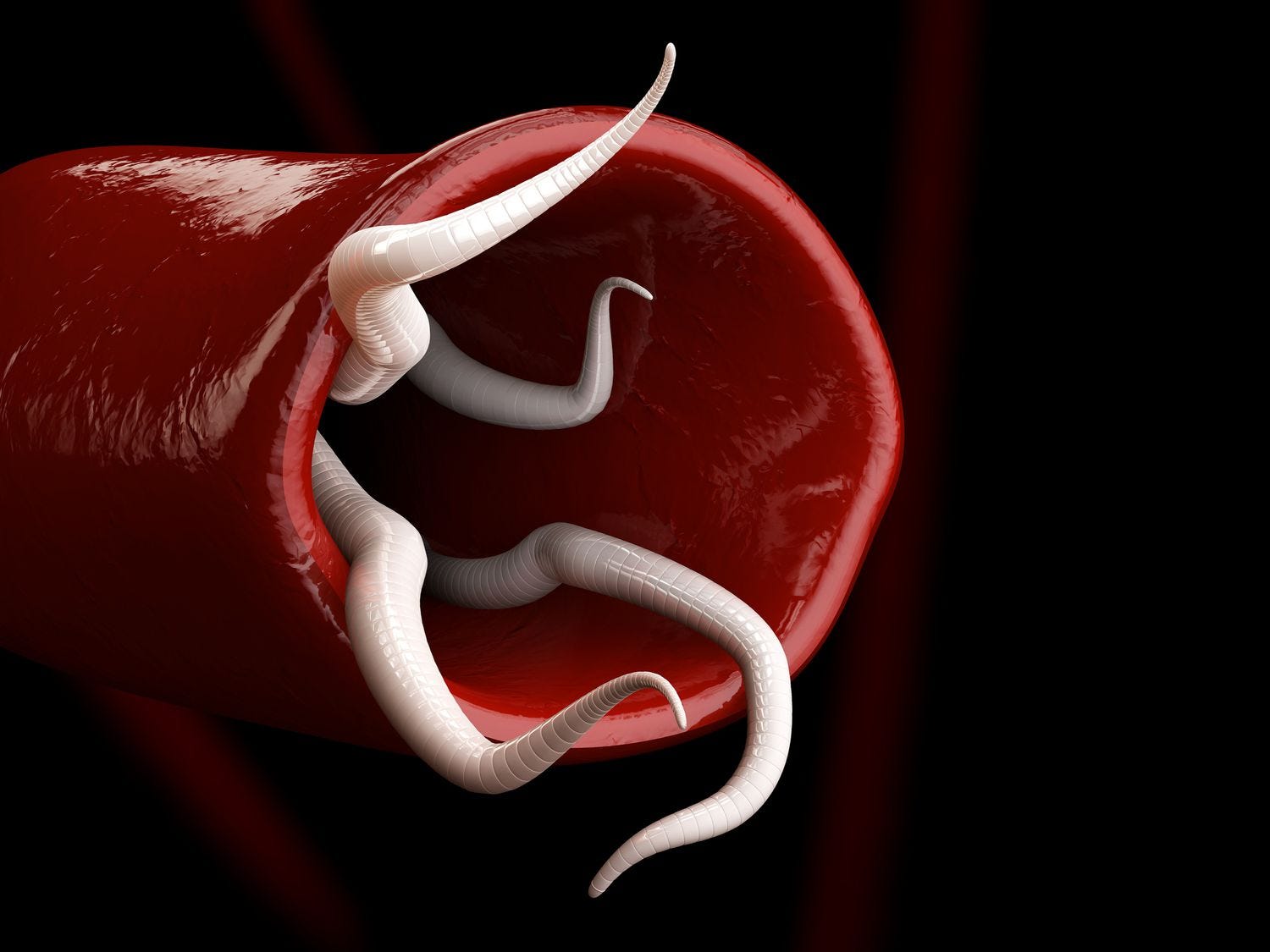
A few years ago I encountered an article discussing helminthic therapy as a response to rising autoimmune diseases. The premise was straightforward: modern sanitation eliminated parasites that once trained the human immune system. Without those challenges the immune system sometimes turns inward, engaging in friendly fire. Multiple sclerosis, inflammatory bowel diseases, type 1 diabetes, rheumatoid arthritis, and severe allergies have all risen dramatically in modern sanitized societies.
Helminthic therapy proposes reintroducing certain beneficial parasites to help regulate immune response and prevent the body from attacking itself. In trying to perfect our environment, we removed both harmful and beneficial stimuli and then had to invent a new intervention to correct the consequences—sometimes creating problems worse than the condition we eliminated.
We humans often outsmart ourselves.
That idea led me to notice how much society behaves like an organism. The people who compose it perform functions analogous to organs—producing, repairing, and adapting—the mechanical processes that keep society breathing. Yet organisms also contain bacteria, viruses, and parasites, and society has equivalents: disruptive personalities, conflict, and behaviors that strain the whole.
I am not suggesting a dystopian sorting of people into castes. My point is simply an illustrative parallel: bodies and societies develop resilience through exposure to stressors. Remove every challenge from a body and the immune system weakens. Remove every friction from society and the same thing may happen psychologically.
Which raises a difficult question: when behaviors sharply conflict with social norms but normal reactions to them are suppressed, are we resolving tension—or merely bottling it up?
Consider children. The playground once functioned as a controlled laboratory where behavior surfaced early and consequences remained small. Kids learned limits, hierarchy, emotional control, and coping strategies in an environment where the stakes were low. Without that stage, unresolved pressures do not disappear; they are postponed.
At the same time, we increasingly encourage children to interpret feelings as reality—even when the mind and body are in direct contradiction—and then structure the environment to affirm the contradiction rather than resolve it. I can only imagine the psychological strain of wanting to be one thing while knowing at a visceral level it cannot occur. Intentionally reinforcing a permanent internal conflict seems unlikely to relieve it, especially when the adults doing it form a temporary support group. The human mind does not possess infinite mechanisms for reconciling irreconcilable realities.
I am not proposing cruelty, nor am I advocating indifference to suffering. Discipline, compassion, and guidance remain essential. The question is whether eliminating all social friction—or adding an unresolvable internal contradiction—produces strength or fragility.
When we eliminated parasites, autoimmune disease increased because the immune system, deprived of external challenges, began attacking the body itself. When we attempt to eliminate all social stressors, do we risk creating psychological autoimmune reactions—internal conflicts with no external release?
Perhaps in trying to remove every harmful influence, we also remove the developmental pressures that teach resilience. A system designed to prevent all discomfort may instead produce minds unable to process reality when discomfort inevitably arrives, and if the analogy holds, the danger is not that children encounter challenge, but that they never learn how to metabolize it. A society that treats every tension as pathology may eventually discover that, like an immune system deprived of training, it has turned inward—confused, reactive, and unable to distinguish threat from normal life.
And by the time that reaction appears, the problem will not be the presence of conflict, but the absence of any capacity to handle it.
Maybe that explains why our young, both the mentally ill and gender dysphoric, are now compelled to kill innocents as a means of revenge or to resolve their own contradictions.
Perhaps the cure is not a cure at all—and it is even worse than the disease.