
False Hero Worship
Why do people venerate alleged criminals like Luigi Mangione, Karmelo Anthony, and Kilmar Abrego Garcia?

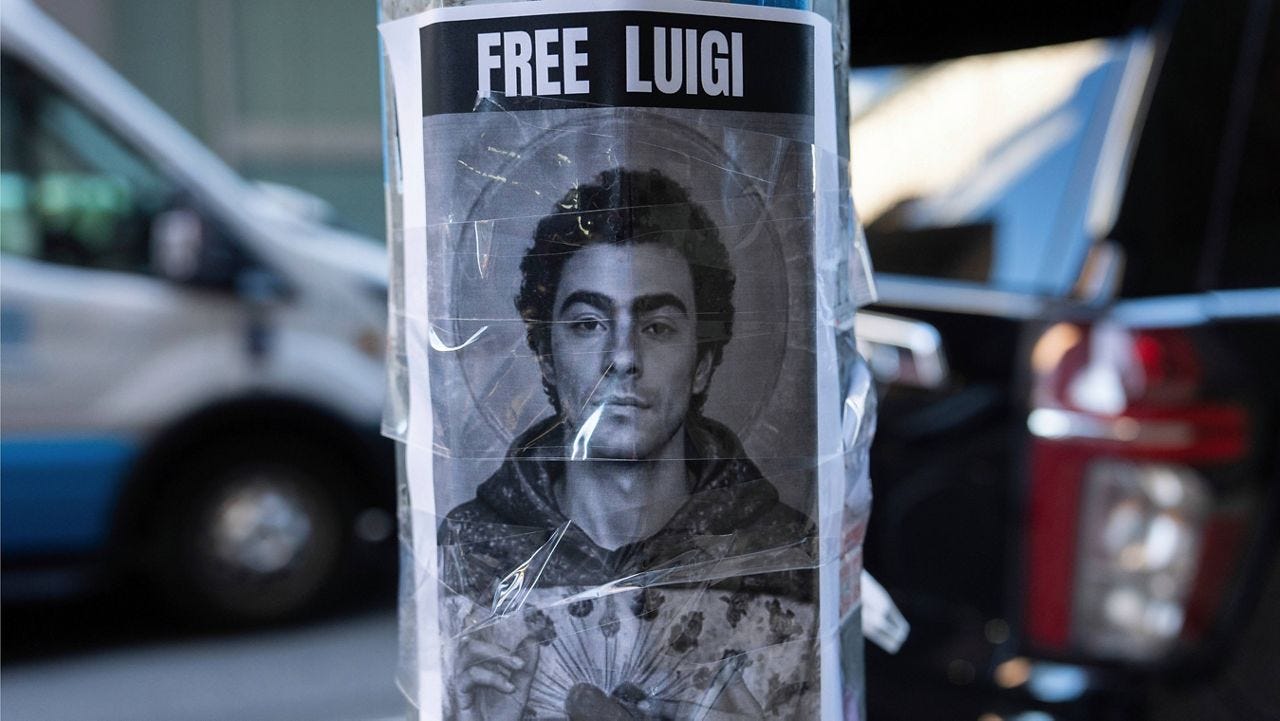
Joanne Chesimard, Mumia Abu Jamal, Michael Brown, George Floyd, Luigi Mangione, Karmelo Anthony, Kilmar Abrego Garcia - separated by time and space, all these people have something common.
They are all heroes of the Democrat left (I allow a little room for some Democrats because I refuse to believe all of them are infected with this sickness).
But why?
The veneration of alleged criminals, such as Luigi Mangione and Karmelo Anthony, reflects a complex interplay of psychological, social, and cultural factors. Mangione, caught on video shooting UnitedHealthcare CEO Brian Thompson in December 2024, and Anthony, accused of a high-profile killing, have both garnered significant public support, marked by crowdfunding campaigns and merchandise like “Free Karmelo” T-shirts. These cases illustrate why individuals who commit serious crimes are sometimes viewed as heroes, driven by systemic frustrations, romanticized vigilantism, psychological impulses, institutional distrust, social media amplification, and anti-establishment sentiment.
A primary driver of this veneration is frustration with systemic injustices, particularly in the U.S. healthcare system for Mangione and broader societal inequities for Anthony. Mangione’s act targeted a CEO of the nation’s largest medical insurer, a symbol of corporate greed blamed for high premiums and denied claims. His manifesto, railing against “parasitic” insurance companies, resonated with those feeling exploited. Similarly, Anthony’s case, though details vary, tapped into anger against perceived institutional failures, with supporters viewing him as challenging an unjust system. Crowdfunding platforms like GiveSendGo raised over $905,000 for Mangione and substantial sums for Anthony, framed as support for causes—corporate accountability or social justice—rather than just individuals. Donors cited healthcare inequities, due process concerns, and systemic failures, viewing both as figureheads for their grievances.
The image of Mangione and Anthony as modern-day vigilantes fuels their hero status. Like historical “folk heroes” such as John Dillinger, who robbed banks during the Great Depression, they are seen by some as striking against an unjust elite. Mangione’s writings described his shooting as a “direct challenge” to corporate corruption, while Anthony’s supporters frame his actions as resistance against systemic oppression. Signs like “Eat the rich” for Mangione and “Free Karmelo” T-shirts reflect these sentiments, casting their acts as symbolic defiance. A December 2024 Economist/YouGov poll showed 21% of Americans viewed Mangione favorably, suggesting similar sympathy for Anthony’s perceived motives.
Psychological factors, such as hybristophilia, also play a role. This attraction to violent figures is amplified when the accused is charismatic. Mangione, an Ivy League graduate dubbed the “hot assassin,” gained over 400,000 X followers, with hashtags like #FreeLuigi trending. Anthony’s “Free Karmelo” T-shirts and online fanbase indicate a similar allure, mirroring cases like Ted Bundy where fascination transcends moral judgment. Social media blurs the line between celebrity and criminality, with TikTok memes and merchandise amplifying their appeal. Prominent figures like Taylor Lorenz, prominent internet scold and cancel culture queen, called Mangione a “moral man” - further legitimizing this fascination.
Distrust in institutions drives support. Mangione’s defense criticized his “perp walk” and death penalty pursuit as publicity stunts, while Anthony’s supporters allege biased prosecution. The removal of Mangione’s GoFundMe campaigns and restrictions on Anthony’s fundraising reinforced narratives of censorship. Supporters, including figures like Chelsea Manning for Mangione, rallied outside courtrooms, believing both were targeted to suppress dissent. Crowdfunding appeals emphasized constitutional rights, appealing to those skeptical of state overreach.
Social media amplifies veneration by creating echo chambers. Hashtags like #EatTheRich and #FreeKarmelo went viral, and the Network Contagion Research Institute noted a “normalization of political violence.” X posts reveal polarization: some call Mangione and Anthony “heroes” for challenging inequities, while others condemn supporters’ moral decay.
Mangione’s bullet casings, inscribed with “DELAY,” “DENY,” and “DEPOSE,” and Anthony’s relatable struggles make them sympathetic to those burdened by systemic woes. Ultimately, their veneration reflects cultural disillusionment with power structures. While their alleged crimes are indefensible to many, for others, they symbolize a desperate stand against systemic failures, transforming criminals into folk heroes, even if mythology - rather than reality - is the basis for that transformation.
There is little else in this world as contemptible as worshipping evil as good and obscuring light with darkness. See Isaiah 5:20
Yes, I too don't think "Democrats" are a monolith. The Liberal Dems are not extremists--but they (the voters--not the politicos) are asleep at the wheel. The Leftists are the "woke" psychotics.