
Erika Agonistes
TPUSA was Charlie Kirk and Charlie Kirk was TPUSA. He was such an iconic, one-of-a-kind personality and intellect, it seems impossible to separate the two, even after Charlie’s assassination.

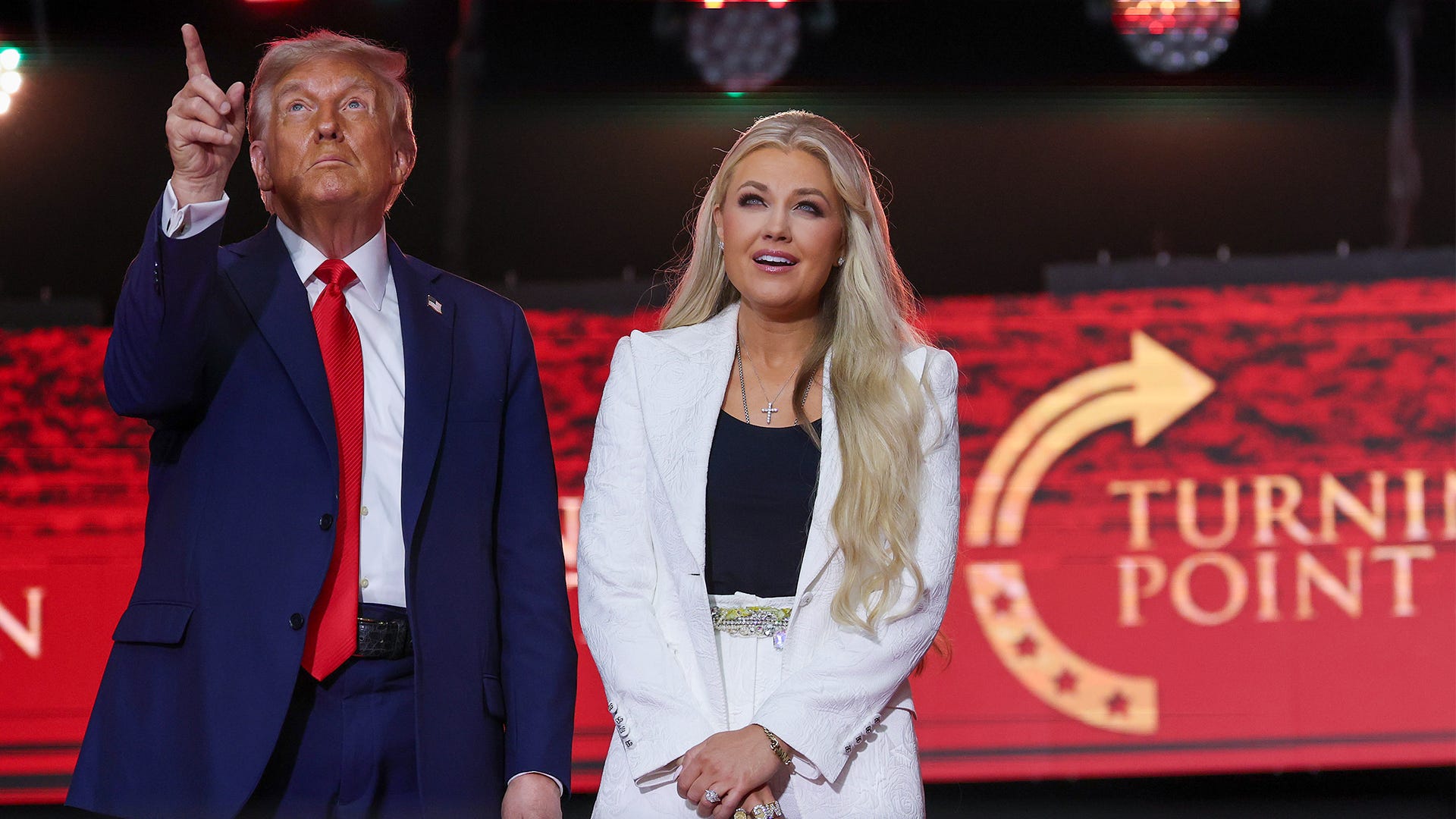
Some young conservatives seem to have a problem accepting Erika Kirk as the head of Turning Point USA, a massively successful spiritual and political movement. She didn’t mourn like some thought she should, she doesn’t dress the way they expect, she isn’t prepared to lead, and she seems too close for comfort to J.D. Vance, they say.
A clear TPUSA problem is that movements built on ideas tend to outlive their founders but those built on personalities tend to struggle the moment the personality is gone.
For years, Charlie Kirk wasn’t merely the face of the organization, he was the organization. His cadence, his framing, his instincts, and his charismatic persona became the delivery mechanism for the ideas TPUSA promoted and the success it achieved. Supporters didn’t just follow a set of principles; they followed the man articulating them and is a distinction that matters, because when the messenger becomes inseparable from the message, loyalty shifts from institutional to personal.
The issue I see with Erika taking the reins is that personal loyalty does not transfer cleanly.
What we are seeing now is not, at its core, an evaluation of leadership capability. It is a substitution problem. Supporters who were drawn in by a specific voice, a specific tone, and a specific presence are now being asked, implicitly, to accept something different under the same banner. Even if the underlying ideas remain intact, the experience has changed. And people are remarkably sensitive to changes in experience, particularly when those experiences are tied to identity.
That sensitivity often disguises itself as critique. Complaints about demeanor, presentation, tone, even how someone handles personal loss, rarely stand on their own as serious objections. They are signals. Proxies. Ways of expressing a deeper discomfort that is harder to articulate: this doesn’t feel like what I signed up for.
There is also an asymmetry at play that few acknowledge openly and that is that founders, over time, become symbols. Their rough edges are sanded down by familiarity and loyalty. Their missteps are contextualized, their strengths amplified, their persona mythologized. Successors, by contrast, enter the stage as fully human and are judged in real time. They are not compared to who the founder was on an average day, but to who the founder has become in memory, refined, idealized, stripped of contradiction, and recontextualized as icons.
That is an impossible standard for the next ups to meet, especially in the context of an assassination.
In the case of a spouse stepping into or alongside leadership, the difficulty compounds. The public rarely sees such a figure as an independent actor. Instead, they are viewed through a relational lens, defined by proximity rather than by merit. This creates a credibility gap that has little to do with competence and everything to do with perception.
The question isn’t “Can she lead?” but rather “Is she him?”
The answer, of course, is almost always self-evidently no, so the evaluation of the next in line begins at a deficit, not at zero.
Layer onto this the cultural expectations embedded within any values-driven movement. Every such group carries an unspoken template of what leadership should look like, not just in ideology, but in tone, style, and even personal comportment. When a new figure deviates from that template, supporters often interpret the deviation as a departure from the mission itself, rather than a difference in expression. The result is a kind of aesthetic policing that masquerades as principled disagreement.
Beneath all of this lies something more fundamental: the discomfort of transition. Movements built around a dominant personality create clarity, reduce complexity and followers know what to expect. They offer a single point of reference for what is true, what matters, and how to interpret events but when that point of reference is removed, even temporarily, ambiguity rushes in. Ambiguity makes people uneasy and uneasy people look for something to stabilize against.
I’ve had many roles of going into struggling businesses as the new leader and my observation is that none of this is really unique to TPUSA.
It is a recurring pattern across political movements, corporations, religious institutions and even sports teams. The more a leader embodies the identity of the organization, the harder it becomes for the organization to exist without them. Some manage the transition by institutionalizing their ideas and building structures that outlast personality. Others break apart like migrating icebergs, as followers sort themselves into factions based on competing interpretations of what the founder “really” stood for. Many simply fade, their energy dissipating once the central figure is gone.
It seems to me that the reaction to Erika Kirk is less an indictment of her and more a reflection of the structure she has stepped into. She is not just being asked to lead, she is being asked, implicitly (and unfairly), to be Charlie and to resolve the tension between a movement’s past identity and its uncertain future. That seems more of a structural test than a test of leadership.
History suggests that structure, more than any individual, will determine what happens next. It has been a little over 6 months since Charlie was murdered, if TPUSA is to continue its role, that resolution needs to come soon.
TPUSA remains a remarkable organization, vital to the resurgence & vitality of American Conservatism.
The hysterics from erstwhile Conservatives who have lost their way including but not limited to Candace Owens are a shameless embarrassment.
My financial support for TPUSA has increased since Charlie’s assassination. I invite everyone reading this to do likewise.
God bless Erika & the kids—& TPUSA.
I hadn't thought about this very deeply, but I think you're right. And, beyond TPUSA, I see the same thing happening to "MAGA," after President Trump is out of office. JD Vance, Marco Rubio, and Ron DeSantis are all great contenders to be next in my book, but none of them will ever match up to the big personality of Donald J. Trump.