
Destroying the American Work Ethic
The luxury beliefs of faux aristocrats are killing the idea that manual work is worthwhile.

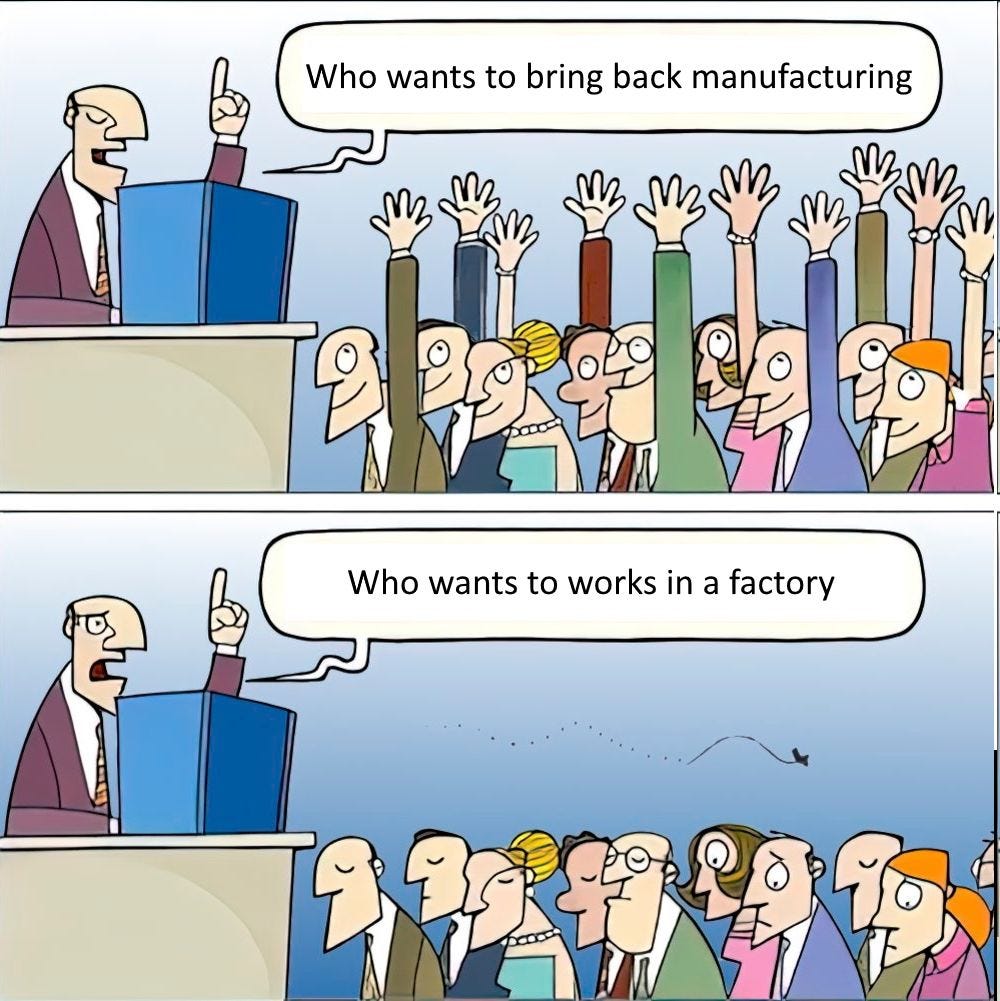
The notion that "I'm too good to do that" reflects an aristocratic pretense and luxury belief often adopted by individuals who have experienced genuine privilege. This attitude manifests in various forms, particularly among certain political figures and commentators. For instance, Representative Jasmine Crockett exemplifies this false sense of aristocracy when she asserts that America relies on illegal immigrants to perform labor because Black Americans won’t return to what she terms a “plantation.” Similarly, Nancy Pelosi and numerous other Democrats have argued that the nation depends on illegal aliens to pick crops, clean toilets, and mind the kids, implying that such tasks are beneath American citizens. They demonize entry-level jobs - like working at McDonald’s - that teach young people the value of work, and they assure the extinction of those jobs by legislating minimum wages that overprice the labor’s value, reducing opportunities. Under the guise of “safety,” many jobs once done by kids have been regulated out of existence, erasing chances for them to learn responsibility. I was driving a tractor and piloting a farm truck at ten years old. By thirteen, I could operate a bulldozer - my dad owned a construction company. These tasks, considered “too dangerous” today, were indeed risky, but I was taught to handle them safely.
It sure seems these self-absorbed elites are teetering on the edge of promoting a new form of slavery, establishing a permanent underclass to “do jobs Americans won’t do.” This mindset has evolved into a broader rejection of revitalizing domestic manufacturing, with critics on the left claiming, “Nobody wants to work in those factories anyway.” This dismissive stance reveals a growing elitism that distances itself from the practical realities of labor and self-reliance.
This faux aristocratic attitude surges during economic downturns, a pattern evident in past rhetoric. During the Great Recession, “funemployment” emerged, romanticizing unemployment as liberating rather than a struggle. High-profile Democrats, including Pelosi, reinforced this by advocating for government payments to free people from what she called “job lock” - the idea that individuals should pursue personal passions without earning a living. Such arguments frame work as optional, a luxury for those who can afford to shirk it. This perspective clashes with the foundational values that define the American spirit.
At its core, this denial of responsibility undermines America’s essence. It dismisses the Puritan work ethic - a belief in the dignity of labor and the moral duty to contribute through effort. Deeply embedded in our history, this ethic holds that work isn’t just a means to an end but a virtue shaping character and community. By deeming certain jobs undesirable, proponents of this pretense erase the duty to provide for oneself and one’s family, a cornerstone of American independence. Our tradition has never been about avoiding necessity but embracing it - doing what needs to be done, regardless of preference or status.
Historically, Americans prided themselves on resilience, tackling whatever built and sustained the nation. Farmers tilled soil, factory workers fueled industrial growth - not because they loved it, but because it was necessary. Today, this entitlement narrative threatens that legacy, suggesting some are above manual labor or steady employment, fostering dependency over self-sufficiency.
I’ve lived it. Bad decisions impacted my family. I’ve faced downsizing, layoffs, and company closures - some during downturns when finding work was brutal, especially at my prior level. Thanks to skills learned as a kid and young adult, I kept food on the table. I laid brick, did carpentry, dug ditches, took odd jobs - anything to make a buck. A factory job then would’ve been a godsend. In fact, I worked in factories to pay for college. I’m not alone - millions of Americans have done hard things.
Ultimately, the “I’m too good to do that” mindset is a luxury belief, a privilege of those insulated from economic realities. It ignores the millions laboring in fields, factories, and service roles out of necessity and pride. America’s strength lies in rolling up its sleeves, not dreaming of a work-optional world. Abandoning that abandons the identity that built this nation.
What has been stated many times - Hard work never hurt anyone...is such a truism, and in fact it has proven beneficial in many instances. Michael - you mentioned you worked in a factory to pay for college, well we are brothers in that regard as I did the exact same.
I worked at Remington Arms gun manufacturer in Ilion NY while I went to college. This was the late 70's and I worked piece work. I was considered a floater as I could handle many of the jobs from lathe work, to drill press, to breach bore and much more. It was dirty work; it was hard work especially in the summers when there was no AC to cool down the inside of the brick building. But through it all I kept my eye on the ball and that was to keep food on my families table, a roof over our heads and earn my education.
Later in life when I had my career in the computer tech field, I happened into starting a janitorial/maintenance business. For 13 years I worked my full-time job and had a very active sideline hustle. The business took its toll on my body hauling the equipment in/out of the van and running the buffers, strippers, etc. But I cleaned toilets, strip/waxed floors, vacuumed, dusted, and anything else the customer needed cleaned.
I tell you all of this because there is also a lot of pride that comes from the hard work ethic. And it is my feeling that the youth of today does not know what that pride feels like, and may never know. Lastly, I will say that at no time did I feel like the peasant, but I held my head high knowing that I was not only contributing for the customer and their patron's sake, but I was also contributing for my family's sake.
This is the first time I have heard the idea of “funemployment.” At first I thought it was “fun-employment” - doing something you greatly enjoyed. But context revealed you meant “f-unemployment” which my father would have called “goofing off.” That begs the question “then who will pay for one’s welfare checks?” But I had forgotten about “Modern Economic Theory” the idea that the government can simply print our GDP without the need for any labor, rent or investment. Only a party of complete grifters could believe in this stuff because in their own personal cases it seems to work!