
Democrats' Education Fail
They say you only hurt the ones you love the most - Democrats seem to hurt the ones who support them the most.

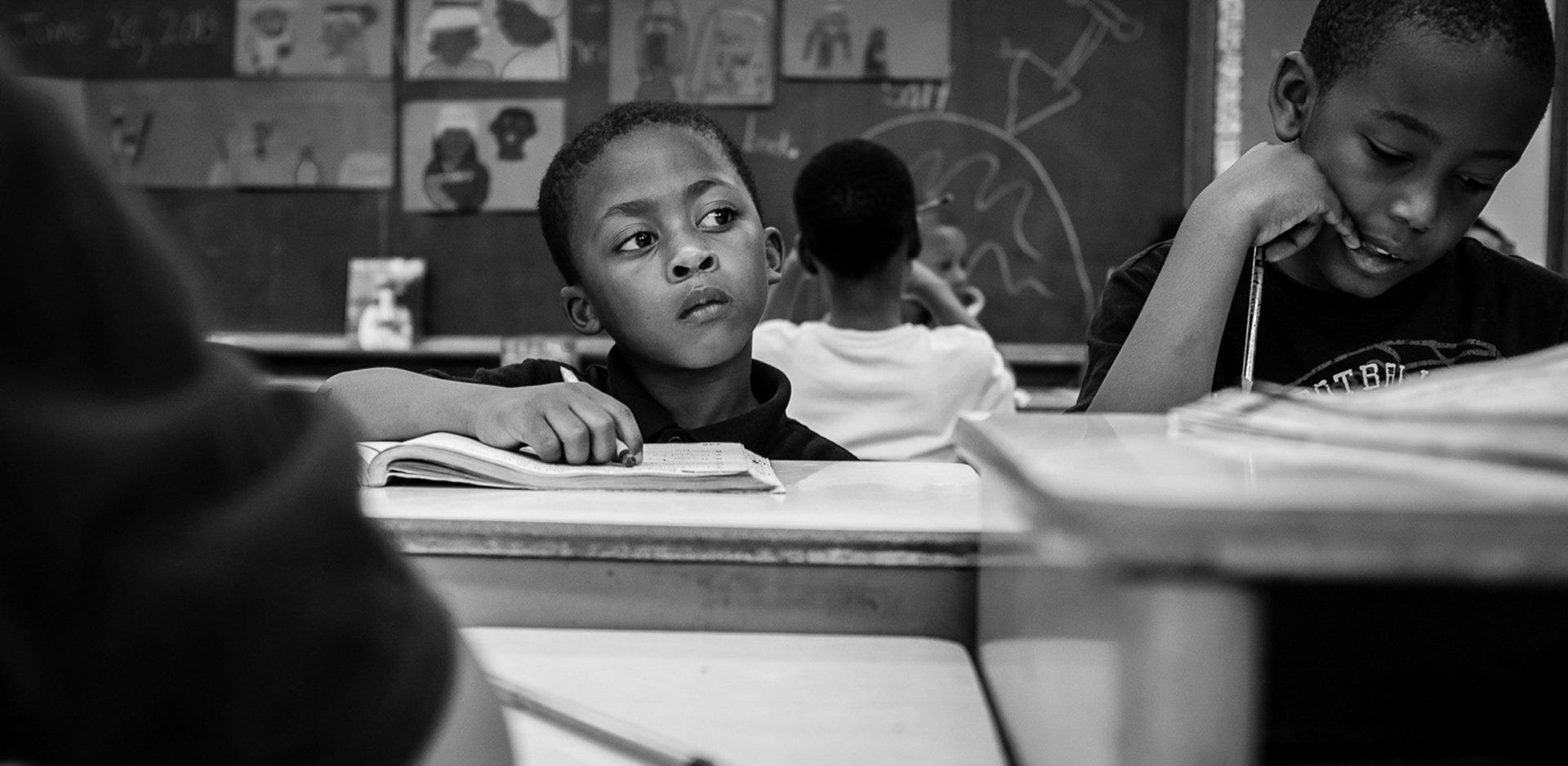
A friend got me to thinking about how closely the perspective of contemporary Democrats mirror that of their forebears in antebellum America when it comes to our failing schools of today – and how the largest group being harmed are mostly the children of lower income Democrat constituents.
Prior to the Civil War, the deliberate prohibition of education for enslaved individuals was a cornerstone of the oppressive system designed to maintain control and perpetuate inequality. Laws across Southern states explicitly banned teaching enslaved people to read or write, rooted in the fear that literacy would foster rebellion and undermine the economic and social order reliant on slavery. This denial of education was not a mere oversight but a calculated strategy to limit intellectual development, restrict access to ideas, and ensure subjugation. Today, while education is not explicitly forbidden, the persistent deficiencies in poor education systems - particularly in underfunded, underserved communities echo this historical injustice in subtle but striking ways. Both phenomena reflect systemic failures that disproportionately harm marginalized groups, curtail opportunity, and reinforce cycles of poverty and powerlessness.
In the antebellum South, literacy was seen as a threat to the status quo. Enslaved individuals who learned to read, like Frederick Douglass, often used that knowledge to challenge their bondage, proving the enslavers’ fears justified. Education was withheld to keep enslaved people dependent, unable to navigate legal systems, read contracts, or organize effectively. Similarly, modern education systems in impoverished areas – even with inflows of federal funding – are often marked by overcrowded classrooms, outdated materials, and underqualified teachers and fail to equip students with the tools needed to escape economic hardship. In 2023, the National Assessment of Educational Progress reported that only 17% of eighth graders in low-income urban schools were proficient in reading, a stark contrast to their wealthier peers. This gap mirrors the antebellum intent to limit intellectual empowerment, albeit through neglect rather than outright prohibition.
Funding disparities further parallel with the past. Slave states invested nothing in the education of the enslaved, preserving resources for the white elite. This mirrors the antebellum logic of resource allocation: those deemed less valuable by the system are denied the means to rise. The result is a modern form of intellectual disenfranchisement, where potential is stifled not by law but by chronic underinvestment- but let’s be honest, on average America spends a lot of money on education, often for little return.
I don’t think it is the money that is the problem.
For fiscal year 2022, (the last year with complete data) the U.S. Census Bureau reported that public school spending per pupil reached $15,633, reflecting an 8.9% increase from $14,358 in fiscal year 2021. This marked the largest year-over-year percentage increase in over two decades. While funding varies widely – for example, in fiscal year 2022, New York led with $29,873 per pupil, while Utah spent the least at $9,552 but funding does not necessarily equal achievement. Utah is ranked 13th in the nation in grades 4 and 8 subjects like reading and mathematics, where New York is ranked 22nd - while spending $20,000 more per student per year.
On a return-on-investment basis, the states that spend less often tend to do better.
The consequences in both eras are hauntingly similar. Illiteracy among enslaved people ensured they remained economically and socially immobilized, bound to labor without agency. Today, poor education correlates strongly with higher dropout rates, unemployment, and incarceration. The U.S. Bureau of Labor Statistics noted in 2023 that high school dropouts face unemployment rates double those of graduates. Like their antebellum counterparts, these individuals are trapped in a system that limits their ability to challenge their circumstances, suggesting that inadequate education serves as a modern mechanism of control, albeit less overt.
While intent differs - antebellum bans were malicious, whereas today’s failures stem from neglect, uninvolved parents, poor discipline, social engineering and just bad teachers and administrators, the outcomes align: restricted access to knowledge perpetuates disadvantage.
While both systems reveal a societal reluctance to fully address the root causes of disparities in America’s public-school systems and raise the question of why Democrats ignore one of their key constituencies, black Americans and their children, by blocking any efforts (like school choice and funding portability) to change a broken system. Their answer is to lock those children behind the walls of failing schools and just to spend even more.
Perhaps it is to ensure sufficient numbers of future democrat voters. It seems the less informed and less able to think critically are the ones who vote for democrats. The childish displays at Trump's speech were not aimed at people who think.
Now segment that $15k by hands-on teachers and “overhead”.
I think overhead is out of control…