
America the Sin Eater
We didn’t choose to police the world—we earned the burden by pretending we didn’t have to. In a borderless, asymmetric world, refusing to act early doesn’t prevent conflict—it guarantees a bigger one.

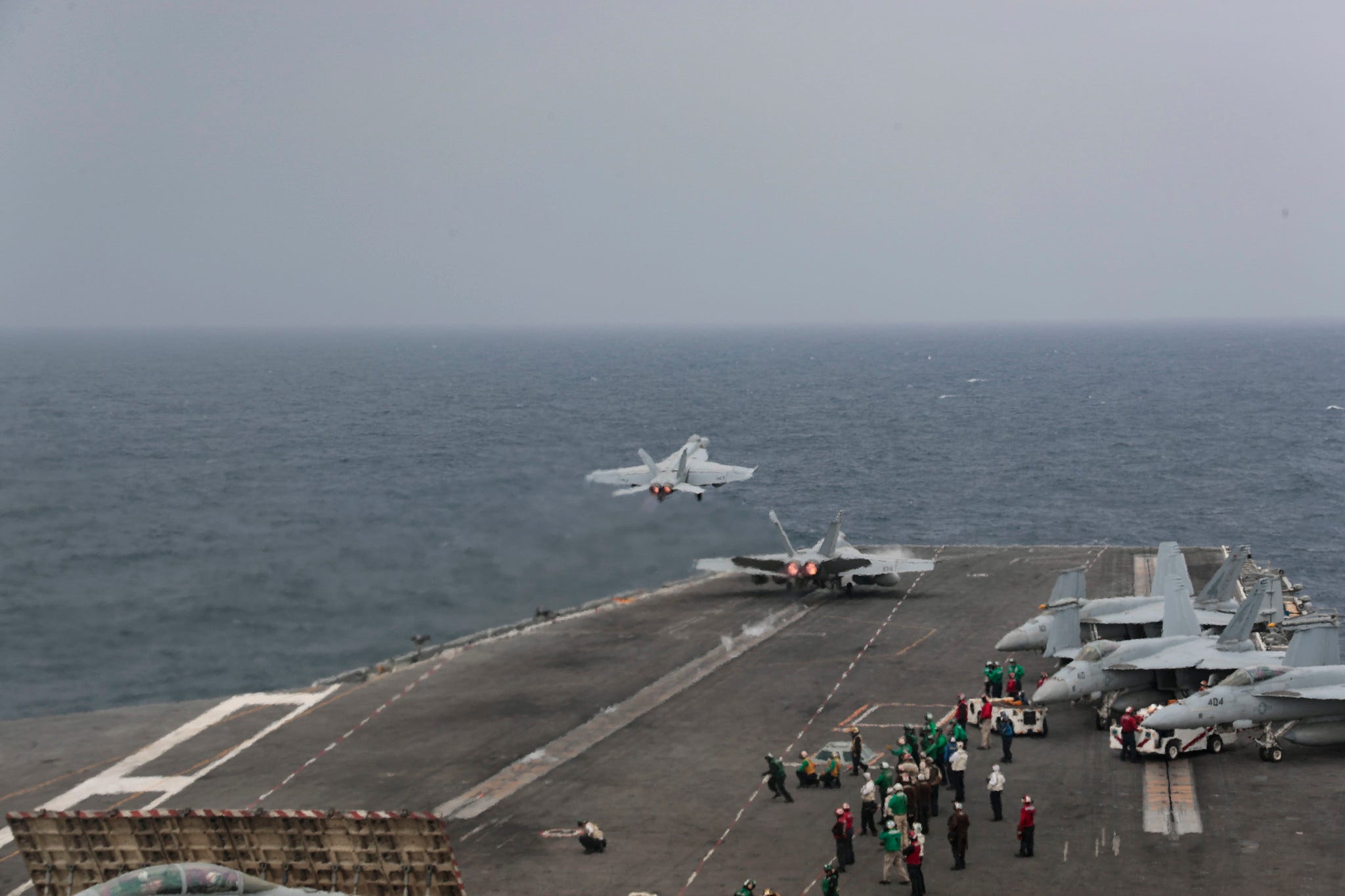
People wonder why America is filling the role of global police when Trump promised no more new or “forever wars.”
I think there is a simple reason—and it is one I have personally experienced over a business career that included frequent international travel, extended assignments abroad, and even a few years living overseas.
9/11 changed more than just America; it changed our relationship with the rest of the world and how American citizens moved through it. Personally, I went from believing I had a kind of protective aura because I was an American to understanding I was a target. As terrorists grew emboldened, it became clear that if I were detained or kidnapped, there was no guarantee American assets would be coming to retrieve me. Holding an American passport was no longer a guarantee.
When I landed in Dubai in 2002 on an American Airlines flight, I remember thinking that being an American on an American airline, flying over Middle Eastern terrain within MANPAD range in a plane with a big American flag on the tail, might not have been the best idea.
It also awakened me to the reality that as America pushed globalization, we failed to recognize that globalization works in reverse—importing cultures and people not aligned with American principles and values. That realization only deepened when former President Obama worked to diminish American standing and leadership in an effort to make us just one nation among many. He and his allies believed that being a superpower drew too much attention, and that if we were simply another country—like those in Europe—there would be less threat to America and Americans.
Ludicrous. When America appears weak, as it did during the Carter, Obama and then the Biden administrations, the threat does not recede—it grows.
The truth is that America has always been more than “Team America: World Police.” It has been the world’s sin eater.
In historical lore, a sin eater is someone who takes on the sins of another through a ritual act, absolving them and allowing them peace. America has often played that role—absorbing the consequences of global disorder and, in the process, preventing humanity from being permanently stained by the worst evils men inflict on one another. At times, this “sin eating” has not only preserved peace but advanced the broader cause of civilization.
There is a simple rule about problems: they rarely improve when ignored. More often, they grow—and once they metastasize, they become far more difficult to resolve quietly.
That is why I find the assertion that Iran “presented no imminent threat” to America so unconvincing. In a world defined by asymmetric risk, Iran and its proxies have posed a continuous threat to Americans since 1979. To argue otherwise is a form of pre-9/11 wishful thinking.
I wish we lived in a world where America was not required to play the role of sin eater. But that is not the world we inhabit. The West allowed this reality to take hold through apathy and lethargy—ignoring problems when they were small and refusing to act when action could have been limited and precise, rather than requiring aircraft carriers and cruise missiles for what might once have been handled far more discreetly, perhaps by a suppressed .22 semiautomatic.
Is this a constitutional role for America?
No—ideally it is not. But neither is it entirely outside our role.
In a connected world where physical borders offer diminishing protection, where even close allies fail basic tests of shared self-interest, and where anti-American forces operate with increasing freedom, we have effectively surrendered the option of not playing this role—ironically, by choosing not to play it when it mattered most.
One might even argue that the constitutional mandate to “provide for the common defense” has been globalized along with everything else.
I don’t like it—but reality is indifferent to what I like.
What I truly detest is being forced to react instead of act—because we delayed the inevitable for far too long.
Far too often it falls on presidents to become a reaction to all that has been ignored for too long. That is how I see President Trump. He is not a conservative, but he does conservative things. He is a mercenary, and he plays with the cards he has been dealt, trying to improve every hand.
Imperfectly and sometimes unconventionally, but his actions are now required to change the game.
Thank you Sir, you said it well.
I don't particularly like it either, but, due to past administrations "let's play nice nice", President Trump has no choice. We are fortunate that the groundwork he laid in his first term, especially the Abraham Accords, is paying significant dividends today.
It always amazes me how there are "conservatives" and libertarians who will always cast America is the provocateur in every global conflict, including the attack on Pearl Harbor. They also seem to hold the belief that America can just close all its doors and isolate like China did and everything would be fine.
Seems to parallel the thinking that the Jooos are always the issue.