
Amendments: More or Fewer?
More often today the Rule of Law now seems to be the Rule of Interpretive Suggestion That Agrees with a Specific Viewpoint.

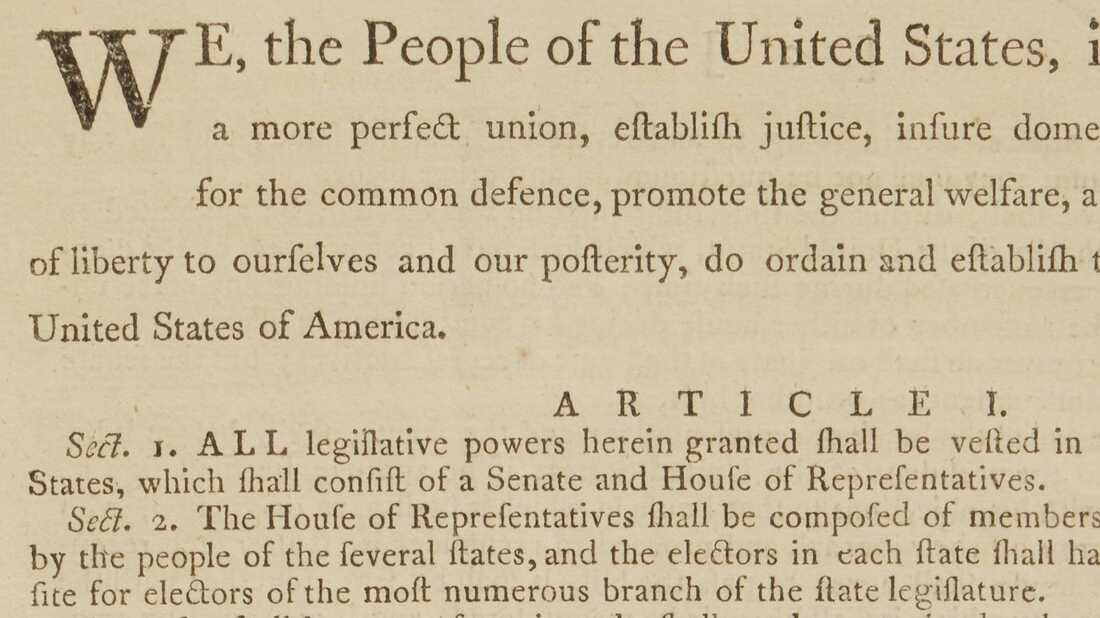
I’ve been considering the outsized roles our courts seem to be filling over the past few years and I have begun to wonder if it is time to add some amendments to our Constitution. I think I’m beginning to see the wisdom of some of Thomas Jefferson’s perspectives on not a “living” constitution, but an “evolving” one that takes some basic decisions out of the hands of the courts – all the way up to SCOTUS.
I’m not completely there, but with every Federal District Court TRO, I get a little closer.
Justice Potter Stewart’s famous 1964 remark on obscenity, “I know it when I see it,” captures the challenge of defining complex legal standards, a difficulty that resonates with the evolving role of the U.S. Supreme Court. The Court’s authority, particularly in determining the constitutionality of laws, has been shaped by pivotal decisions and ongoing debates about judicial power, rooted in the nation’s earliest years.
The Supreme Court’s role as the ultimate arbiter of constitutionality began to take shape under Chief Justice John Marshall, a Federalist who championed centralized authority during his 34-year tenure. His most significant ruling came in Marbury v. Madison (1803), where the Court asserted its power of judicial review, declaring it could overturn laws passed by Congress if they violated the Constitution. This decision established the Court as the final interpreter of constitutional law, a precedent that remains foundational to the American legal system.
However, this assumption of power was not universally accepted. In 1815, Thomas Jefferson challenged the idea that judges alone should decide a law’s constitutionality, arguing that the Constitution grants no such exclusive authority to the judiciary over the executive or legislative branches. With the American court system still in its infancy and case law limited, Jefferson viewed Marbury as a judicial power grab that disrupted the separation of powers, giving the Supreme Court undue influence over the other branches. He believed this violated the Constitution’s design.
I share Jefferson’s concern, but the reality of our legal system cannot be dismissed lightly. The precedent set by Marbury has endured for over two centuries, shaping a system of law built on judicial review. Changing this framework requires working within the Constitution’s parameters, as any other approach risks undermining the rule of law itself.
Jefferson offered a solution, emphasizing that the ultimate arbiter of constitutional disputes should be the people, acting through their elected representatives in Congress or a constitutional convention called by two-thirds of the states. He wrote, “The ultimate arbiter is the people of the Union, assembled by their deputies in convention… Let them decide to which they mean to give an authority claimed by two of their organs.” This reflects the Constitution’s Article V, which outlines the process for amending the Constitution: Congress, with a two-thirds vote in both houses, or two-thirds of state legislatures, can propose amendments or call a convention to do so.
Jefferson further elaborated on the need for a flexible Constitution. In 1809, he praised a proposed Spanish Constitution that allowed two branches of government to overrule the third in cases of constitutional disagreement, a mechanism he felt the U.S. Constitution lacked. He believed the people, through their representatives, should have the power to amend the Constitution to address evolving needs. In 1823, he wrote, “Whatever be the Constitution, great care must be taken to provide a mode of amendment when experience or change of circumstances shall have manifested that any part of it is unadapted to the good of the nation.” He reiterated this in 1825, noting that “time and changes in the condition and constitution of society may require occasional and corresponding modifications.”
Jefferson’s vision contrasts with modern debates over constitutional interpretation. Calls from the right for “original intent” or from the left for a “living Constitution” both risk judicial activism, where judges impose their political leanings rather than adhering to the Constitution’s text or the will of the people. Amending the Constitution through popular acclaim, as Jefferson advocated, is a more democratic approach than relying on judicial interpretation swayed by the political climate of the day.
However, even a constitutionally amended document may not satisfy everyone. The people, through their representatives, may choose a path some find objectionable, forcing a choice: submit to the rule of law or reject it. The challenge lies in balancing fidelity to the Constitution with the need for change in a dynamic society. As Jefferson noted in 1803, “Nothing is more likely than that [the] enumeration of powers is defective… Let us then go on perfecting it by adding by way of amendment to the Constitution those powers which time and trial show are still wanting.” This approach - amending the Constitution through deliberate, democratic means - remains the most principled way to address its imperfections while preserving the rule of law.
It baffles me that any court lower than the Supreme Court of the United States has the judicial power of review to determine constitutionality of national and state laws and executive actions. This allows the various district courts and circuit courts of appeal to each create their own unique case law that may be at odds with the case law created by other district and circuit courts until only by appeal to the SCOTUS can they be reconciled into one universal case law ruling. For example at one time in the Southern California District it was ruled that an accused could be convicted of a capital crime on the basis of a polygraph test. Meanwhile in the capital Federal Court polygraph tests were ruled to be inadmissible as evidence. I do not know if this disparity still exists but it is one example of the sort of conflict that is possible when lower courts are considered to have power of judicial review as well as ordinary powers of original jurisdiction or appeal.
Our system of law limits SCOTUS from taking on any case they wish, instead they are required to follow rules as to whether a case rises to the level of their review. Any disagreement between states automatically goes to SCOTUS, but other cases require standing, damages, disagreement by inferior courts, and a whole slew of other requirements. Although our Supreme Court has deferred judging on many cases I'd like to see them look into, that choice is theirs when a case rises to the point of being available to them.