
All Hail the Security State
We allowed our freedoms to be taken in exchange for protection that was never provided.

When one considers the recent spate of terror attacks in Western democratic countries, the inability to prevent them is both predictable and should be expected. This stems from over two decades of challenges in combating terrorism, where, despite the fact Osama Bin Laden is sleeping with the fishes, his broader objectives have arguably influenced Western societies significantly, and by “influenced”, I mean he was successful.
If you lived through the 80s and 90s, you might recall a different world. Comparing those decades to the past twenty-four years, it's hard to argue that security and freedom have improved. The 9/11 tragedy marked a turning point, empowering the intelligence community and exponentially growing the security state, which includes elected government, the unelected federal bureaucracy, and private sector collaborators. This has led to an era where constant surveillance is not just tolerated but often viewed as normal.
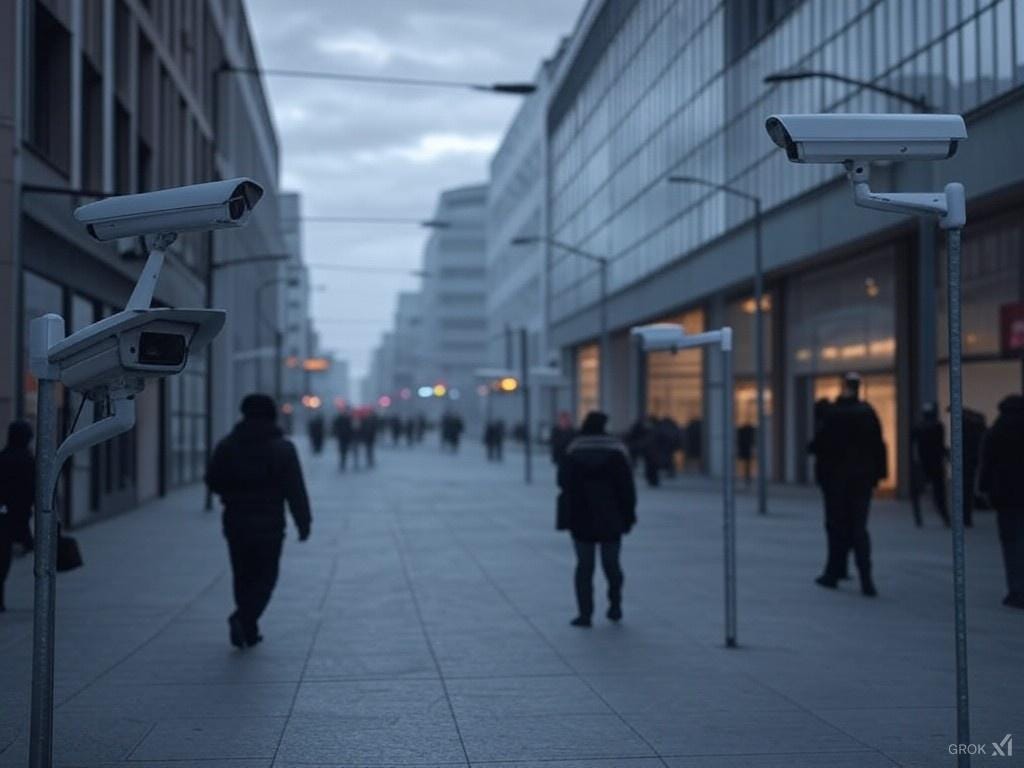
There are cameras everywhere and we have grown accustomed to the vast amounts of data collected on us throughout our lives, used for purposes we might never consciously consented to, through legislation, executive orders, or unauthorized actions by government agencies.
Bin Laden and his successors understood that Western societies, accustomed to freedom, might undervalue it. The complacency in security is evident in recent attacks like the one on Bourbon Street. On New Year's Day, during a major public event and tourist influx, a domestic terrorist, who had pledged allegiance to ISIS online, used a Ford F-150 SuperCrew truck, flying an ISIS flag, to drive onto the sidewalk and attack crowds. Hardly the same as slipping an undetectable virus or some sort of Bond-like evil genius device into the crowd.
The security measures were inadequate; street bollards were being replaced, and temporary police cars were used as barriers, but the use of sidewalks as attack routes was overlooked. New Orleans Police Department Superintendent Anne Kirkpatrick was unaware of available heavy barricades that could have been used, highlighting a failure in security planning.
Moreover, there's a concern over how counter-terrorism tools are being used. The FBI and DOJ have been criticized for surveilling groups like Catholic churches, PTA members, pro-life activists, and those opposing open borders, suggesting a misuse of surveillance powers intended for terrorism prevention.
The intelligence community's power is also a point of contention, as evidenced by comments from figures like Chuck Schumer, indicating the potential for the intelligence community to retaliate against political adversaries when he commented, “Let me tell you, you take on the intelligence community, they have six ways from Sunday at getting back at you.”
Bin Laden's strategy was to push Western societies to self-destruct by trading liberty for security, a trade that has not necessarily prevented attacks like the one in New Orleans. This shift has made society less recognizable, with security measures becoming so intrusive that they erode trust and foster discord.
The America of 2025 is markedly different from that of 1985 due to the security state – of that, I have no fear of being contradicted, but there is hope among people like me that President Trump, Tulsi Gabbard, John Ratcliffe, Pam Bondi and Kash Patel - and others – will reverse the worst of the abuses.
It is a steep hill to climb, but one that must be summited if we want to have our freedoms returned.
Well stated, again. Thank you, Michael!
Great read. I myself just can't put a finger on it. ...it being the root intent they wish to get the system to ..for me it's all leading to Revelation 13