
A Common Man
Being a common man does not mean "less than", in many ways it means "greater than."

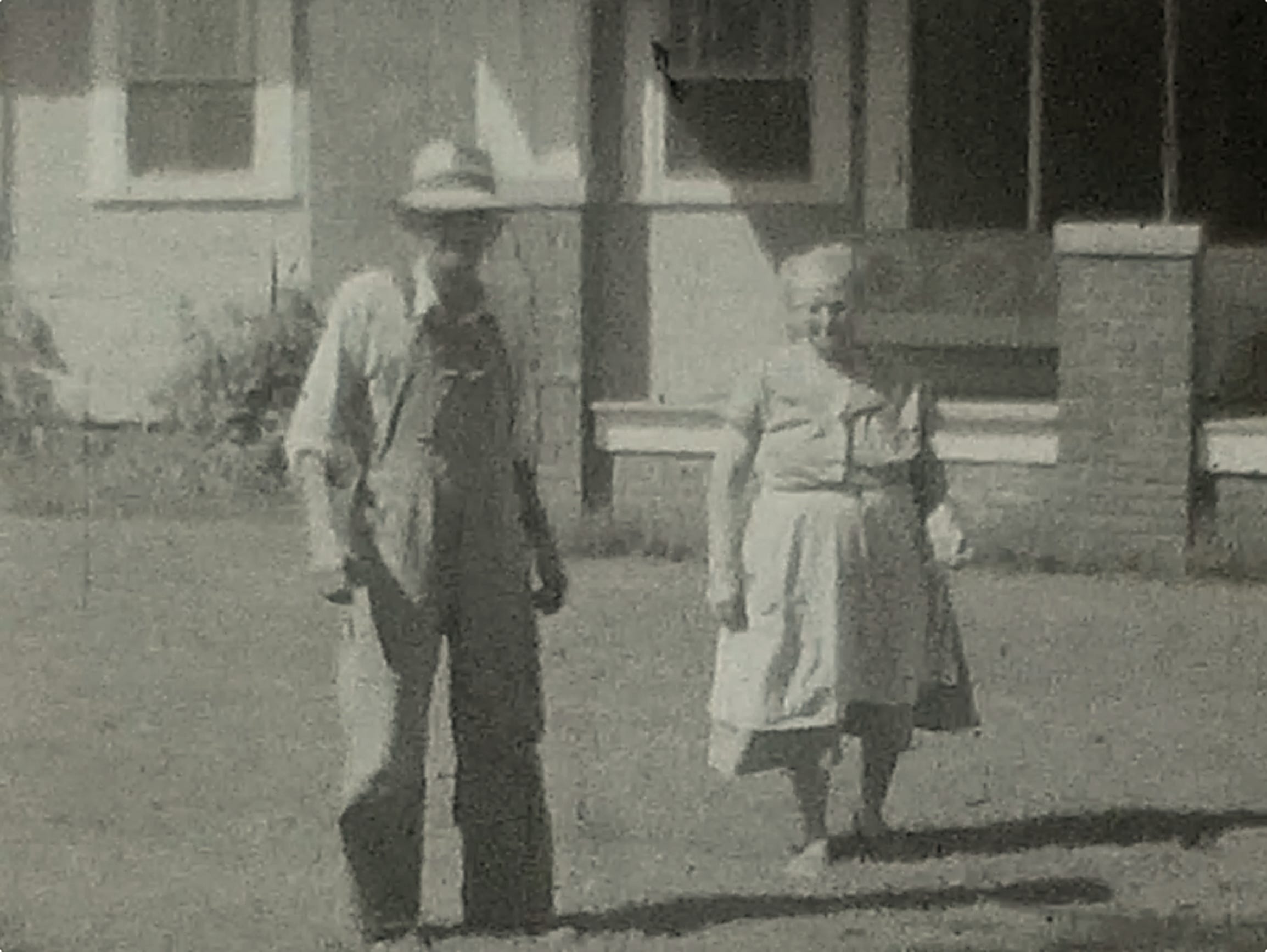
I am a common man.
I use the term “man”, not as an exclusion of women, but as a general term describing all people of similar characteristics.
While the term “common” has been construed to mean something not to be desired, not special, unremarkable, and to be avoided, I thought I would take the opportunity for my new connections to explain who and what I am, because to be a common man is not something of which to be ashamed.
A common man is an ordinary member of society whose authority derives from participation in the community rather than status, title, or institutional power — the representative citizen. His is defined by his position outside the circles of inherited authority and professional power.
It does not mean he is uncouth, low, lacking in intelligence, rude or of poor manners or grooming habits, driven by base emotions or lacking in drive or desire. He’s not necessarily poor or of low class. He may not have a wall of fancy diplomas displaying how credentialled he is, he possesses worthy knowledge and true wisdom born of life experiences doing hard things and loving his family with an unmatched and unrestrained softness. While he may not know proper etiquette or why people need 20 pieces of silverware, 5 plates and 6 glasses to eat dinner, he does just fine with a good, sharp knife, a fork, a simple spoon, and a single cup. He may not drive the latest vehicles because his 2013 Ford F150 gets him where he needs to go, and hauls what he needs to be hauled. He might go to work in that truck, climb on a tractor or into the cab of a Peterbilt, or he might ride the bus.
He works, raises a family, pays his bills and taxes, and lives with the direct consequences of political and economic decisions rather than merely debating them. His knowledge comes less from theory than from experience — from jobs held, risks taken, and obligations met — and his priorities tend toward stability, fairness, and practical results instead of ideological perfection. He may be skilled or unskilled, prosperous or struggling, educated or self-taught, but he shares a defining trait: his stake in society is personal and immediate, not institutional.
In democratic thought, the common man represents the baseline citizen whose consent gives legitimacy to government and whose everyday realities ultimately test whether policies succeed or fail.
If I have a superpower, it is I speak a common man’s language and think a common man’s thoughts – many times, I have been told I write what is in the minds of people. I have been blessed with that gift and the goal of letting people know they aren’t the only people thinking what they are thinking.
You are not alone.
Often that is the best message one can hear.
I have a lot of new connections here, so I think it is important for those new to my posts to understand where I came from as a basis for my thinking, my opinions, and my worldview.
I grew up in what many would call a “poor” household, though I didn’t know it at the time. My parents made sure I never wanted for anything essential, but there were things other kids had that we didn’t. At the beginning of each school year I got five pairs of jeans and one set of nice clothes, and that was my wardrobe for the entire year. I desperately wanted Levi’s, but my mother bought Tuf-Nut or Sears Rawhide because they had reinforced knees that survived elementary-school recess. I secretly preferred the Tuf-Nuts anyway — they came with a pocketknife.
Our first television was a General Electric 19-inch black-and-white set from the 1965 Sears catalog. We could receive four channels, though only three came in clearly: WREG from Memphis, WTVA from Tupelo, and WMC from Memphis. On clear days, after turning the antenna just right, we could coax a fuzzy picture from the ABC affiliate. The day my dad raised the antenna and those moving images appeared, I was convinced I had died and gone to heaven.
The other vivid milestone came in the spring of 1968, when our World Book encyclopedias arrived. With only three reliable TV channels — two often broadcasting the same programs — I read those books from A to Z. Living on a farm with the nearest playmate about a mile away, winter nights growing dark by six meant chores were done early and curiosity took over. By third grade my reading and writing tested at a twelfth-grade level. My world expanded rapidly, yet I still never thought of myself as poor. I was happy. I had television as a window and books as a doorway.
That changed in middle school. Friends were dropped off at school while I rode a bus for an hour. They played sports after class while I did chores. They owned things and had experiences I didn’t. For the first time, I felt poor — not because anything in my life had changed, but because my comparisons had. I began to resent my parents and my upbringing. Why didn’t we have more? Didn’t they understand?
One afternoon, while helping my grandfather repair his tractor, I voiced that resentment. His response became a turning point in my life.
He reminded me I had never gone hungry, never lacked warm clothes, and had always been cared for when sick. My father was building a business for our future; my mother had left her job to raise me and keep our home. My help after school wasn’t exploitation — it was participation in the family. Most importantly, he said I had never lacked love and therefore had the power to change my circumstances.
He told me to replace envy with aspiration. Instead of resenting my starting point, I should build on it and be grateful for it.
At fourteen, that lesson was hard to accept, but it shaped everything that followed. Looking back, I see I stood at a fork: years of self-pity or ownership of my future. My grandfather refused to let me drift toward the former. He knew I was free to choose a path — and needed to understand that freedom meant responsibility for what came next.
And good or bad, that is how I have lived the life of a common man, one who has been remarkably blessed far more than he is worthy.
Michael, that is one of the best columns you have ever written. It is eloquently written, yet simple enough for anyone to understand. Reading columns such as this is a real treasure for "common" folks.
There is nothing “less than” about the common man. He is the load-bearing beam of the Republic. He pays the taxes. He buries the dead. He fixes the machines. He raises the children. He absorbs the policy experiments cooked up by credentialed elites and lives with the consequences. His wisdom isn’t theoretical—it’s earned in sweat, sacrifice, and responsibility. The common man doesn’t need ten forks at dinner or a string of degrees to understand fairness. He understands reality because he carries it daily. Government draws legitimacy from him, not the other way around. If he loses faith, the structure collapses.