
13 Rules for Rationals
Alinsky organizes anger. Classical liberalism organizes civilizations.

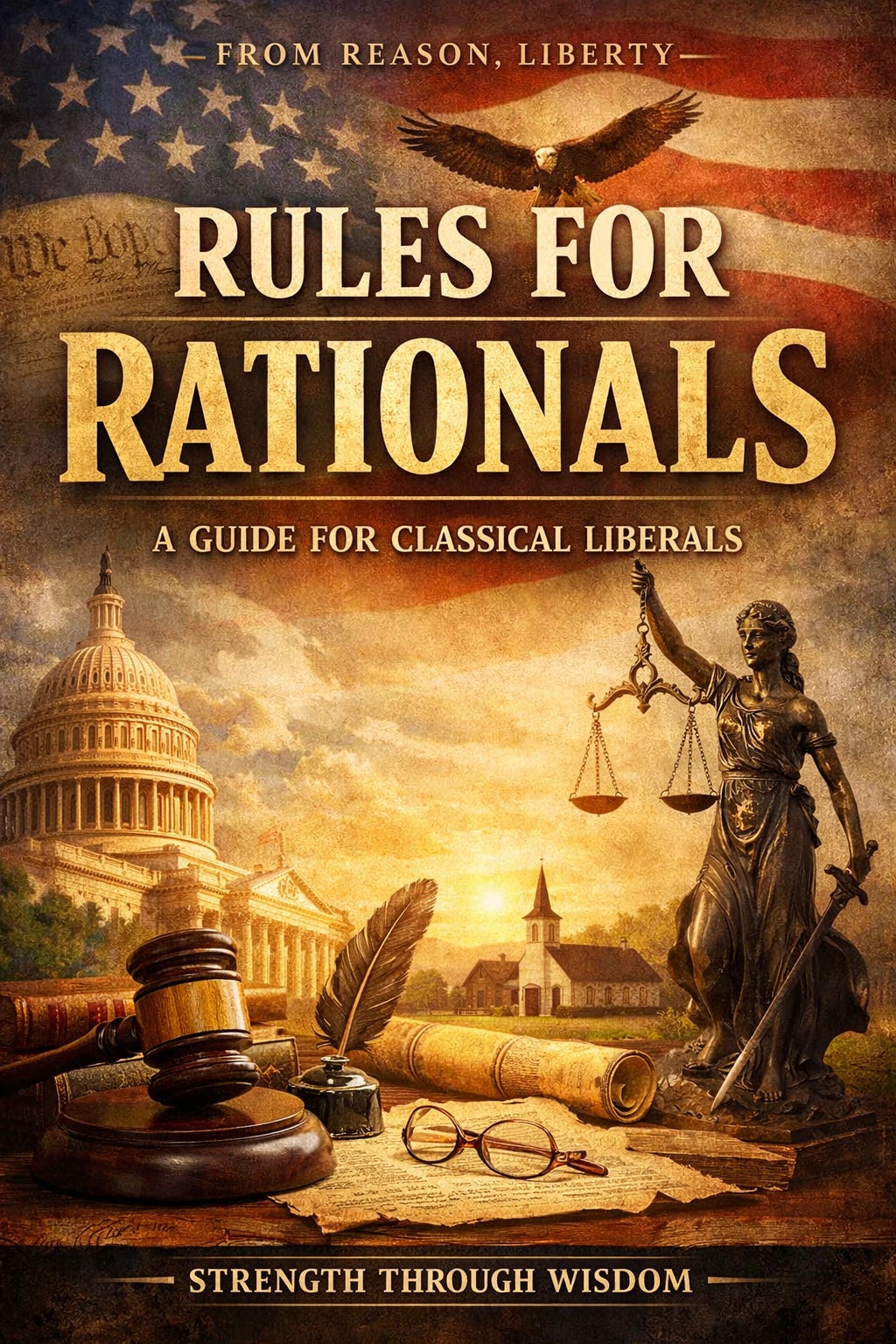
On and off this week I have been thinking about the differences between the 59-day temper tantrums of the Occupy Wall Street “protests” back in 2011 and what we are witnessing on the Minneapolis streets today and it struck me at how much more aggressively “Alinsky” they have become. While it was formally published in 1971, Alinsky completed it amid the political turbulence of the late 1960s and early 1970s, addressing a new generation of activists.
But no matter what you think about Alinsky, his rules were logical.
What we are seeing today is not. I mentioned Reagan’s quote yesterday: “Well, the trouble with our liberal friends is not that they’re ignorant; it’s just that they know so much that isn’t so.” I firmly believe this is true. They invent things. They take a factual event, add irrational emotion and come up with the most horrific explanation possible to keep the fear, adrenaline and anger flowing.
Criminals and thugs become “activists” and “legal observers”—angelic freedom fighters—who are agents of “neighbors”, “Maryland Dads”, while law abiding, church going Christians are cast as modern versions of William Quantrill (leader of Quantrill’s Raiders) or “Bloody Bill” Anderson, who are planning another Lawrence Massacre (killing ~150-200 civilians and burning the town).
I’ve often wondered what a direct opposite of Alinsky’s rules would look like. Twenty years ago, I began handwriting my thoughts down, and over the subsequent years, would revisit, revise and reword them based on the events of the day. Over the last couple of weeks, I have been researching how a rational person can even deal with an irrational argument based in emotional reasoning.
The invasion of Cities Church in St. Paul on January 18th caused me to dig my “Rules for Rationals” out from where it has slumbered since I last touched it after J6, and going through it, I noticed a lot of commonality with the research I was digging through about how to handle the irrational and emotional arguments the left uses to justify their lawless actions today.
So, with loins girded, I revised my 13 Rules for the ninth or tenth time, and was surprised how little they changed this time. Here they are:
13 Rules for Rationals
A Classical Liberal Framework
1. Begin with first principles, not grievances. Anchor every argument in enduring truths: natural rights, human dignity, ordered liberty, and the rule of law. Ground your vision in transcendent principles rather than shifting tactical advantage or collective blame.
2. Tell the truth, even when it costs you. Base arguments on evidence and logic. Short-term lies destroy long-term credibility, and reality always collects its debt. Intellectual integrity is the foundation of lasting change.
3. Defend free speech absolutely. The moment you justify silencing others, you authorize your own future silencing. Open debate is the cornerstone of progress and the antidote to tyranny. Today’s majority is tomorrow’s minority.
4. Steel-man your opponent. If you cannot articulate the strongest version of the other side, you haven’t earned your conclusion. Assume good faith and address arguments on their merits, not identities.
5. Means matter as much as ends. How you win determines whether victory is sustainable and just. Lead by example, not by exception. Hold yourself to the standards you demand of others—hypocrisy destroys moral authority.
6. Persuasion beats pressure. Lasting change comes from winning hearts and minds through reason. Convince minds before attempting to move institutions. Power without legitimacy decays.
7. Respect institutions—even while reforming them. Courts, markets, families, and civic norms are civilizational infrastructure. Preserve what works before innovating. Understanding why arrangements persist often reveals embedded wisdom.
8. Decentralize power whenever possible. Concentrated authority, even in friendly hands, threatens liberty. Local solutions respect diversity, enable experimentation, and protect against tyranny of the majority.
9. Champion personal liberty and responsibility. The individual is the smallest minority. Power comes from self-reliance and agency, not dependency. Encourage accountability and voluntary exchange over coercion.
10. Measure consequences, not intentions. Good intentions are common; good results are rare. Society is complex, and unintended consequences are real. Let evidence, not ideology, guide reform.
11. Build coalitions on shared principles. Unite with those who share core values of liberty, dignity, and constitutional order—not fleeting tactics or shared enemies. Positive visions unite more durably than grievances.
12. Play the long game. Think in term of decades, not news cycles. Cultural change precedes political change. Invest in education, civic knowledge, religious teaching, and character formation that will outlast any election cycle.
13. Build what you wish existed. Don’t merely protest decay—create alternatives: businesses, schools, media, communities. Action and example inspire more than complaint.
Of course, these are principled, and our opponents are not and sometimes that means smash-mouth football is the order of the day, but even when that happens, these rules should still govern that process as well. Strength on strength battles still have rules.
The contrast with Alinsky is that where tactical radicalism seeks power through conflict and ends-justify-means pragmatism, rational classical liberalism (traditional conservativism) pursues liberty through principle, persuasion, and the patient work of building free institutions.
In short, while Alinsky organizes anger, classical liberalism organizes civilization.
I double-dog dare you to print out those rules and ship them to Randi Weingarten, with a suggestion that members of her teachers' union hang a copy on every government-school classroom wall.
Sentiment is a sugar high, not a strategy. The radical left runs on emotional amphetamines—rage, panic, and manufactured crises—burning out its useful idiots as fast as it recruits them. They have the attention span of fleas and the discipline of a flash mob. One week it’s “genocide,” the next week it’s forgotten. Civilizations aren’t built on tantrums; they’re built on reason, law, and endurance. That’s why Alinsky-style agitation always collapses and classical liberalism always outlasts it. You can’t sustain a movement on hysteria forever. Reality shows up, the bill comes due, and reason collects—every single time.